FFS Bone Reduction vs. Soft Tissue Procedures: When is Each Necessary?

A side profile of a young woman with a high ponytail looking at a sunset cityscape from a rooftop.

For many transgender women and transfeminine individuals, the journey toward aligning their physical appearance with their internal sense of self is a deeply personal and significant undertaking. At the heart of this journey often lies Facial Feminization Surgery (FFS). But FFS is not a single procedure; it is a sophisticated, multi-faceted art form tailored to each individual. To truly understand its power is to look beneath the surface and appreciate its different layers.

The most critical distinction to grasp is the difference between bone work and soft tissue work. Think of your face as a house. The bones are the architectural framework—the foundation, the walls, the roofline. They define the fundamental size and shape of the structure. The soft tissues—skin, fat, muscle, and cartilage—are the finishes. They are the siding, the landscaping, the drapes in the windows, and the subtle contours that make the house a home.

A masterful surgeon doesn’t just work on one or the other. They understand that creating a naturally feminine and harmonious result depends entirely on the intricate synergy between these two layers. This guide will walk you through the architectural foundation of bone work and the delicate refinements of soft tissue work, helping you become an informed and empowered partner in your FFS journey. Understanding these distinct yet interconnected approaches is not merely academic; it is fundamental to achieving a truly transformative and authentic outcome.

Facial Feminization Surgery is a comprehensive set of procedures designed to soften masculine facial features and enhance those perceived as more feminine. For many, FFS is a pivotal step in aligning their external appearance with their internal identity, significantly improving their quality of life and alleviating gender dysphoria. The human face is a complex tapestry of bone, muscle, fat, and skin, each contributing to its overall shape and expression. Male and female faces exhibit subtle yet distinct differences in skeletal proportions and soft tissue distribution. For instance, male foreheads tend to be more prominent with a heavier brow bone, while female foreheads are typically smoother and rounder. Jawlines in males are often squarer and more angular, contrasted with the softer, more tapered jawlines commonly seen in females.

Similarly, differences in nose shape, lip fullness, and hairline position all contribute to perceived gender. FFS addresses these discrepancies by surgically altering these features to achieve a more feminine aesthetic. This article will delve into the specifics of both bone and soft tissue FFS procedures, explaining what each entails, its feminizing effect, and how they often work in concert to achieve comprehensive and harmonious results. The distinction between bone and soft tissue procedures isn’t merely academic; it has significant implications for surgical planning, recovery, and the ultimate outcome.

Bone modifications, by their nature, are more invasive and typically involve longer recovery periods due to the extent of tissue manipulation and healing required. However, they provide the foundational changes that significantly alter the overall facial architecture. Soft tissue procedures, while often less invasive, fine-tune the details, adding volume, refining contours, and adjusting expressions that complete the feminization process. Both are indispensable tools in the FFS surgeon’s arsenal, used strategically to sculpt a face that embodies femininity while maintaining naturalness and individual character. Choosing the right combination requires expert guidance, realistic expectations, and a clear understanding of what each type of procedure can achieve. This deep dive aims to equip you with the knowledge to navigate these complex decisions with confidence, ensuring your journey leads to the most authentic reflection of yourself.


Close-up portrait of a woman with dark hair and brown eyes, looking directly into the camera in front of a blurred bookshelf background.

The Architectural Foundation: Bone Reduction Procedures

Bone structure forms the foundation of the face, dictating its overall shape, contours, and proportions. In FFS, modifying these underlying skeletal elements is often the first and most impactful step in achieving significant feminization. These procedures address fundamental differences between typical male and female facial skeletons, creating a softer, more rounded, and less angular appearance. The goal is not just to reduce masculine features but to create new, harmonious feminine contours that complement the individual’s unique facial anatomy.

Forehead Contouring and Brow Bone Reduction

The forehead and brow area are among the most telling indicators of gender. In males, the brow bone, or supraorbital ridge, is often more pronounced. This creates a noticeable ridge above the eyes and a backward-sloping forehead. Female foreheads, conversely, are typically smoother, rounder, and more vertically oriented. Forehead contouring and brow bone reduction are central FFS procedures designed to address these differences.

For most individuals seeking brow bone reduction surgery, the brow bone itself is too thin to be fully shaved down, as it sits in front of a sinus cavity. In such cases, the front wall of the frontal sinus can be removed, contoured, and then secured back in place using titanium or absorbable plates and screws to flatten the forehead. This is medically termed a setback, referring to the procedure name “frontal sinus setback” (Gender Confirmation Center, n.d.).

In a small percentage of the population, about 4-5%, the front wall of the frontal sinus is thick enough to be shaped without removal. This is called frontal bone contouring. Often, brow bone reduction surgery is combined with reshaping the supraorbital ridge, the bones of the eye socket. This helps feminize the eye shape, making the eyes appear more open and rounded, which is typical of an estrogen-dominant puberty (Gender Confirmation Center, n.d.).

The feminizing effect of forehead contouring is profound. It eliminates the heavy brow, allowing the eyes to appear less shadowed and more prominent. A smoother forehead also creates a more youthful and feminine profile, correcting the often-visible “forehead slope” characteristic of many male faces. This procedure forms the cornerstone of upper facial feminization, setting the stage for other procedures to achieve overall facial harmony (Dr. MFO, 2025a).

Jaw and Chin Reshaping

The lower face, particularly the jawline and chin, also plays a crucial role in gender perception. Male jawlines tend to be broader, squarer, and more angular, often with prominent jaw angles. Female jawlines are typically narrower, more V-shaped or oval, and exhibit softer angles. Jaw and chin reshaping procedures aim to transform these features into a more feminine form.

Jaw angle reduction, or mandibular angle reduction, involves reducing the prominence of the jaw angles at the back of the mandible. In males, these angles can be quite sharp and wide, contributing to a square appearance. The surgeon carefully shaves or resects a portion of the bone at the jaw angles, creating a smoother, less angular transition from the ear to the chin. The goal is to achieve a narrower, more tapered lower face, a hallmark of feminine beauty. This procedure significantly softens the overall contour of the lower face, making it appear less harsh and more elegant (Dr. MFO, 2025a).

Chin reshaping, or genioplasty, addresses the chin’s size, projection, and shape, which greatly influence facial balance and perceived gender. Male chins can be wider, squarer, or more prominent. Genioplasty in FFS aims to reduce the width of the chin, shorten its vertical height if necessary, and/or reshape it to a more pointed or rounded form, depending on the desired outcome and the patient’s existing anatomy.

A sliding genioplasty is a common technique where an incision is made inside the mouth. The chin bone is cut and repositioned. The bone segment can be moved forward, backward, up, down, or narrowed to achieve the desired feminine shape. It is then secured with small plates and screws. For less dramatic changes, the chin bone can be shaved down to reduce its size or squareness (Dr. MFO, 2025a).

The combined effect of jaw and chin reshaping is a more graceful and harmonious lower face. A narrower, softer jawline and a refined chin contribute significantly to the overall feminine aesthetic, balancing the features created by upper face modifications. These procedures redefine the silhouette of the lower face, moving away from a strong, masculine squareness towards a delicate, feminine oval or heart shape (Dr. MFO, 2025a).

Tracheal Shave (Adam’s Apple Reduction)

The Adam’s apple, or laryngeal prominence, is a secondary sex characteristic that becomes more prominent during male puberty due to the enlargement of the thyroid cartilage. Its presence is a significant source of gender dysphoria for many transgender women. A tracheal shave, also known as chondrolaryngoplasty, is a straightforward but highly effective FFS procedure designed to reduce the size and prominence of the Adam’s apple.

The procedure involves making a small incision, typically in a natural skin crease on the neck, to minimize visible scarring. The surgeon then carefully shaves down the most prominent part of the thyroid cartilage, reducing its projection and creating a smoother contour of the neck. Extreme care is taken to avoid damaging the vocal cords, which are located just behind the cartilage, ensuring that vocal function is preserved. While primarily a cartilage modification, it significantly impacts the overall appearance of the neck and profile, contributing to a more feminine silhouette. The result is a smoother neckline, which helps to further feminize the profile and reduce a highly visible male characteristic (Dr. MFO, 2025a).


A young woman with long brown hair sitting in a private jet, looking out the airplane window with a thoughtful expression.

The Artistic Refinements: Soft Tissue Procedures

While bone modifications provide the foundational changes in FFS, soft tissue procedures are essential for refining details, adding volume, and addressing specific features that contribute to a softer, more feminine appearance. These procedures work with the skin, fat, muscles, and other tissues to enhance contours, improve symmetry, and provide a polished, natural-looking result. They often complement bone work, ensuring that the overall facial aesthetic is harmonious and complete.

Rhinoplasty (Nose Reshaping)

The nose is a central facial feature, and its shape often differs between sexes. Male noses tend to be larger, wider, and have a more prominent bridge and tip, often with a downward projection. Female noses are typically smaller, narrower, with a softer bridge, and often a slightly upward-tilted tip. Rhinoplasty in FFS focuses on feminizing the nose to achieve these characteristics, making it more delicate and proportionate to the newly feminized face.

Techniques used in FFS rhinoplasty include dorsal hump reduction, which involves shaving down the bony or cartilaginous hump on the bridge of the nose to create a smoother, straighter profile. Narrowing the nasal bones brings them closer together to reduce the width of the bridge, making the nose appear more slender from the front. Tip refinement reshapes the cartilage at the tip of the nose to make it smaller, more refined, and often slightly rotated upward, creating a more feminine angle with the upper lip. Alar base reduction reduces the width of the nostrils if they are too wide, which can be a common male characteristic (Dr. MFO, 2025a).

Rhinoplasty significantly impacts facial balance and harmony. A feminized nose blends seamlessly with the other features, enhancing the overall aesthetic without drawing undue attention to itself. The goal is a natural-looking nose that belongs to the face, not an “operated-on” nose (Dr. MFO, 2025a).

Lip Lift and Lip Augmentation

Feminine lips are often fuller, with a more defined cupid’s bow and a shorter distance between the base of the nose and the upper lip. Male upper lips can appear longer and thinner. Lip feminization procedures aim to enhance the size, shape, and position of the lips for a more youthful and feminine appearance.

A lip lift, or subnasal lip lift, involves removing a small strip of skin from just below the nostrils. This shortens the philtrum, the distance between the nose and the upper lip. It also everts the upper lip and exposes more of the upper teeth, creating a more youthful and feminine lip position. This has the pleasant side effect of increasing upper tooth show when speaking or smiling, which is a youthful, feminine trait (Dr. MFO, 2025a).

Lip augmentation involves adding volume to the lips to make them fuller and more luscious. Common methods include fat grafting, where autologous fat (fat from the patient’s own body) is transferred to the lips. This offers a natural, long-lasting solution and avoids synthetic materials. The fat is typically harvested from areas like the abdomen or thighs, processed, and then injected into the lips. Dermal fillers, such as injectable hyaluronic acid, can provide temporary lip augmentation, offering a non-surgical option for enhancing lip volume (Dr. MFO, 2025a).

These procedures bring focus to the center of the face, enhancing expressiveness and softness. The combination of a lip lift and augmentation can dramatically feminize the mouth area, creating a more inviting and youthful smile. These procedures can correct a “long upper lip” often seen in male faces, contributing to a more balanced and harmonious lower face (Dr. MFO, 2025a).

Hairline Lowering and Brow Lift

The hairline and eyebrows are critical for framing the upper face and influencing perceived gender. Male hairlines are often higher and receded, sometimes forming an ‘M’ shape, while female hairlines are typically lower and more rounded or oval. Male eyebrows tend to be lower-set and flatter, whereas female eyebrows are generally higher, more arched, and positioned above the orbital rim. Hairline lowering and brow lift procedures address these distinctions.

Hairline lowering, or forehead advancement, involves advancing the scalp forward to lower the hairline. An incision is made at or just behind the natural hairline, and the scalp is carefully lifted and pulled forward to its new, lower position. The excess skin is removed, and the incision is meticulously closed at the new hairline. This creates a smaller forehead, a more feminine hairline shape (often rounded), and can also help to disguise a receding hairline. It is frequently combined with forehead contouring to achieve comprehensive upper facial feminization (Dr. MFO, 2025a).

A brow lift elevates the position of the eyebrows, opening up the eyes and creating a more feminine arch. There are several techniques, including coronal brow lift, where an incision is made behind the hairline, allowing the surgeon to lift the entire forehead and eyebrows. An endoscopic brow lift is less invasive, involving small incisions within the hairline through which an endoscope and specialized instruments are used to lift the brow. A hairline brow lift is performed directly at the hairline, often in conjunction with hairline lowering (Dr. MFO, 2025a).

A brow lift complements forehead contouring by ensuring that the eyebrows are positioned optimally for a feminine aesthetic. It creates a more refreshed, open, and youthful appearance around the eyes, which are often considered the windows to the soul (Dr. MFO, 2025a).

Cheek Augmentation

The midface, particularly the cheeks, plays a significant role in facial feminization. Female faces typically have fuller, more prominent cheekbones that contribute to a softer, more youthful, and heart-shaped facial contour. Male cheekbones can be flatter or less defined. Cheek augmentation aims to enhance these midface contours, adding volume and projection to create a more feminine appearance.

Common cheek augmentation methods include cheek implants, where synthetic implants, typically made of silicone, are custom-selected or custom-designed and placed over the cheekbones to add permanent volume and definition. Implants come in various shapes and sizes to achieve different aesthetic goals, from subtle enhancement to more dramatic contouring. They are typically inserted through incisions made inside the mouth or discreetly near the hairline (Dr. MFO, 2025a).

Fat grafting, or autologous fat transfer, involves harvesting fat from another part of the patient’s body (e.g., abdomen or thighs) via liposuction. It is then processed and strategically injected in tiny droplets into areas like the cheeks to create higher, fuller “apple” cheeks, or the temples to reverse hollowing. Fat grafting offers a natural solution, as it uses the body’s own tissue, reducing the risk of allergic reactions. It provides a softer, more natural-looking augmentation than implants and can also improve skin quality in the treated area (Dr. MFO, 2025a).

Cheek augmentation contributes significantly to midface feminization by creating a more youthful and sculpted appearance. Fuller cheeks can soften the overall facial contour, making the face appear less angular and more oval or heart-shaped, which are traditionally feminine forms. This procedure helps to create the “ogee curve” – a double S-curve contour from the temple to the cheek, indicative of youthful feminine cheeks – which greatly enhances facial harmony (Dr. MFO, 2025a).


The Synergy of Bone and Soft Tissue: Achieving Harmony

While discussing bone and soft tissue FFS procedures separately helps to understand their individual contributions, it is crucial to recognize that true, comprehensive facial feminization often involves a synergistic combination of both. The face is a unified structure, and altering one component inevitably impacts others. Surgeons specializing in FFS understand this intricate relationship and develop personalized treatment plans that integrate various procedures to achieve a balanced, natural, and harmonious feminine outcome.

Achieving Facial Harmony Through Combined Procedures

Imagine trying to feminize a face by only altering soft tissues, such as adding lip fillers and a brow lift, while a prominent brow bone and square jawline remain. The results would likely be unbalanced and unnatural. Similarly, addressing only bone structures without refining the softer contours of the nose, lips, or hairline might leave the face looking “sculpted” but lacking the delicate nuances of femininity. This is why combined procedures are paramount (Dr. MFO, 2025a).

Bone procedures lay the fundamental groundwork for feminization. For example, reducing the brow bone projection creates a smoother forehead, which then allows the eyes to appear more open and the eyebrows (often lifted with a soft tissue procedure) to sit in a more feminine position. Similarly, reshaping a square jawline through bone reduction creates a narrower lower face, which then beautifully complements fuller lips and augmented cheeks. The soft tissues drape over the newly shaped bone structure, highlighting the refined contours (Dr. MFO, 2025a).

A rhinoplasty, a soft tissue procedure that reshapes the nose’s cartilage and bone, then ensures that this central feature is in perfect proportion with the feminized forehead and jaw. Hairline lowering (soft tissue) works hand-in-hand with forehead contouring (bone) to reduce the perceived height of the forehead. When procedures are combined thoughtfully, they create a cascading effect of feminization. The goal is not just to change individual features but to create a cohesive facial identity that is unmistakably feminine yet uniquely individual (Dr. MFO, 2025a).

This integrated approach ensures that the new features flow seamlessly into one another, resulting in a face that looks naturally feminine and balanced from all angles. The art of FFS lies in this orchestration, where the surgeon acts as both an artist and a highly skilled anatomist, sculpting a face where every component contributes to the overall harmonious aesthetic (Dr. MFO, 2025a).

The Importance of a Personalized Treatment Plan

Given the complexity and individuality of facial anatomy, a one-size-fits-all approach to FFS simply does not work. The critical role of a custom-tailored treatment plan, developed in consultation with a highly experienced and specialized FFS surgeon, cannot be overstated. Every individual’s starting point is unique – their bone structure, soft tissue distribution, skin elasticity, and aesthetic goals vary significantly. Therefore, the surgical plan must be meticulously designed to address these individual needs and aspirations (Dr. MFO, 2025a).

During the consultation process, the surgeon will typically perform a detailed facial analysis, often utilizing 3D imaging to assess bone and soft tissue dimensions. They will discuss the patient’s specific concerns, desired outcomes, and realistic expectations. Based on this comprehensive assessment, the surgeon will recommend a combination of bone and/or soft tissue procedures that are most appropriate for achieving optimal feminization while maintaining naturalness (Dr. MFO, 2025a).

This personalized approach ensures that the surgical interventions are precise and targeted, maximizing the feminizing impact while minimizing unnecessary procedures. It also allows for a staged approach if necessary, prioritizing certain procedures based on impact, recovery considerations, and financial planning. A truly personalized plan is the cornerstone of successful FFS, leading to outcomes that are both transformative and deeply satisfying for the individual (Dr. MFO, 2025a).

Recovery and Post-Operative Care

Understanding the recovery process after FFS is crucial for proper planning and managing expectations. The recovery experience can vary significantly depending on the extent and combination of procedures performed, but certain aspects are common across most FFS surgeries, particularly those involving bone modification.

Immediately after surgery, patients can expect swelling, bruising, and discomfort. Swelling is a universal response to surgical trauma and is typically most pronounced in the first few days to a week after surgery, gradually subsiding over several weeks to months. Full resolution of swelling can take up to a year or even longer, especially for bone-related procedures. Bruising, similarly, will typically resolve within 2-4 weeks. Pain is usually manageable with prescribed medication (Dr. MFO, 2025a).

Key aspects of post-operative care include adequate rest, keeping the head elevated to reduce swelling, and applying cold compresses to minimize swelling and bruising in the initial days. A soft diet may be recommended, especially after jaw and chin procedures, to avoid putting stress on healing bones and incisions. Meticulous oral hygiene is vital if incisions were made inside the mouth. Regular follow-up appointments with the surgical team are essential to monitor healing, remove sutures or staples, and address any concerns (Dr. MFO, 2025a).

Perhaps the most important aspect of recovery is patience. The final results of FFS become apparent gradually as swelling resolves and tissues settle. It’s a journey that requires time and self-care. The overall healing process for FFS is extensive. While initial recovery (returning to light activities) might take 2-4 weeks, the complete resolution of swelling and soft tissue remodeling can take many months to a year or more. Bone healing takes even longer, often 6-12 months for full consolidation, though most discomfort subsides much sooner. Understanding these timelines is key to a smooth and successful recovery journey, allowing individuals to prepare adequately and manage their expectations (Dr. MFO, 2025a).


Navigating Your FFS Journey: Key Considerations for Procedure Selection

Embarking on the FFS journey is a deeply personal and significant decision. The process of selecting the right procedures is multifaceted, requiring careful consideration of personal aesthetic goals, the surgeon’s expertise, and a thorough understanding of the potential outcomes, risks, and benefits of each approach. This phase is critical to ensuring that the surgical plan aligns perfectly with the individual’s vision for their feminized self.

Aligning Procedures with Personal Aesthetic Goals

The first and most crucial step in procedure selection is a clear articulation of your personal aesthetic goals. What does “feminine” mean to you? What specific features cause you the most dysphoria? Do you envision a subtle refinement or a more dramatic transformation? While there are general principles of feminine facial anatomy, beauty is subjective, and your unique preferences are paramount. Some individuals may desire a very soft, delicate look, while others might prefer a slightly stronger, yet still feminine, contour (Dr. MFO, 2025a).

It’s important to bring examples, such as photos of desired facial features or even photos of yourself pre-transition that you like, to your consultation. This can help the surgeon understand your vision. However, it’s equally important to have realistic expectations and to understand that a surgeon’s role is to enhance your natural features to achieve a harmonious and balanced feminine outcome, not to transform you into someone else entirely. The goal is to feminize your existing facial structure in a way that feels authentic and natural to you. This open dialogue with your surgeon is essential for translating your desires into a feasible and effective surgical plan (Dr. MFO, 2025a).

The Role of Surgeon Expertise and Specialization

Choosing a highly experienced and specialized FFS surgeon is arguably the most critical decision in your FFS journey. FFS is a highly complex and nuanced field that requires a unique combination of artistic vision, deep anatomical knowledge, and specialized surgical skills. It goes beyond general plastic surgery; it demands an understanding of gender-affirming care and the specific nuances of facial gender differences (Dr. MFO, 2025a).

An FFS specialist will have extensive experience with both bone and soft tissue modifications, understanding how these interact to achieve optimal feminization. They will be adept at techniques that minimize scarring, preserve nerve function, and ensure natural-looking results. Look for surgeons who have a strong portfolio of FFS before-and-after photos, demonstrating consistent, high-quality results across various facial types. They should be board-certified in relevant surgical specialties, such as plastic surgery, maxillofacial surgery, or otolaryngology, with additional fellowship training or extensive experience specifically in FFS (Dr. MFO, 2025a).

Furthermore, a reputable surgeon will be well-regarded within the transgender community and have positive patient testimonials. They will prioritize patient education and communication, ensuring you feel comfortable and fully informed throughout the process. The surgeon’s expertise directly impacts the safety, effectiveness, and aesthetic outcome of your FFS. Investing time in finding the right specialist is an investment in your well-being and satisfaction with the results (Dr. MFO, 2025a).

Understanding Risks and Benefits of Each Approach

Like all surgical procedures, FFS carries inherent risks, and it’s essential for patients to have a clear and comprehensive understanding of these before proceeding. The risks can vary slightly between bone and soft tissue procedures, though many are common to all surgeries.

General surgical risks applicable to both bone and soft tissue procedures include infection, bleeding, adverse reaction to anesthesia, numbness or altered sensation (often temporary, but can be permanent), scarring (though surgeons strive to minimize this), asymmetry, swelling, and bruising. Specific risks for bone FFS procedures include nerve damage, particularly relevant for jaw, chin, and forehead procedures, potentially leading to temporary or permanent numbness in specific areas of the face or lips. Non-union or mal-union of bone, though rare, means the bone might not heal correctly after osteotomies (bone cuts). Dental issues, such as temporary or rarely permanent changes in bite or dental sensitivity, can occur with jaw and chin procedures. Breathing issues are extremely rare with tracheal shave, but damage to airways or vocal cords is a theoretical risk if not performed by an expert (Dr. MFO, 2025a).

Specific risks for soft tissue FFS procedures include temporary or permanent hair loss along the incision line with hairline lowering, though this is uncommon. Slight variations in results between the two sides of the face can lead to asymmetry. For filler or fat graft complications, lumps, unevenness, or reabsorption of fat can occur. Rhinoplasty-specific risks include breathing difficulties, septal perforation (rare), and altered sense of smell (rare) (Dr. MFO, 2025a).

The benefits of FFS are significant. They include a substantial reduction in gender dysphoria, improved self-confidence and self-esteem, enhanced social interactions (being perceived as one’s affirmed gender), a more harmonious and aesthetically pleasing facial appearance, and greater alignment between internal identity and external presentation. A reputable surgeon will thoroughly review all potential risks and benefits, ensuring you make an informed decision. They will also discuss their strategies for mitigating these risks and managing any complications should they arise. Understanding these aspects empowers you to approach your FFS journey with confidence and realistic expectations (Dr. MFO, 2025a).


Conclusion

Facial Feminization Surgery represents a profound and life-affirming journey for many transgender individuals, offering a path to align their external appearance with their authentic gender identity. As we have explored, FFS encompasses a diverse array of surgical interventions that can be broadly categorized into those targeting the underlying bone structures of the face and those focusing on the more superficial soft tissues. Both categories are vital and often work in concert to achieve comprehensive and harmonious feminization.

Bone modifications, such as forehead contouring, jaw and chin reshaping, and tracheal shave, provide the foundational changes, redefining the skeletal framework to diminish masculine angularity and create softer, more rounded contours. These procedures lay the essential groundwork upon which further feminization is built. They address the core architectural differences that often contribute most significantly to gender dysphoria, creating a fundamental shift in facial perception. Without these foundational changes, soft tissue refinements alone may not achieve the desired level of gender congruence, leaving an underlying masculine structure that can still be a source of discomfort.

Complementing these foundational changes are soft tissue procedures, including rhinoplasty, lip lifts and augmentation, hairline lowering, brow lifts, and cheek augmentation. These procedures refine the delicate details, add volume, and enhance expressions, bringing an artistic finish to the transformation. They are the crucial elements that add the subtle curves, fullness, and youthful vitality often associated with feminine aesthetics. Soft tissue work ensures that the newly sculpted bone structure is beautifully draped and enhanced, creating a natural and cohesive appearance rather than a stark, surgically altered look.

The true power of FFS lies in the synergistic application of both bone and soft tissue techniques. A skilled FFS surgeon meticulously crafts a personalized treatment plan, combining these approaches to ensure that every feature contributes to a unified, balanced, and naturally feminine aesthetic. This individualized approach, guided by surgeon expertise and aligned with the patient’s unique aesthetic goals, is paramount for achieving deeply satisfying and life-changing results. It acknowledges that each face is unique and requires a bespoke strategy to unlock its feminine potential. Recovery is a journey requiring patience and diligent post-operative care, with full results emerging gradually over time, underscoring the importance of a long-term perspective.

Ultimately, the goal of FFS is not to look like a model or a celebrity. It is not about chasing an artificial standard of beauty. The definition of success for FFS is profoundly personal and has two facets: internal success and external success. Internal success means looking in the mirror and seeing yourself, feeling a sense of peace and rightness in your own skin. It is the relief that comes from the quiet, constant hum of facial dysphoria finally fading away. External success means moving through the world with ease, being gendered correctly without effort, and having the privilege of “stealth”—not because you are hiding, but because your face so clearly and authentically reflects your identity that it’s no longer a point of confusion or contention for others.

Success is when the architecture of your bones and the artistry of your soft tissues align perfectly to reflect the woman you have always been. It’s when the house is finally, truly, your home. By understanding these fundamental layers, you are not just preparing for surgery; you are taking the first, most crucial step toward building that home for yourself. Do your research, consult with experienced specialists, and embrace the journey with informed confidence. Your authentic self awaits.

Frequently Asked Questions

What is the primary difference between FFS bone reduction and soft tissue procedures?

FFS bone reduction procedures primarily reshape the underlying skeletal structure of the face (e.g., forehead, jaw, chin) to diminish masculine angularity. Soft tissue procedures, conversely, refine superficial features like the nose, lips, hairline, and cheeks by altering skin, fat, and muscle to enhance feminine contours and volume.

Is it always necessary to have both bone and soft tissue FFS procedures?

No, it is not always necessary. The ideal approach depends on an individual’s unique facial anatomy and feminization goals. While a combination often yields the most harmonious results, some individuals may benefit more from one type of procedure over the other. A personalized consultation with an FFS surgeon will determine the best plan.

How long is the recovery for FFS bone reduction procedures compared to soft tissue procedures?

Recovery for bone reduction procedures is generally longer due to the extensive nature of bone healing, with significant swelling subsiding over several months and full bone consolidation taking 6-12 months. Soft tissue procedures typically have a quicker initial recovery, with less pronounced swelling resolving faster, though overall healing still requires patience.

Can FFS procedures be performed in stages?

Yes, FFS procedures can be performed in stages. This approach is common due to financial considerations, the extensive nature of some surgical plans, or patient preference for shorter, more focused recovery periods. Your surgeon will discuss the pros and cons of single-stage versus staged surgery based on your individual circumstances.

What are the main benefits of undergoing FFS?

The main benefits of FFS include a significant reduction in gender dysphoria, improved self-confidence and self-esteem, enhanced social interactions through being perceived as one’s affirmed gender, a more harmonious and aesthetically pleasing facial appearance, and greater alignment between internal identity and external presentation.

Bibliography

Tracheal Shave vs. Voice Feminization Surgery: Ultimate Guide

A joyful middle-aged woman with blonde hair smiling while talking on a smartphone, standing on a balcony overlooking the ocean and a coastal town at sunset.

Everyone’s doing facial feminization surgery wrong. Here’s what nobody tells you: addressing the visible protrusion on your neck is only half the battle. You can successfully eliminate your Adam’s apple, the prominent thyroid cartilage, and still be clocked the moment you open your mouth. It’s a frustrating, heartbreaking reality for many transgender women.

Think about that. The voice is an absolute game-changer. It’s the silent, sonic signature that defines how the world instantly perceives you.

But here’s the kicker: the two procedures designed to address the Adam’s apple and the voice—Tracheal Shave and Voice Feminization Surgery (VFS)—are fundamentally different, both in goal and execution. They are not interchangeable.

This choice isn’t just about surgery; it’s about aligning your internal self with your external presentation—a deeply emotional undertaking. Getting the sequence or the procedure wrong can lead to serious complications, including permanent changes to your pitch and resonance. You need to know the facts, not just the glossy brochure details.


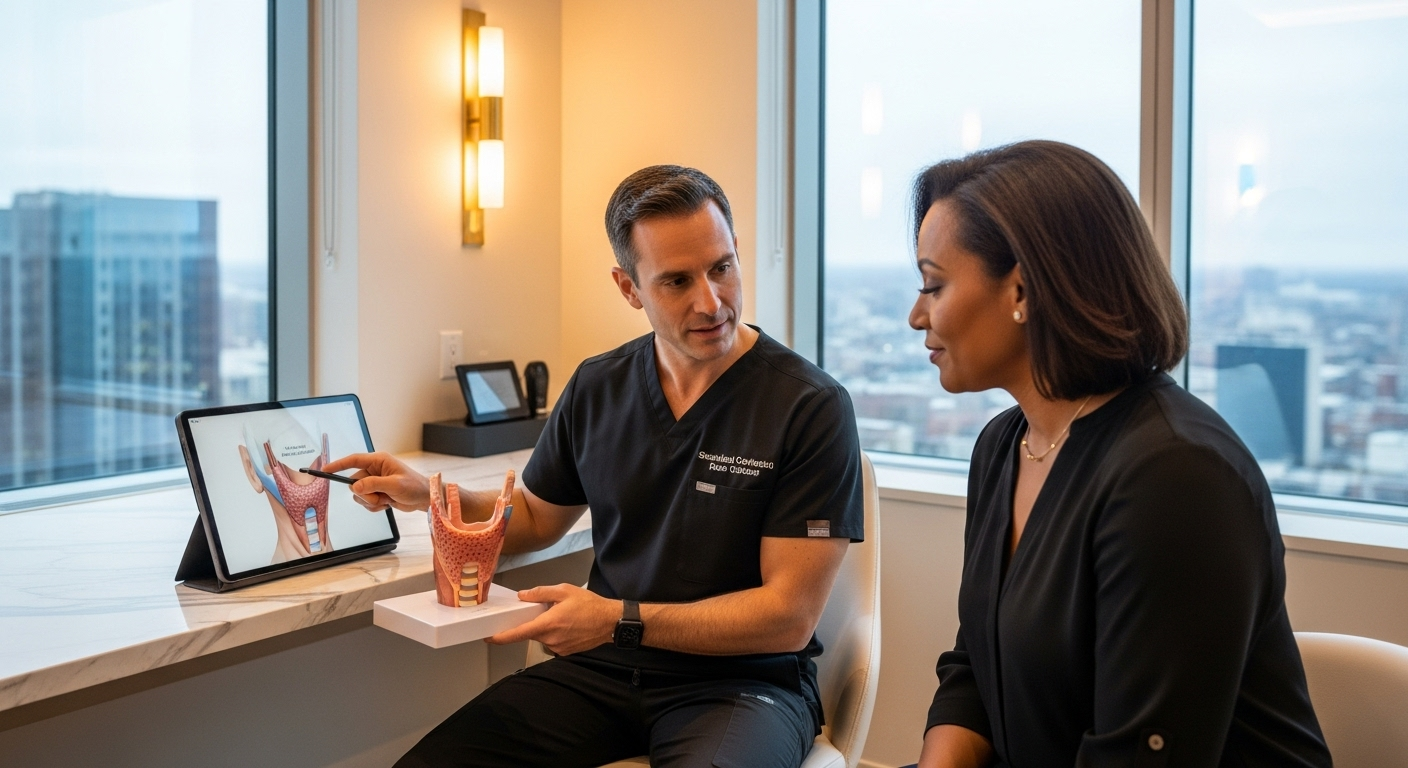
A doctor explaining the anatomy of the throat to a patient using a medical tablet and a 3D model of the larynx in a professional clinical office.

What is the Tracheal Shave Really For? The Aesthetic Imperative

The tracheal shave, medically termed chondrolaryngoplasty, is purely aesthetic. That’s the core, non-negotiable truth. It is designed to create a smooth, feminine contour to the neck by reducing the size of the thyroid cartilage. This prominent cartilage—the so-called Adam’s apple—grows significantly during testosterone-driven puberty. Estrogen doesn’t shrink it. Surgery is the only viable path to reduction.

The process is straightforward, relatively speaking. A surgeon makes a small, horizontal incision, often cleverly placed in a natural skin crease to minimize the resulting scar. Then, they carefully shave away the excess cartilage. The goal is simple: eliminate the visual bulge without touching the delicate structures inside.

This is where the risk lies, admittedly. The vocal cords, or vocal folds, are located directly behind that cartilage. An overzealous or inexperienced surgeon could remove too much, potentially damaging the anterior commissure—the front-most point where the vocal cords meet—which can lead to a lower pitch and hoarseness. This is why choosing an experienced, board-certified facial feminization surgeon is a non-brainer.

The recovery? It’s quick. Patients often go home the very same day, typically within hours. Swelling and bruising are normal for about a week, but the visual result is almost immediate, a smooth neck profile where a bump once stood.

Look, a tracheal shave is excellent for addressing visible dysphoria—a crucial piece of the puzzle. It completely changes how clothing lays on your neck. It’s a foundational step in FFS. But it will not, under any circumstance, raise the pitch of your speaking voice. The difference between this and VFS? It’s night and day, which we’ll get into shortly.


The Surgical Spectrum: Tracheal Shave vs. Feminizing Laryngoplasty

Where the tracheal shave relies on shaving down cartilage for an external, visual change, Voice Feminization Surgery (VFS) takes a completely different, internal approach by modifying the vocal cords themselves to alter pitch. The result? A smooth neck line versus a higher, more feminine voice. This direct contrast is essential for managing expectations.

AspectTracheal Shave (Chondrolaryngoplasty)Voice Feminization Surgery (VFS)
Primary GoalAesthetic: Reduce Adam’s Apple protrusionFunctional: Raise the speaking pitch
Target StructureThyroid Cartilage (external bulge)Vocal Cords (internal, vibrating tissue)
Voice ChangeNone (risk of lowering pitch if over-reduced)Significant increase in Fundamental Frequency (pitch)
ScarringSmall, horizontal neck incision (often hidden)Depends on VFS Type: None (Glottoplasty) or Small Neck Incision (CTA)
Best ForPatients seeking a feminine neck contourPatients with vocal dysphoria, regardless of neck prominence
Bottom LineVisual confirmation of femininityAuditory confirmation of femininity

The typical tracheal shave is a standalone procedure, often done with other FFS elements. However, if a patient undergoes a more complex procedure like a modern Feminization Laryngoplasty (FL), the need for a separate tracheal shave might be eliminated. This newer, comprehensive technique aims to feminize the entire laryngeal structure—both the voice and the neck profile—simultaneously. It explicitly removes the anterior thyroid cartilage and shortens the vocal cords. Talk about efficient!

This evolution of surgery highlights the core choice: simple aesthetic fix versus complex, two-part structural change. Five years ago, you almost always needed two separate procedures. Today, emerging approaches like Feminization Laryngoplasty might disrupt everything by addressing both concerns in one session.


Why Isn’t the Voice Just “Trained”? The Science of Pitch

Why can’t you just use speech therapy? You’ve probably experienced vocal fatigue after consciously trying to maintain a higher voice for an extended period. That effort is exhausting. The truth? It’s complicated.

The fundamental frequency of a person’s voice—the perceived pitch—is determined by the length, tension, and mass of the vocal folds. Once testosterone works its magic during puberty, the larynx enlarges, and the vocal cords thicken and lengthen. These changes are permanent. Hormone Replacement Therapy (HRT) with estrogen will not reverse them.

This is the physiological reality that VFS seeks to correct. Surgery aims to shorten, thin, or tighten the vocal cords to make them vibrate faster, thereby raising the pitch. This is what makes VFS a true gender-affirming procedure, shifting a voice that is physically male to one that is functionally female.

The comparison is stark. Voice therapy is a behavioral modification approach, training muscles and habits to work with the existing instrument. VFS is a physical modification, permanently altering the instrument itself to make the desired pitch easier to achieve and maintain naturally. Both are important, but VFS provides the essential physical foundation for long-term vocal comfort and authenticity.


Deconstructing Voice Feminization: The Alphabet Soup of VFS

Voice Feminization Surgery isn’t just one procedure; it’s a family of techniques. The most common ones you’ll hear about are Glottoplasty (Wendler’s) and the older Cricothyroid Approximation (CTA). Each method tackles the vocal cords differently, and honestly, the data’s mixed on which is the absolute best for every single patient.

Glottoplasty is often the preferred choice now. Surgeons use an endoscope—a thin tube with a camera—inserted through the mouth, meaning no external scar (a huge plus!). The procedure shortens the vocal cords by creating a scar tissue bridge, a “web,” at the front. As the scar contracts, the cords shorten, and the pitch goes up. A complete game-changer.

Unlike Glottoplasty, Cricothyroid Approximation (CTA) requires a small incision on the neck. It raises the pitch by suturing the thyroid and cricoid cartilages closer together, thereby stretching and tightening the vocal cords. CTA, however, has fallen out of favor with many surgeons because its long-term pitch maintenance can be inconsistent, sometimes fading back toward the patient’s original, lower pitch over time.

Now here’s where it gets weird. Some surgeons will combine Glottoplasty with a technique like Laser Reduction Glottoplasty (LRG), which uses a laser to thin the vocal cord mass, further raising the pitch. This comprehensive approach is gaining traction, maximizing the pitch increase with minimal external invasion.

The critical decision point is whether you need a massive pitch leap or a subtle, natural shift. A Glottoplasty tends to provide the most significant, stable pitch increase, whereas a simple CTA offers less dramatic, sometimes less reliable results. This part gets murky, but the consensus is leaning heavily toward endoscopic approaches for their efficacy and lack of external scarring.

VFS TechniqueMechanismApproachPitch Effect (Approx.)Key Advantage
Wendler GlottoplastyShortens vocal cords (scar web)Endoscopic (Through mouth)High (60-80Hz increase)No external scar; most significant pitch increase
Cricothyroid Approximation (CTA)Increases vocal cord tension (sutures)External (Small neck incision)Moderate (40-50Hz increase)Can be done with Tracheal Shave incision
Feminization Laryngoplasty (FL)Shortens cords and reduces larynx sizeExternal (Neck incision)High (Vocal/Aesthetic Combo)Addresses both pitch and Adam’s Apple in one
Vocal Fold Muscle Reduction (VFMR)Thins vocal cord mass (laser)Endoscopic (Through mouth)Minimal (10-20Hz increase)Good for singers or minor adjustments

The shift from older methods like CTA to newer, multi-faceted procedures like Glottoplasty and FL is a reflection of surgical refinement. Surgeons are finding better ways to achieve an authentically feminine sound, not just a higher one.


The Recovery Paradox: Silence is Golden, Literally

The recovery from these procedures illustrates the fundamental difference between them. This is the part that surprised me most.

For a tracheal shave, the recovery is mainly focused on wound care. You need to keep the incision clean, manage swelling, and avoid strenuous activity for a few weeks. Voice use? Generally unaffected, though you might have temporary hoarseness from the general anesthesia tube. Life returns to normal fast.

But flip to VFS, and the mandatory protocol becomes absolute, critical voice rest. We are talking two full weeks, sometimes more, of not speaking at all. Not whispering. Not coughing loudly. Not even clearing your throat. Whispering is actually more damaging than normal speech, as it strains the delicate, newly formed internal surgical site.

Why? The vocal cords need to heal and form that essential scar tissue. Any vibration, any strain, can compromise the surgical outcome, potentially leading to an inferior pitch result or complications like granulomas. The psychological burden of forced silence can be immense—it’s a marathon, not a sprint. This is a critical factor for anyone whose livelihood depends on their voice.

The situational advantage becomes obvious here: a tracheal shave is excellent for a patient who cannot take extended leave from vocally demanding work. But if the pitch-altering change is the priority, VFS is the only real option, demanding total adherence to the silence protocol.


The Sequencing Scramble: Which First?

This is the big question: Tracheal Shave or VFS? Or both simultaneously? The general consensus used to be: Tracheal Shave first, then VFS if the voice remained a source of dysphoria.

Today, the tide is turning, primarily due to the rise of Feminization Laryngoplasty. However, for those choosing the two-step route (Tracheal Shave + Glottoplasty), it’s generally recommended to have the tracheal shave done first or simultaneously. Why?

If you have a tracheal shave done aggressively, there is a small, but real, chance of damaging the vocal cord attachment—the anterior commissure. If this happens, your pitch could drop. If VFS has already been performed, this complication makes the pitch correction much harder. If the shave is done first, any potential vocal drop can be corrected or compensated for during a subsequent VFS procedure.

Let’s be real: surgeons hate revising each other’s work. Starting with the aesthetic modification (the shave) provides a cleaner canvas and prevents potential damage from interfering with the functional outcome (the pitch change). Plus, having a VFS without an aesthetic neck procedure can sometimes leave a very prominent Adam’s apple, especially if a procedure like the older CTA was performed.

Sequencing StrategyProsConsIdeal Candidate
Shave First, VFS LaterAllows VFS surgeon to correct any pitch issues from the shave; easier to recover from two smaller surgeries.Extended transition time; two separate costs and recoveries.Patient prioritizing neck contour now but who can wait for voice work.
VFS First, Shave LaterImmediate vocal femininity; minimal external scarring with Glottoplasty.A prominent Adam’s Apple might remain a source of dysphoria; subsequent shave risks pitch drop.Patient whose vocal dysphoria is the most urgent concern.
Feminization LaryngoplastyBoth aesthetic and voice results simultaneously; one recovery period.Only offered by highly specialized surgeons; recovery is more intense than a simple shave.Patient seeking the most comprehensive, single-surgery solution.

For many, combining the tracheal shave with a Glottoplasty is the sweet spot. The shave is external, the Glottoplasty is internal (endoscopic). They don’t directly interfere, and they can be performed in the same operative session. The main limitation is the intense, multi-week voice rest that follows.


The Emotional Weight and Long-Term Outcomes

The psychological impact of these surgeries is profound. For a trans woman, the elimination of a prominent Adam’s apple is often described as a relief—the removal of a constant reminder of male puberty. The smooth neck contour provides instant, undeniable visual gender congruence.

The vocal change is even more powerful. Passing—that controversial, personal concept of being perceived as your gender—is heavily mediated by the voice. The ability to speak without straining, to make a phone call without worry, or to simply read a bedtime story in a voice that truly reflects who you are… that’s the real dividend of a successful VFS.

The long-term risk of a tracheal shave is primarily cosmetic: scarring or the very rare complication of a pitch drop. The risks associated with VFS are more functional: a voice that is too high, a limited vocal range (particularly the lower notes for singing), or a voice that sounds rough or breathy. CTA, for instance, has a reputation for limiting a singer’s lower register.

Honesty, the key to success for any of these procedures lies not just with the surgeon, but with the patient’s commitment to post-operative care. That two-week silent recovery for VFS? It’s absolutely critical for the long-term success of the pitch elevation. You’ll need a stellar support system.

A group of friends enjoying a pleasant dinner together at a rooftop restaurant during twilight, with a happy woman in the center foreground.

The Bottom Line on Laryngeal Feminization

So, which is it? A Tracheal Shave is the surgical answer to an aesthetic problem—the male-typical laryngeal prominence. Voice Feminization Surgery is the surgical answer to a functional and acoustic problem—the lower speaking pitch.

If you are a trans woman struggling with the visual dysphoria of a prominent Adam’s apple but have achieved a comfortable, feminine voice through years of voice training, the tracheal shave alone will suffice. Conversely, if your neck is naturally less prominent, but your deep voice causes daily misgendering, VFS becomes your priority. The reality for most is that they need both, as they address different, equally important aspects of gender presentation.

Do your research. Consult with both a facial feminization surgeon and a laryngologist specializing in gender-affirming voice care. Understand the risks—the chance of a pitch drop with a careless shave, or the possibility of an unnatural tone with a failed VFS. This is your body, your voice, and your journey. Don’t rush the most important decisions.

A congruent voice is priceless.

Frequently Asked Questions

What is the main difference between a tracheal shave and voice feminization surgery?

A tracheal shave (chondrolaryngoplasty) is a cosmetic procedure that reduces the visible prominence of the Adam’s apple for a smoother neck profile, without changing vocal pitch. Voice feminization surgery, however, directly alters the vocal cords and larynx to raise the voice’s pitch and feminize its resonance.

Does a tracheal shave change the pitch of my voice?

A tracheal shave does not directly change the pitch of your voice. The procedure focuses on reshaping the external thyroid cartilage to reduce the Adam’s apple’s visibility while carefully preserving the vocal cords, which are responsible for voice production. Temporary hoarseness due to swelling may occur but typically resolves.

How does voice feminization surgery raise vocal pitch?

Voice feminization surgery raises vocal pitch by structurally modifying the vocal cords and larynx. Techniques typically involve shortening the vocal cords, increasing their tension, or altering the surrounding cartilage to cause them to vibrate at a higher frequency.

Is voice therapy necessary if I undergo voice feminization surgery?

Voice therapy is highly recommended both before and after voice feminization surgery. Pre-surgical therapy builds vocal awareness and safe habits, while post-surgical therapy helps you adapt to your new vocal range, build strength, and develop a natural, expressive feminine communication style.

What are the recovery expectations for voice feminization surgery?

Recovery from voice feminization surgery typically involves a period of strict voice rest (up to 30 days), followed by several months of avoiding yelling or whispering. Initial hoarseness and discomfort are common, with full vocal healing and refinement taking up to 12 months.

Can a tracheal shave and voice feminization surgery be performed at the same time?

Depending on individual circumstances and surgical planning, a tracheal shave can sometimes be performed concurrently with other facial feminization procedures. Voice feminization surgery might also be integrated into a broader surgical plan or performed as a separate, staged procedure.

Bibliography

  • Colorado Voice Clinic. (n.d.). Everything You Need to Know About Voice Feminization Surgery. Retrieved from https://www.coloradovoiceclinic.com/post/everything-you-need-to-know-about-voice-feminization-surgery
  • Medical News Today. (2024, June 7). Voice feminization surgery: Types, uses, risks, and more. Retrieved from https://www.medicalnewstoday.com/articles/voice-feminization-surgery
  • Palm Beach Plastics. (n.d.). Voice Feminization Surgery – The Perfect Finishing Touch to an FFS Journey. Retrieved from https://www.palmbeachplastics.com/facial-feminization-surgery-ffs/voice-feminization-surgery-ffs/
  • TransHealthCare. (n.d.). Voice Feminization. Retrieved from https://www.transhealthcare.org/voice-feminization/

  • TransVitae. (2025, February 26). Tracheal Shave: What to Expect From This Common FFS Procedure. Retrieved from https://www.transvitae.com/tracheal-shave-what-to-expect-from-this-common-ffs-procedure/

7 Secrets to Stunning Almond Eyes: Your Ultimate Before & After Guide

Close-up portrait of a woman with natural makeup, highlighting her green eyes, long eyelashes, and clear skin.

The human eye is often called the window to the soul, and its shape plays a profound role in how we perceive beauty, emotion, and youth. Among the many variations, the almond eye stands out as a universally admired aesthetic ideal. Characterized by its elegant oval form, a gentle taper at both the inner and outer corners, and a subtle upward tilt, almond eyes convey a sense of natural grace, alertness, and captivating allure. This distinctive shape ensures that the iris typically touches both the upper and lower eyelids, avoiding any visible white space above or below the colored part of the eye. This creates a soft, engaging gaze that many find inherently attractive and photogenic (Surgyteam, 2025).

However, not everyone is born with this coveted eye shape. Genetic predisposition, the natural aging process, or even previous surgical outcomes can lead to eyes that appear round, downturned, or perpetually tired. For individuals seeking to harmonize their facial features and achieve the expressive qualities of almond eyes, modern oculoplastic surgery offers sophisticated and transformative solutions. These procedures go beyond superficial changes, delving into the intricate anatomical structures to create lasting and natural-looking results.

This comprehensive guide will demystify the world of almond eye surgery, providing a deep dive into the techniques, benefits, and considerations involved. We will explore the core principles that define the perfect almond eye, examining the subtle nuances that contribute to its aesthetic superiority. Our journey will then lead us through the mechanistic intricacies of specialized procedures like canthoplasty and canthopexy, outlining the precise surgical steps involved in sculpting this desired form. We will also highlight real-world applications, showcasing how these techniques can correct various concerns, from inherited downturned eyes to post-surgical refinements, and illustrate the dramatic visual transformations possible through high-quality patient photo galleries (Taban MD, n.d.).

Furthermore, this article will address the crucial aspects of recovery, long-term outcomes, and the evolving landscape of ocular aesthetics, including future advancements in surgical methodologies. Our aim is to serve as a definitive resource, offering actionable insights and foresight for anyone considering this profound aesthetic journey. By understanding the art and science behind almond eye surgery, you can make informed decisions and embark on a path toward eyes that truly reflect your inner radiance and vitality. This is not just about changing an eye shape; it is about unlocking a new level of confidence and self-expression, ensuring your eyes tell the story you want them to tell.

The desire for almond-shaped eyes is more than a passing trend; it is a pursuit of a timeless beauty standard. Celebrities like Bella Hadid, Rihanna, Natalie Portman, Angelina Jolie, Olivia Wilde, and Mila Kunis are often celebrated for their gorgeous almond eyes, which contribute to their youthful and captivating appearance (Longevita, 2025).

This universal appeal underscores why so many individuals seek to achieve this particular contour. Whether it’s to correct a naturally sad or tired expression, enhance facial symmetry, or simply achieve a more defined and elegant gaze, almond eye surgery offers a pathway to align external appearance with internal aspirations. The journey begins with understanding the precise anatomical targets and the nuanced surgical approaches that make these transformations possible.


Close-up of a woman's face highlighting her eye, perfectly shaped eyebrow, and smooth skin.

The Allure of Almond Eyes: Defining the Aesthetic Ideal

The aesthetic appeal of almond-shaped eyes is deeply rooted in specific anatomical characteristics that contribute to a balanced and harmonious facial structure. An almond eye is fundamentally an elongated, oval shape, tapering gracefully at both the inner and outer corners. This creates a distinct, sharp point at each canthus.

A key feature is the relationship between the iris and the eyelids: in an ideal almond eye, the upper and lower eyelids gently touch the iris, ensuring no white space (sclera) is visible above or below the colored part of the eye when looking straight ahead (Surgyteam, 2025). This absence of scleral show creates a soft, natural, and engaging gaze, preventing the wide-eyed or startled look sometimes associated with rounder eye shapes.

Beyond the basic oval, the “perfect” almond eye often features a subtle upward tilt at the outer corner, known as a positive canthal tilt. This upward slant imparts a youthful and lifted quality to the entire ocular region, contributing to a desirable “cat-eye” effect without the need for makeup (Surgyteam, 2025). This natural elevation enhances an overall impression of alertness and vitality. The eyelid crease, when present, is typically well-defined and visible, further accentuating the eye’s natural structure and offering versatility for various makeup styles. The precise balance between the eye’s length and height, combined with the careful angling of the corners, results in a symmetrical and aesthetically pleasing contour that complements a wide array of facial structures.

Variations within the almond eye spectrum further highlight its diverse appeal. Some individuals may have “thin almond eyes,” characterized by a slightly narrower width, which can create a more elongated and slender appearance, often conveying a dramatic or mysterious aura. Conversely, “big almond eyes” feature larger, rounder irises that amplify the captivating and expressive qualities of the almond shape, often making the individual appear more approachable and animated (Surgyteam, 2025).

These subtle differences demonstrate the inherent adaptability of the almond form, allowing for unique expressions of beauty while maintaining its fundamental characteristics of balance and elegance. The consistent presence of almond eyes across various ethnicities, including East Asian, South Asian, and Middle Eastern populations, further underscores its universal appeal and genetic prevalence.

The desire to achieve or enhance this eye shape is often driven by a wish to correct perceived imbalances or to align one’s appearance with a personal ideal of beauty. Whether addressing inherited traits that result in a downturned or rounded eye, or seeking to rejuvenate eyes that have shown signs of aging, understanding the specific components of the almond eye aesthetic is the first step. This detailed appreciation allows for a targeted approach in surgical planning, ensuring that the modifications enhance natural beauty rather than creating an artificial look. The goal is always to achieve a harmonious outcome that integrates seamlessly with the individual’s overall facial features, providing a refreshed and more confident expression.


A confident woman with shoulder-length brown hair, wearing a black turtleneck sweater, posing gracefully in a warm, softly lit modern cafe setting.

Canthoplasty & Canthopexy: Surgical Pathways to Almond Eyes

Canthoplasty is a specialized surgical procedure designed to reshape the canthus, which is the corner of the eye where the upper and lower eyelids meet. The primary objective of canthoplasty, particularly lateral canthoplasty, is to alter the angle and position of the outer corner of the eye. This often results in a more lifted, elongated, or almond-shaped appearance (Oculofacial Surgical Arts, n.d.). While it can be performed as a standalone procedure, it is frequently combined with other ocular surgeries, such as blepharoplasty, which addresses excess skin and fat in the eyelids, for a more comprehensive rejuvenation.

Understanding the Canthal Tendons

To fully grasp canthoplasty, it is essential to understand the anatomy of the canthal tendons. The eyelids are supported by two primary fibrous bands: the medial canthal tendon (MCT) and the lateral canthal tendon (LCT). The MCT anchors the inner corner of the eyelids to the nasal bone, while the LCT attaches the outer corner of the eyelids to the orbital rim.

The precise tension and position of these tendons dictate the overall shape and angle of the eye. In canthoplasty, the surgeon meticulously manipulates these tendons, especially the LCT, to achieve the desired aesthetic outcome. For example, a common goal is to elevate the LCT, which in turn lifts the outer corner of the eye, creating the characteristic upward slant of an almond eye (Surgyteam, 2025).

Types of Canthoplasty Procedures

  • Lateral Canthoplasty: This is the most common type of canthoplasty performed to achieve an almond eye shape. It involves modifying the lateral canthal tendon to lift and tighten the outer corner of the eye. The procedure can involve cutting, repositioning, and securely reattaching the LCT to a higher point on the orbital rim. This creates a more elongated and upturned appearance, effectively reducing any perceived droopiness or a negative canthal tilt (Surgyteam, 2025).
  • Lateral Canthopexy: Often confused with canthoplasty, canthopexy is a less invasive procedure. It tightens the lateral canthal tendon without fully detaching it from the bone. This technique provides support and subtle elevation to the outer corner, primarily addressing mild laxity or a slightly downturned appearance. While it offers a less dramatic change than a full canthoplasty, it can still contribute to a more refined almond-like contour and is often preferred for minor adjustments or preventative measures (Surgyteam, 2025).
  • Medial Canthoplasty (Epicanthoplasty): This procedure focuses on the inner corner of the eye. It specifically addresses the epicanthic fold, a skin fold that covers the inner corner of the eye, which is common in many East Asian populations. By carefully removing or reshaping this fold, medial canthoplasty can make the eyes appear wider and more open, revealing more of the inner corner and contributing to a more defined almond shape (Surgyteam, 2025).

Each of these procedures requires a nuanced understanding of facial anatomy and a skilled hand to ensure natural-looking and harmonious results. The choice of procedure depends on the individual’s existing eye shape, desired outcome, and the surgeon’s assessment of the canthal tendons and surrounding tissues. The goal is always to enhance the eye’s natural beauty while maintaining its functional integrity.


The Surgical Journey: Precision in Reshaping Ocular Contours

The execution of almond eye surgery, whether it’s a canthoplasty or canthopexy, demands meticulous surgical skill and a profound understanding of periorbital anatomy. These procedures are typically performed under local anesthesia with sedation, though general anesthesia may be an option depending on the patient’s preference and the complexity of the case. The precise steps involved vary slightly based on the specific type of canthoplasty being performed and the desired aesthetic outcome (Longevita, 2025).

Lateral Canthoplasty: A Step-by-Step Overview

  • Pre-operative Planning and Incision: Before the procedure, the surgeon carefully marks the incision lines. A small incision, typically 1-2 cm in length, is strategically made in the natural crease of the upper eyelid or just below the lash line at the outer corner of the eye. This placement is crucial for concealing the resulting scar within the natural folds of the skin, ensuring it is minimally visible once healed (Surgyteam, 2025).
  • Dissection and Tendon Access: The surgeon then carefully dissects through the orbicularis oculi muscle, a circular muscle surrounding the eye, to expose the lateral canthal tendon (LCT). This delicate process requires extreme precision to avoid damaging surrounding tissues, nerves, and blood vessels, which are vital for both aesthetic and functional integrity.
  • Tendon Release and Repositioning: The lateral canthal tendon is then carefully detached from its original insertion point on the orbital rim. Once released, the tendon is repositioned to a higher and slightly more lateral point on the periosteum, the fibrous membrane covering the bone of the orbital rim. This upward and outward vector is fundamental for creating the desired almond shape and the lifted outer corner that defines this aesthetic (Longevita, 2025).
  • Fixation: The repositioned tendon is securely reattached to the periosteum using strong, non-absorbable sutures. The tension applied during this fixation is critical; it must be sufficient to create the desired lift and shape without causing excessive tightness, which could lead to an unnatural or pulled appearance. The surgeon meticulously adjusts the tension to ensure a natural and harmonious contour.
  • Skin Closure: Any excess skin, if present, is carefully trimmed to ensure a smooth and natural contour around the newly shaped eye. The incision is then closed with fine sutures. The ultimate goal is to achieve a natural-looking result with scars that are virtually imperceptible once fully healed, blending seamlessly with the surrounding skin.
  • Medial Canthoplasty: Addressing the Inner Corner

    Medial canthoplasty, also known as epicanthoplasty, involves a distinct set of techniques focused on the inner corner of the eye. Various incision patterns, such as the Z-plasty or W-plasty, are chosen based on the extent of the epicanthic fold and the desired outcome. The surgeon carefully excises or rearranges skin and soft tissue at the inner corner to expose more of the lacrimal caruncle (the small, pink fleshy nodule) and create a sharper, more defined inner canthus. This procedure can significantly enhance the overall length and openness of the eye, contributing to a more pronounced almond shape, particularly in individuals with prominent epicanthic folds (Surgyteam, 2025).

    Both lateral and medial canthoplasty procedures require a surgeon with specialized expertise in oculoplastic surgery. The intricate nature of the periorbital region demands a deep understanding of both aesthetic principles and functional anatomy to ensure optimal results and minimize complications. The careful planning and execution of each step are paramount to achieving the desired almond eye shape while preserving the natural expressiveness and health of the eyes.


    Real-World Transformations: Who Benefits from Almond Eye Surgery?

    Almond eye surgery procedures are sought by a diverse group of individuals, each with unique motivations and anatomical considerations. The primary candidates are those who desire a more elongated, lifted, or almond-shaped eye contour. This often includes individuals with naturally round or downturned eyes who wish to achieve a more aesthetically balanced and youthful appearance. For instance, a patient with a naturally downturned outer canthus might seek lateral canthoplasty to create an upward slant, thereby counteracting the tired or sad expression often associated with downturned eyes (Surgyteam, 2025).

    Case Studies and Common Scenarios

    • Correcting Downturned Eyes: A common application involves patients whose outer eye corners sag, giving a perpetually fatigued or melancholic look. Lateral canthoplasty can effectively lift these corners, creating a more alert and vibrant expression. This is particularly impactful for individuals who feel their natural eye shape does not reflect their inner vitality (Taban MD, n.d.).
    • Enhancing Eye Symmetry: In some cases, individuals may have asymmetrical eye shapes, where one eye appears rounder or more downturned than the other. Canthoplasty can be precisely tailored to balance these discrepancies, achieving a more harmonious facial symmetry and a more balanced overall appearance (Taban MD, n.d.).
    • Refining Post-Blepharoplasty Results: Occasionally, after traditional blepharoplasty, some patients may experience a slight rounding of the outer eye corner or a persistent laxity. Canthoplasty can be performed as a revisional procedure to tighten the lower eyelid and refine the outer canthal angle, ensuring a crisp and natural almond contour (Oculofacial Surgical Arts, n.d.).
    • Addressing Epicanthic Folds: For individuals of East Asian descent, medial canthoplasty (epicanthoplasty) is frequently performed to reduce prominent epicanthic folds. This not only lengthens the eye horizontally but also creates a more defined inner corner, contributing to a more open and almond-like appearance (Surgyteam, 2025).
    • Correcting Lower Eyelid Retraction: Almond eye surgery is also a solution for lower eyelid retraction, where the lower eyelid sits too low, exposing the white part of the eye below the iris (scleral show). This can be an inherited trait, a result of aging, or a complication from previous eye surgery. By repositioning the lower eyelid to meet the iris border, the surgery creates a more attractive almond shape and eliminates the scleral show (Longevita, 2025).
    • Treating Ectropion and Ptosis: Beyond purely cosmetic concerns, canthoplasty can address functional issues like ectropion (lower eyelid turning outward) or ptosis (drooping lower eyelids). By tightening and lifting the eyelids, the procedure restores their correct position, preventing irritation, dryness, and improving overall eye function (Estetik International, n.d.).

    Pre-operative Consultation and Realistic Expectations

    A thorough pre-operative consultation is paramount for anyone considering almond eye surgery. During this crucial stage, the surgeon will meticulously assess the patient’s overall facial anatomy, skin elasticity, existing eye shape, and discuss their desired outcomes in detail. Advanced imaging and AI-powered face analyzers can assist in visualizing potential results and setting realistic expectations (Surgyteam, 2025). It is vital for patients to understand that while canthoplasty can significantly enhance the eye shape, the goal is always natural-looking improvements rather than a complete transformation that might appear artificial. Discussions will cover potential risks, the expected recovery timelines, and the importance of adhering strictly to post-operative care instructions. This collaborative approach ensures that the patient’s vision aligns with what is surgically achievable, leading to high satisfaction with the final results.


    Recovery, Long-Term Results, and Future Advancements in Ocular Aesthetics

    The recovery period following almond eye surgery is a critical phase that significantly influences the final outcome and the longevity of the results. Immediately after the procedure, patients can expect some degree of swelling, bruising, and mild discomfort around the eyes. Pain medication, prescribed by the surgeon, can effectively manage any discomfort. Cold compresses are often recommended to minimize swelling and reduce bruising. It is common for patients to experience a feeling of tightness at the outer corners of their eyes, which gradually subsides as the healing process progresses (Longevita, 2025).

    Post-operative Care and Timeline

    • First Week: Swelling and bruising are typically most prominent during this initial period. Patients are advised to keep their head elevated, even while sleeping, to help reduce swelling. Strenuous activities should be strictly avoided, and meticulous wound care instructions provided by the surgeon must be followed. Stitches are usually removed within 5-7 days after the surgery (Longevita, 2025).
    • Weeks 2-4: During this phase, most significant swelling and bruising begin to resolve. Patients can generally return to light, non-strenuous activities. The new eye shape starts to become more apparent, though subtle residual swelling may persist. Makeup can typically be resumed after about a week, but it’s crucial to be gentle around the surgical areas (Longevita, 2025).
    • Months 1-6: Residual swelling continues to diminish, and the scars mature. Initially, scars may appear reddish, but they gradually fade and become less noticeable over several months to a year. The final almond shape becomes fully established during this period, revealing the long-term aesthetic improvements (Surgyteam, 2025).

    The longevity of almond eye surgery results is generally excellent, especially when performed by an experienced oculoplastic surgeon and supported by a stable weight and healthy lifestyle (Surgyteam, 2025). The repositioning and secure fixation of the canthal tendons provide a durable structural change. However, it is important to remember that the natural aging process will continue. Future skin laxity or changes in overall facial structure may subtly alter the appearance over many years. Patients are strongly advised to protect their eyes from excessive sun exposure and maintain good skincare practices to help preserve their results for as long as possible (Estetik International, n.d.).

    Future Implications and Innovations in Ocular Aesthetics

    The field of oculoplastic surgery is continuously evolving, driven by advancements in technology and a deeper understanding of aesthetic principles. Future implications for almond eye shaping and related procedures include:

    • Minimally Invasive Techniques: Ongoing research is focused on developing less invasive methods, such as advanced thread lifts or targeted energy devices. These innovations aim to offer similar lifting and shaping effects with reduced downtime and scarring. While non-surgical options like PDO thread lifts already exist for lifting the outer corner, further refinement could make them more predictable and long-lasting (Surgyteam, 2025).
    • Enhanced Imaging and AI Planning: The integration of artificial intelligence (AI) and sophisticated 3D imaging will become even more advanced. This will allow for hyper-personalized surgical planning, enabling surgeons to simulate outcomes with greater accuracy. Patients will be able to visualize their potential results more clearly and actively participate in the design of their new eye shape, fostering a more collaborative and informed decision-making process (Surgyteam, 2025).
    • Biocompatible Materials: The development of new, advanced biocompatible materials for tendon reinforcement or tissue scaffolding could further enhance the stability and longevity of surgical results. These materials have the potential to reduce the need for revisional procedures and improve the overall durability of the aesthetic changes.
    • Combination Therapies: There is an increasing trend towards combination therapies, integrating canthoplasty with other procedures like blepharoplasty, fat grafting, or laser resurfacing. This holistic approach allows for more comprehensive and harmonious periorbital rejuvenation, addressing multiple concerns simultaneously for a more impactful and balanced outcome.

    These innovations promise to make the pursuit of the perfect almond eye form safer, more precise, and more accessible. They continually push the boundaries of aesthetic possibility, offering individuals more refined and predictable pathways to achieving their desired ocular aesthetics. The future of eye shaping is bright, with technology and surgical expertise converging to deliver increasingly natural and satisfying transformations.


    Conclusion: Embracing the Art and Science of Ocular Aesthetics

    The quest for the perfect almond-shaped eye is a journey that beautifully intertwines aesthetic desire with advanced surgical precision. As we have explored, the almond eye is not merely a fleeting trend but a timeless ideal, characterized by its elegant oval form, subtle upward tilt at the outer corners, and the harmonious way the iris meets the eyelids. This natural balance contributes to an expression of vitality, intelligence, and captivating allure that transcends cultural boundaries and is universally admired. Understanding these intrinsic aesthetic dimensions is the foundational step for anyone considering ocular refinement, as it sets the stage for achieving truly transformative and natural-looking results.

    Canthoplasty, in its various forms, represents the pinnacle of surgical artistry dedicated to achieving this ideal. Whether through lateral canthoplasty to lift and define the outer corner, medial canthoplasty to refine the inner canthus, or canthopexy for subtle support, these procedures offer tangible pathways to reshape the ocular contour with remarkable precision. The mechanistic details, from meticulous incisions to the careful repositioning and fixation of canthal tendons, underscore the complexity and expertise required to deliver natural-looking and enduring results. These techniques are not about creating an artificial appearance but about enhancing inherent beauty, correcting perceived imbalances, and restoring a youthful, alert gaze that truly reflects an individual’s inner self.

    The real-world impact of almond eye surgery extends far beyond physical alteration. For many, achieving an eye shape that aligns with their aesthetic aspirations can profoundly boost self-confidence and improve their overall quality of life. From correcting naturally downturned eyes that convey unintended sadness to refining post-surgical outcomes or addressing functional issues like ectropion and ptosis, the applications are diverse and deeply personal. However, the success of this journey hinges on a comprehensive understanding of the procedure, realistic expectations, and a collaborative relationship with a highly skilled oculoplastic surgeon. The pre-operative consultation, often aided by modern visualization tools, becomes a crucial dialogue where desires meet anatomical realities, ensuring that the envisioned outcome is both achievable and harmonious with the individual’s unique facial features.

    Looking ahead, the horizon of oculoplastic surgery promises even greater precision and personalization. Innovations in minimally invasive techniques, coupled with the burgeoning capabilities of AI-powered diagnostic and planning tools, will continue to refine the art of eye shaping. These advancements will not only enhance surgical safety and efficacy but also empower individuals with more informed choices and predictable outcomes. The pursuit of aesthetic perfection in the almond eye form is a testament to humanity’s enduring appreciation for beauty and the remarkable progress of medical science in fulfilling these aspirations. As technology and surgical expertise continue to evolve, the dream of perfectly sculpted, captivating almond eyes moves ever closer to a universally attainable reality, inviting individuals to embrace a future where their eyes truly reflect their inner radiance.

    If you are considering almond eye surgery, take the crucial first step: consult with a board-certified oculoplastic surgeon specializing in these delicate procedures. Discuss your aesthetic goals, understand the potential outcomes, and ensure you have a clear, personalized treatment plan. Your eyes deserve the expertise and care that will bring out their most beautiful and expressive potential.

    Frequently Asked Questions

    What defines the ideal almond eye shape?

    The ideal almond eye is characterized by an elongated, oval shape that tapers to subtle points at both the inner and outer corners. The iris typically touches both the upper and lower eyelids without showing any white space, and there is often a slight upward tilt at the outer corner, contributing to a lifted and youthful appearance.

    What is canthoplasty surgery?

    Canthoplasty is a specialized surgical procedure designed to reshape the outer or inner corners of the eye (the canthus). It involves manipulating the canthal tendons to alter the angle and position of the eye corners, most commonly to achieve a more lifted, elongated, or almond-shaped appearance.

    What is the difference between lateral canthoplasty and canthopexy?

    Lateral canthoplasty involves detaching and repositioning the lateral canthal tendon to a higher point on the orbital rim for a more significant lift and reshaping of the outer eye corner. Canthopexy, on the other hand, tightens the lateral canthal tendon without detaching it, offering more subtle support and elevation, primarily for mild laxity.

    Can almond eye surgery correct downturned eyes?

    Yes, lateral canthoplasty is frequently performed to correct downturned outer eye corners. By lifting and tightening the lateral canthal tendon, the procedure can create an upward slant, transforming a tired or melancholic expression into a more alert and vibrant one.

    How long is the recovery period for almond eye surgery?

    Immediately after surgery, patients can expect swelling and bruising, which are most prominent in the first week. Significant swelling typically resolves within 2-4 weeks, and the new eye shape becomes more apparent. Full resolution of residual swelling and scar maturation can take several months to a year.

    Can almond eye surgery be combined with other procedures?

    Yes, almond eye surgery can be combined with other cosmetic procedures such as blepharoplasty (eyelid surgery), brow lifts, or facial fat grafting for a more comprehensive rejuvenation. Combining procedures can provide more dramatic results and improve overall facial harmony.

    Bibliography

    • Estetik International. (n.d.). Almond Eye (Canthoplasty). Retrieved from https://www.estetikinternational.com/treatments/face/almond-eye
    • Longevita. (2025, December 5). Almond Eye Surgery: Procedure, Recovery & Results. Retrieved from https://www.longevita.co.uk/guides/almond-eye-surgery/
    • Oculofacial Surgical Arts. (n.d.). Canthoplasty (Almond Eye) Gallery. Retrieved from https://www.oculofacialarts.com/canthoplasty-gallery
    • Surgyteam. (2025, November 14). Perfect Almond Eye Form: Canthoplasty Surgery Techniques & Aesthetics. Retrieved from https://surgyteam.com/perfect-almond-eye-canthoplasty-techniques/
    • Taban MD. (n.d.). Almond Eye Surgery Before and After Gallery. Retrieved from https://tabanmd.com/gallery/almond-eye-surgery/

Sculpted Beauty: 7 Secrets to a Stunning V-Line Jawline Transformation

A side-profile portrait of a woman with glowing skin, elegant makeup, and wearing gold hoop earrings and rings, set against a neutral grey background.

In the evolving landscape of facial aesthetics, the pursuit of a refined and harmonious lower face has led to the widespread recognition of “V-Line Surgery.” This specialized approach to facial contouring, which originated in East Asian beauty practices, has now captivated a global audience seeking to achieve a slimmer, more tapered jawline. It represents a profound journey of self-affirmation, offering a transformative pathway for individuals who desire to align their external appearance with a more delicate, balanced, and elegant facial structure. Unlike superficial cosmetic enhancements, V-Line surgery delves into the fundamental skeletal architecture of the jaw and chin, addressing intrinsic proportions that define perceived facial gender and overall aesthetic harmony.

The human face, a complex interplay of bone, muscle, fat, and skin, presents an intricate canvas for aesthetic modification. Variations in skeletal proportions and soft tissue distribution are key determinants of facial perception. For instance, a broad, square, or angular jawline is often associated with masculine features, while a softer, more tapered, and often V-shaped contour is traditionally considered feminine and youthful. V-Line surgery is meticulously designed to bridge this gap, offering a permanent solution to reshape the lower face and cultivate a silhouette that resonates with desired aesthetic ideals. This is not merely about altering individual features; it is about orchestrating a cohesive transformation that redefines the entire lower facial third, creating a harmonious balance with the upper and mid-face.

The growing popularity of V-Line surgery stems from its ability to deliver definitive and lasting results, addressing concerns that non-surgical methods cannot adequately resolve. Injectable treatments, such as neuromodulators or dermal fillers, offer temporary refinements, but they fall short in altering the underlying bone structure responsible for a truly broad or square jawline (StyleCraze, 2025). Therefore, for individuals seeking profound and permanent changes, V-Line surgery emerges as the gold standard. This comprehensive guide will meticulously explore the multifaceted aspects of V-Line surgery, providing an in-depth analysis of its procedures, benefits, potential risks, and the intricate recovery process. We will examine the various surgical methods employed, from mandibular angle reduction to genioplasty, and discuss how these techniques are synergistically combined to sculpt a precise and aesthetically pleasing V-shape.

Furthermore, we will delve into the critical role of advanced preoperative planning, highlighting the integration of cutting-edge imaging modalities and virtual surgical planning systems. These technological advancements have revolutionized the field, allowing surgeons to precisely visualize desired outcomes and plan interventions with unparalleled accuracy (Barnett et al., 2023). We will also consider the cultural influences that have shaped the aesthetic ideals driving V-Line surgery, particularly in East Asian beauty standards, and how these global trends inform contemporary surgical practices. Understanding the nuanced interplay between surgical expertise, technological innovation, and patient-specific anatomical variations is paramount for achieving optimal and satisfying results. Consequently, this article serves as an authoritative resource for anyone contemplating this transformative procedure, offering the detailed insights necessary to make informed decisions and embark on a successful journey toward enhanced facial harmony.

The decision to undergo V-Line surgery is deeply personal, driven by individual aesthetic aspirations and the desire for greater self-confidence. This guide aims to demystify the complexities of facial bone contouring, providing a clear and evidence-based understanding of what to expect at every stage. From the initial consultation, where personalized treatment plans are meticulously crafted, to the intricacies of post-operative care and long-term management, every facet will be addressed. Our objective is to empower prospective patients and professionals alike with the knowledge required to navigate this sophisticated surgical pathway with assurance. By shedding light on the advanced techniques and rigorous considerations involved, we underscore that V-Line surgery, when performed by a highly skilled and experienced specialist, offers not just a physical alteration, but a profound affirmation of personal identity and aesthetic preference.

Unlocking the V-Line Aesthetic: What Jaw Shaving Surgery Entails

V-Line jaw shaving surgery, also known as mandibular contouring or mandibuloplasty, is a specialized cosmetic procedure designed to reshape the lower jaw and chin. It aims to create a more slender, tapered, and V-shaped facial contour. This aesthetic is highly sought after, particularly in cultures where a delicate lower face is equated with youth and elegance (TJ Plastic Surgery, 2025).

This surgical intervention typically addresses three primary components of the lower face: the mandibular bone, the angles of the jaw, and the chin. The objective is to reduce excessive width, correct prominent angles, and refine the chin to achieve a harmonious and balanced facial silhouette. Consequently, the procedure transforms a broad, square, or U-shaped jawline into a softer, more graceful V-shape.

Unlike temporary solutions like injectables, V-Line surgery offers permanent structural refinement by directly modifying the bone (Wave Plastic Surgery, 2025). Surgeons meticulously sculpt the bone to create lasting results. This involves advanced techniques to ensure precision and aesthetic harmony, aligning the external reflection with internal self-perception.

Exploring Diverse Surgical Methods for Jaw Contouring

Achieving the coveted V-Line shape often involves a combination of specialized surgical techniques, each tailored to address specific anatomical variations of the jaw and chin. These methods fundamentally alter the bone structure to create a refined and harmonious lower facial contour. The selection of technique depends on the patient’s existing anatomy and desired outcome (StyleCraze, 2025).

Mandibular Angle Reduction: Softening the Jawline

Mandibular angle reduction is a core component of V-Line surgery, focusing on reducing the prominence of the jaw angles at the back of the mandible. Masculine jawlines often present with sharp, wide angles that contribute to a square or overly broad appearance. The surgeon carefully shaves or resects a portion of this bone, creating a smoother, more tapered transition from the ear to the chin (TJ Plastic Surgery, 2025).

This procedure is typically performed through intraoral incisions, meaning all cuts are made inside the mouth. This approach completely avoids visible external scarring (TJ Plastic Surgery, 2025). The goal is to create a narrower lower face, which is a hallmark of feminine facial aesthetics, making the overall contour appear softer and more elegant.

Genioplasty: Refining the Chin’s Shape and Projection

Chin reshaping, or genioplasty, addresses the size, projection, and shape of the chin. In V-Line surgery, the objective is often to reduce chin width, shorten its vertical height if it is excessively long, or reshape it to a more pointed or rounded form, complementing a feminized jawline (StyleCraze, 2025).

A common technique is the sliding genioplasty, where the chin bone is carefully cut horizontally, and the distal segment is repositioned. This segment can be moved backward for reduction, advanced for increased projection, vertically shortened, or narrowed to achieve a delicate, feminine contour. Small plates and screws secure the repositioned bone, ensuring stability and predictable healing (Barnett et al., 2023).

For chins primarily requiring reduction in width or projection without significant repositioning, direct bone shaving or burring can be performed. This technique creates a softer, more refined appearance. Therefore, genioplasty is essential for achieving a balanced and harmonious lower facial profile that contributes to the overall V-shape (GetLabTest, 2025).

Integrated Jawline Contouring: The “V-Line” Effect

The synergy of mandibular angle reduction and genioplasty often culminates in “V-line” surgery. This combined approach creates a significantly more tapered and feminine lower facial silhouette. Surgeons also employ techniques like T-shaped osteotomy, which involves horizontal and vertical cuts for chin narrowing, or inverted V-shape osteotomy for reducing chin width and height (StyleCraze, 2025).

The L-shape shift method is ideal for protruding or long chins, where the bone is cut horizontally, fixed, and then excess bone is trimmed. These varied osteotomy procedures ensure that the surgeon can precisely address the unique anatomical needs of each patient, achieving a refined and elegant V-shape (StyleCraze, 2025).

Transformative Benefits of V-Line Jaw Surgery

V-Line jaw surgery offers a multitude of benefits, extending beyond mere aesthetic enhancement to profoundly impact an individual’s self-perception and social interactions. The primary advantages revolve around creating a more harmonious, balanced, and distinctly feminine lower facial profile (Ivo Gwanmesia, 2025).

Firstly, the procedure effectively reduces the width and length of a broad jaw, transforming a square or U-shaped contour into a slender, tapered appearance (StyleCraze, 2025). This refinement significantly softens the overall facial structure. Secondly, V-Line surgery precisely shapes a short or square chin, providing a more defined and elegant look that complements the newly contoured jawline. This correction can also address an asymmetrical or overly prominent chin, bringing it into better proportion with the rest of the face.

Consequently, individuals often experience enhanced facial symmetry and an improved overall facial contour, creating a more youthful and aesthetically pleasing appearance. Ultimately, for many, this transformation leads to a significant boost in self-confidence and satisfaction with their reflection. Patients report feeling more at ease and affirmed in their identity, which facilitates improved mental well-being and social comfort (Ivo Gwanmesia, 2025).

A high-contrast, black and white profile portrait of a woman with flawless skin, posing with her hand under her chin, emphasizing elegant facial features.

Navigating Potential Risks and Complications of V-Line Surgery

While V-Line jaw surgery offers remarkable transformative potential, it is crucial for prospective patients to understand the inherent risks and potential complications associated with any surgical procedure involving significant bone modification. A thorough discussion with a qualified surgeon about these considerations is essential for informed decision-making (GetLabTest, 2025).

One of the most critical concerns is potential nerve damage. The mandibular nerve, responsible for sensation in the lower lip and chin, courses through the jawbone and can be at risk during bone reshaping. Temporary numbness or altered sensation is a common post-operative experience, affecting most patients to some degree. However, permanent sensory changes can occur in a small percentage of cases (Doseway, 2025). Meticulous surgical technique, often guided by advanced imaging, aims to minimize such risks.

Other potential complications include infection, which is a risk with any incision, especially intraoral ones exposed to oral bacteria. Bleeding and hematoma formation are also possibilities, though careful hemostasis during surgery helps mitigate these. Asymmetry, although surgeons strive for perfect balance, can sometimes occur, potentially requiring further corrective intervention (Ivo Gwanmesia, 2025).

Less common but serious risks include jaw fracture and non-union or malunion of osteotomies, where the bone segments fail to heal correctly. These complications can lead to persistent aesthetic issues or functional problems like difficulties with bite alignment or chewing (StyleCraze, 2025). Patients may also experience prolonged swelling and discomfort during the extensive recovery period. Therefore, selecting a board-certified surgeon with extensive experience in V-Line surgery and following all pre- and post-operative instructions diligently are paramount to minimizing these risks and optimizing outcomes.

Identifying the Ideal Candidate for V-Line Jaw Surgery

Determining suitability for V-Line jaw surgery involves a comprehensive assessment of a patient’s anatomical features, overall health, and psychological preparedness. Ideal candidates typically possess specific characteristics that make them well-suited for this transformative procedure, ensuring both safety and satisfactory outcomes (GetLabTest, 2025).

Firstly, candidates should have completed facial growth, which generally occurs by age 18-21. This ensures the skeletal structure is stable and the surgical results will be permanent and predictable (Doseway, 2025). Secondly, individuals with a broad, square, or angular jawline that they perceive as overly dominant or masculine are often excellent candidates. This includes those with a U-shaped lower face or particularly prominent mandibular angles (StyleCraze, 2025).

Furthermore, good candidates are in robust overall health, free from significant cardiac or respiratory illnesses, and are non-smokers. Smoking can severely impede healing and increase complication rates. Patients must also possess realistic expectations regarding the surgical results and be committed to adhering to the post-operative recovery protocols (Ivo Gwanmesia, 2025). A thorough consultation with a specialized plastic surgeon is crucial to evaluate individual anatomy, discuss desired outcomes, and confirm candidacy for V-Line surgery.

Comprehensive Preparation and Planning for V-Line Surgery

The success of V-Line jaw surgery is heavily reliant on meticulous preparation and precise preoperative planning. This crucial phase ensures patient safety, optimizes surgical outcomes, and aligns patient expectations with realistic possibilities (Barnett et al., 2023).

The initial step involves a comprehensive facial analysis, often utilizing advanced 3D imaging such as Cone-Beam Computed Tomography (CBCT) or standard Computed Tomography (CT) scans. These provide detailed three-dimensional anatomical data of the patient’s skull and overlying soft tissues. This granular data is essential for an accurate diagnosis of existing skeletal differences, including bone volume, asymmetries, and the precise assessment of critical underlying structures like nerve pathways and sinus cavities (Barnett et al., 2023; Doseway, 2025).

Building upon this imaging data, virtual surgical planning (VSP) systems become indispensable tools. Surgeons import the CT/CBCT data into specialized software to generate a precise 3D digital model of the face and skull. Within this virtual environment, every osteotomy, bone graft placement, and custom implant positioning can be meticulously planned. This digital platform allows surgeons to simulate various surgical scenarios, adjust bone segment movements, and visualize potential aesthetic and functional outcomes before any physical incision is made (Barnett et al., 2023; Doseway, 2025).

Customized cutting guides and drilling templates can be virtually designed and 3D printed, then used intraoperatively to execute the planned osteotomies with remarkable accuracy, minimizing human error. Beyond virtual planning, a thorough medical history review and preoperative testing are mandatory to assess the patient’s overall health and identify any contraindications. Discussions about expected outcomes, potential risks, and a detailed recovery plan are also integral. Patients are typically advised to cease smoking and alcohol consumption weeks prior to surgery to promote optimal healing (Ivo Gwanmesia, 2025).

A sophisticated woman in an emerald green dress posing on a rooftop terrace overlooking a glowing city skyline at night.

Recovery and Lasting Results After V-Line Surgery

The recovery process following V-Line jaw surgery is a critical phase that demands patience, diligent care, and a clear understanding of the expected timeline. While the immediate post-operative period can be intense, the permanent nature of the results makes the journey worthwhile for many individuals (Wave Plastic Surgery, 2025).

Immediate Post-Operative Phase (1-2 Weeks)

Patients can anticipate significant facial swelling, bruising, and discomfort immediately after surgery. Swelling is typically most pronounced in the first few days to a week, gradually subsiding thereafter. Bruising will similarly resolve within 2 to 4 weeks. Pain management is crucial and involves prescribed analgesia and anti-inflammatory medications (GetLabTest, 2025).

A soft or liquid diet is often prescribed for several weeks to prevent stress on healing bone segments and intraoral incisions. Meticulous oral hygiene, using antimicrobial mouth rinses, is paramount to prevent infection. Activity restrictions are stringent in the initial weeks; strenuous activities must be avoided. Head elevation, even during sleep, is strongly recommended to optimize lymphatic drainage and reduce swelling (Barnett et al., 2023).

Intermediate Healing Phase (2-6 Weeks)

During this period, noticeable improvements occur as much of the initial swelling diminishes. Patients can usually return to light activities and some sedentary work after 1-2 weeks. However, visible swelling, though reduced, will still be present. The diet gradually progresses from liquids to soft foods as jaw mobility improves (GetLabTest, 2025).

Regular follow-up appointments monitor healing progress. Gentle jaw exercises may be recommended to prevent stiffness and promote lymphatic drainage. Early contour changes become visible, offering a glimpse of the refined jawline. Most patients begin to feel more comfortable in social settings by the end of this phase, though full results are still developing (StyleCraze, 2025).

Long-Term Recovery and Final Results (3-12 Months)

The final aesthetic outcome of V-Line surgery becomes apparent as residual swelling completely resolves and soft tissues adapt to the new bony framework. This process can take up to a year or even longer for complete maturation. Bone consolidation and remodeling also continue during this period, ensuring the stability and permanence of the surgical changes (Barnett et al., 2023).

The results of V-Line surgery are considered permanent because the underlying bone structure is directly modified (Wave Plastic Surgery, 2025). The reshaped bone defines the facial contour for life. Patients typically achieve full functional recovery by 6 months, although subtle improvements in sensation may continue for up to a year. Regular follow-up appointments are essential for monitoring long-term integrity and ensuring sustained patient satisfaction. The transformation is often life-changing, providing a newfound sense of confidence and harmony (Ivo Gwanmesia, 2025).

V-Line Surgery Versus Non-Surgical Jawline Contouring Alternatives

For individuals seeking to refine their jawline, a spectrum of options exists, ranging from permanent surgical interventions like V-Line surgery to various temporary non-surgical alternatives. Understanding the distinctions between these approaches is crucial for making an informed decision that aligns with aesthetic goals and desired longevity (Doseway, 2025).

Botox for Jaw Slimming

Botulinum toxin (Botox) injections offer a non-surgical method for jaw slimming, particularly effective for individuals with hypertrophied (enlarged) masseter muscles. The treatment relaxes these chewing muscles, gradually reducing their bulk over a period of 3-6 months. This results in a subtle narrowing of the lower face. However, Botox exclusively targets muscular components and is ineffective for patients with prominent bony jaw structures (Wave Plastic Surgery, 2025). Maintenance treatments are required every 4-6 months to preserve the results.

Dermal Fillers for Jawline Enhancement

Hyaluronic acid dermal fillers can enhance jawline definition and correct minor asymmetries without surgery. Strategic placement along the mandibular border creates improved definition and projection, and chin augmentation can create the illusion of a more tapered jawline. Results appear immediately and typically last 6-12 months (Wave Plastic Surgery, 2025). While offering immediate, reversible results, fillers cannot reduce jaw width or modify bone structure, making them suitable only for specific, minor aesthetic concerns.

Kybella for Submental Fat Reduction

Kybella (deoxycholic acid) is an injectable treatment specifically designed to reduce submental fat, commonly known as a “double chin.” It permanently destroys fat cells, leading to a more defined profile under the chin. While it can contribute to a sharper jawline by removing excess fat, Kybella does not address the underlying bone structure or muscle bulk (Wave Plastic Surgery, 2025). It is often complementary to other contouring methods rather than a standalone solution for V-Line transformation.

In contrast to these temporary, soft-tissue-focused alternatives, V-Line jaw shaving surgery provides a permanent structural change by directly modifying the bone. Therefore, for individuals seeking a true, lasting V-Line profile, surgical intervention remains the most effective and definitive solution. The choice depends on the extent of desired change, the underlying anatomical cause of concern, and willingness to undergo a surgical recovery (Doseway, 2025).

Cultural Influences on Jaw Contouring Preferences

Aesthetic ideals are deeply rooted in cultural perceptions, and jaw contouring preferences are no exception. The “V-Line” aesthetic, a global phenomenon, particularly highlights these cultural differences, especially between East Asian and Western beauty standards. Understanding these influences is crucial for surgeons to meet diverse patient expectations (Doseway, 2025).

In East Asian beauty, a slim, delicate, and often heart-shaped face with a tapered lower jawline is highly prized, symbolizing youth, femininity, and elegance. This cultural preference has driven the innovation and widespread adoption of V-Line surgery techniques in countries like South Korea. Surgeons in these regions have pioneered sophisticated methods for significant jaw reduction and chin refinement, focusing on achieving a notably narrower and more pointed lower face (TJ Plastic Surgery, 2025).

Conversely, traditional Western aesthetic ideals often emphasize a stronger, more defined jawline, particularly in men, and a balanced, softer oval shape in women, rather than an extremely narrow V-shape. While a degree of jawline definition is still desired, the emphasis may be on harmony with other facial features and a less dramatic reduction of mandibular angles (Doseway, 2025).

The globalization of aesthetic surgery has led to a cross-pollination of techniques and ideals. Patients from various backgrounds now seek the V-Line aesthetic, influencing surgical approaches worldwide. Surgeons must therefore possess a nuanced understanding of these diverse preferences, adapting their techniques to individual patient goals while respecting cultural contexts. This ensures that the aesthetic outcome is not only technically proficient but also culturally sensitive and personally affirming for the patient (Doseway, 2025).

Close-up of a woman's perfect lips with natural makeup, showcasing healthy and hydrated skin.

Pioneering Technological Advancements in V-Line Surgery

The field of V-Line jaw surgery has been significantly transformed by the integration of cutting-edge technological advancements. These innovations enhance precision, safety, and predictability, leading to superior aesthetic and functional outcomes (Barnett et al., 2023).

3D Virtual Surgical Planning (VSP)

Three-dimensional virtual surgical planning (VSP) is perhaps the most significant technological leap. Utilizing high-resolution CT or CBCT scans, surgeons create a detailed digital model of the patient’s facial skeleton. This virtual environment allows for meticulous planning of every osteotomy, bone graft placement, and implant position with sub-millimeter accuracy (Barnett et al., 2023; Doseway, 2025).

VSP enables surgeons to simulate various surgical scenarios, precisely measure bone reductions or augmentations, and visualize the potential aesthetic outcomes before surgery. This iterative planning process minimizes guesswork, significantly reduces operative time, and enhances the predictability of results (Barnett et al., 2023). Moreover, customized cutting guides and drilling templates can be designed and 3D printed directly from the VSP data, ensuring that the real-time surgery adheres precisely to the virtual plan.

Intraoperative Navigation Systems

Intraoperative navigation systems, often likened to a GPS for surgeons, further enhance precision during the actual procedure. These systems track the exact position of surgical instruments in real-time relative to the patient’s anatomy and the pre-planned virtual model. This continuous feedback ensures that bone reductions, advancements, or augmentations are executed with remarkable accuracy, especially in complex cases or those with atypical anatomy (Barnett et al., 2023).

Piezoelectric Surgical Instruments

Piezoelectric devices utilize ultrasonic vibrations to make precise bone cuts while sparing delicate soft tissues, such as nerves and blood vessels. Unlike traditional rotary instruments that can cause non-selective tissue damage, piezoelectric surgery offers enhanced control and reduced thermal injury. This technology improves safety, particularly when operating near critical neurovascular structures, leading to less bleeding, reduced post-operative swelling, and potentially faster recovery (Doseway, 2025).

The combination of these advanced technologies not only significantly improves the accuracy and safety of V-Line surgery but also elevates the predictability of outcomes. This ultimately leads to higher patient satisfaction and profoundly natural-looking, harmonious facial transformations.

Impact of V-Line Surgery on Dental Health and Occlusion

V-Line jaw surgery, by its very nature, involves significant modification of the mandibular and chin bones, which are intimately connected with the dental arches. Therefore, understanding its potential impact on dental health and occlusion (the way upper and lower teeth meet) is a crucial consideration in preoperative planning and patient counseling (Doseway, 2025).

Careful surgical planning is paramount to maintain or, in some cases, improve bite function. While the primary goal of V-Line surgery is aesthetic contouring, any changes to the jawbone can directly influence the alignment of the teeth. Some patients may require coordinated orthodontic treatment before or after surgery to optimize their occlusion and ensure stable, functional results (StyleCraze, 2025). Pre-existing dental issues or malocclusions may become more apparent or require specific attention after jaw repositioning.

Temporary changes in bite commonly occur during the initial healing phase due to swelling and muscle adaptation. However, these usually resolve as the swelling subsides and the jaw muscles adjust to the new bone structure. Persistent occlusal issues, though rare with meticulous planning, may necessitate additional orthodontic or dental intervention (Doseway, 2025). Long-term implications on dental health are generally positive when the surgery is performed correctly, as a stable and harmonious jaw structure supports better oral function and hygiene. Regular follow-up with both the surgeon and a dentist is recommended to monitor dental health and occlusion over time.

A smiling woman with long brown hair in a white dress, standing in a field of colorful wildflowers during sunset.

Essential Postoperative Care Protocols for Optimal Healing

The post-operative phase following V-Line jaw surgery is as crucial as the surgery itself for achieving optimal healing, minimizing complications, and ensuring long-term satisfaction. A structured and diligent approach to aftercare significantly impacts the final aesthetic and functional outcomes (Barnett et al., 2023).

Immediate Postoperative Management

In the initial 48-72 hours, patients experience significant swelling, bruising, and discomfort. Consistent application of cold compresses to the jaw and surrounding facial areas helps to minimize swelling and alleviate pain. Head elevation, even during sleep, is strongly recommended to promote lymphatic drainage and reduce facial edema. Pain is managed with prescribed oral analgesics and anti-inflammatory medications, often using a multimodal approach to reduce reliance on opioids (Barnett et al., 2023).

A liquid diet is typically prescribed for the first few weeks to prevent any undue stress on the healing bone segments and intraoral incisions. Meticulous oral hygiene is paramount, involving gentle brushing with a soft toothbrush and regular rinsing with prescribed antimicrobial mouthwashes to prevent infection in the oral cavity. Activity is severely restricted, with patients advised to avoid any strenuous physical exertion (GetLabTest, 2025).

Intermediate Recovery Care Guidelines

As patients transition beyond the first week, swelling gradually begins to subside, and discomfort decreases. The diet slowly progresses from liquids to soft, easily chewable foods as tolerated, usually over several weeks. Oral hygiene routines can become more thorough, though care must still be taken around incision sites (Barnett et al., 2023).

Gentle jaw exercises may be introduced by the surgeon to prevent stiffness and restore normal range of motion. Compression garments, such as a jaw bra, are often recommended to be worn consistently for several weeks, then nightly, to help reduce swelling and support the new contours. Regular follow-up appointments are essential during this phase to monitor healing, remove sutures (if any), and address any concerns or minor complications (Barnett et al., 2023).

Long-Term Maintenance and Result Preservation

Full resolution of swelling and complete bone healing can take anywhere from 6 to 12 months, with subtle refinements continuing for even longer. During this long-term phase, maintaining stable weight and a healthy lifestyle is important, as significant weight fluctuations can alter facial soft tissue contours (Barnett et al., 2023).

Continued adherence to good oral hygiene and regular dental check-ups are crucial. While the results of V-Line surgery are permanent at the bone level, natural aging processes will continue. Therefore, ongoing communication with the surgical team through periodic follow-up appointments ensures long-term integrity of the reconstruction and sustained patient satisfaction (Barnett et al., 2023).

Close-up portrait of a woman with radiant, healthy skin and natural makeup, looking at the camera against a neutral background.

Conclusion: The Enduring Artistry of V-Line Facial Contouring

The journey through V-Line jaw surgery is a testament to the profound convergence of surgical artistry and advanced medical science, offering a transformative pathway for individuals seeking to achieve a more refined, harmonious, and authentically balanced lower facial aesthetic. This comprehensive exploration has illuminated the intricate details of a procedure that, while originating from specific cultural ideals, has garnered global recognition for its ability to redefine facial contours with remarkable precision and lasting impact. We have delved into the fundamental surgical techniques—mandibular angle reduction and genioplasty—that form the cornerstone of V-Line surgery, understanding how each contributes to the creation of a slender, tapered, and aesthetically pleasing jawline. These osseous modifications are not merely about reduction; they are about sculpting a foundational framework that aligns with the individual’s desired facial identity.

A critical highlight of this guide has been the indispensable role of advanced preoperative planning, a phase revolutionized by cutting-edge imaging modalities and virtual surgical planning systems. The capacity to generate high-resolution 3D digital models and virtually rehearse every surgical step ensures an unprecedented level of accuracy and predictability. This technological synergy minimizes surgical risks, optimizes efficiency, and significantly enhances the likelihood of achieving precise, harmonious outcomes. Furthermore, the discussion on potential risks and complications underscores the gravity of this surgical undertaking, emphasizing the paramount importance of selecting a highly experienced and specialized surgeon who possesses both the technical prowess and the nuanced understanding required to navigate such complexities effectively. The distinction between V-Line surgery and non-surgical alternatives has also been clarified, reinforcing that for permanent, structural changes to the jawline, surgical intervention remains the definitive solution, offering a depth of transformation that fillers or neuromodulators cannot replicate.

The recovery process, though demanding and often protracted, is an integral part of the overall transformation, requiring patience, meticulous adherence to post-operative care protocols, and realistic expectations regarding the gradual emergence of final results. This commitment to diligent aftercare directly influences healing, minimizes potential complications, and ensures the long-term stability of the surgical outcomes. Beyond the aesthetic benefits, the profound psychological impact of V-Line surgery cannot be overstated. For many, achieving a facial contour that harmonizes with their internal self-perception leads to a significant reduction in self-consciousness, a boost in self-confidence, and an enhanced quality of life. It is a powerful affirmation of identity, facilitating greater comfort and authenticity in social interactions.

Ultimately, V-Line jaw surgery, when approached with careful consideration, thorough planning, and executed by an expert, represents a pinnacle of modern facial aesthetic surgery. It empowers individuals to achieve a sculpted, balanced, and elegant lower facial contour that endures. The continuous advancements in surgical techniques, coupled with evolving technological integrations, promise an even more refined future for this transformative field. Therefore, for those contemplating this journey, the path to a stunning V-Line jawline is not just a surgical procedure, but a meticulously guided transformation towards enhanced self-harmony and enduring aesthetic satisfaction. Embark on this journey with confidence, knowing that precision, expertise, and personalized care are the hallmarks of a successful outcome.

To explore the possibilities for your unique facial transformation, it is highly recommended to seek a personalized consultation with a board-certified plastic surgeon specializing in V-Line surgery. This initial discussion will provide a tailored assessment of your facial anatomy, clarify your aesthetic goals, and outline a comprehensive treatment plan designed specifically for you. A specialist can offer invaluable insights into the most appropriate techniques, discuss realistic outcomes, and guide you through every step of the process with expertise and care. Take this crucial step today to gain a deeper understanding and confidently pursue the sculpted beauty you envision for your jawline.

Bibliography

  • Alraddadi, A. (2021). Literature Review of Anatomical Variations: Clinical Significance, Identification Approach, and Teaching Strategies. Cureus, 13(4), e14451. https://pmc.ncbi.nlm.nih.gov/articles/PMC8117423/
  • Barnett, S. L., Choe, J., Aiello, C., & Bradley, J. P. (2023). Facial Feminization Surgery: Anatomical Differences, Preoperative Planning, Techniques, and Ethical Considerations. Medicina (Kaunas), 59(12), 2070. https://pmc.ncbi.nlm.nih.gov/articles/PMC10744788/
  • Doseway. (2025). Jaw Plastic Surgery: V-Line And Reduction. https://doseway.com/jaw-plastic-surgery/
  • GetLabTest. (2025). V-Line Surgery: A Comprehensive Guide to Jaw and Chin Reshaping. https://www.getlabtest.com/news/post/v-line-surgery-jaw-chin-reshaping
  • Ivo Gwanmesia. (2025, February 15). Everything you need to know about V-Line Surgery. https://ivogwanmesia.com/blog/everything-you-need-to-know-about-v-line-surgery/
  • StyleCraze. (2025, July 5). V-Line Jaw Surgery: 4 Methods, Benefits, Risks, And Costs. https://www.stylecraze.com/articles/v-line-surgery/
  • TJ Plastic Surgery. (2025). V-Line Surgery: The Secret to a Sculpted, Beautiful Jawline. https://www.tj-plasticsurgery.com/articles/v-line-surgery-the-secret-to-a-sculpted-beautiful-jawline
  • Wave Plastic Surgery. (2025, November 5). What Is a V-Line Jaw Shaving Surgery?. https://waveplasticsurgery.com/what-is-v-line-jaw-shaving-surgery/

Refining Femininity: Genioplasty & Anatomy’s Role in FFS

Close-up portrait of a young woman with natural, radiant makeup and glowing skin, highlighting professional skincare or beauty aesthetics.

Facial Feminization Surgery (FFS) represents a deeply intricate and profoundly personal journey, offering a transformative pathway for individuals seeking to align their external appearance with their affirmed feminine identity. This highly specialized field within craniofacial and plastic surgery transcends mere aesthetic enhancements, demanding a meticulous, individualized approach that acknowledges the profound and inherent variations in human facial anatomy. The fundamental principle guiding successful facial feminization is the understanding that no two faces are identical, nor do they present the same set of masculine characteristics to be addressed. Therefore, a “one-size-fits-all” methodology is inherently inadequate for achieving optimal, natural-looking, and deeply satisfying results. Instead, the process necessitates a bespoke surgical strategy meticulously tailored to each patient’s unique underlying skeletal and soft tissue architecture, which is a complex interplay of genetic predisposition, developmental factors, and the effects of hormonal influences.

This comprehensive guide will delve into the critical role of distinctive facial anatomy in shaping the precise surgical interventions and techniques employed during FFS, underscoring how a nuanced appreciation of individual features culminates in a truly personalized and effective transformation. We will explore how expert surgeons navigate the complex landscape of craniofacial differences between sexes, which range from the subtle contours of the brow to the more pronounced angles of the jaw, and how these anatomical nuances directly inform the selection and execution of feminizing procedures. The objective is not merely to soften overtly masculine traits but to sculpt a cohesive and balanced facial appearance that authentically reflects the individual’s gender identity, thereby enhancing psychological well-being, alleviating gender dysphoria, and facilitating social affirmation (Barnett et al., 2023).

This exploration will highlight the advanced diagnostic tools, such as high-resolution 3D imaging and sophisticated virtual surgical planning systems, that empower surgeons to create a detailed, three-dimensional blueprint of the patient’s face. This technological integration enables an unprecedented level of precision in preoperative strategizing, allowing for simulated outcomes and customized surgical guides. Furthermore, we will examine how various surgical techniques, encompassing both osseous (bone) modifications—which address the fundamental framework of the face—and soft tissue refinements—which provide the delicate finishing touches—are synergistically integrated to produce a harmonious outcome that maintains naturalness while achieving profound feminization.

The discussion will extend to the critical considerations involved in managing patient expectations, ensuring they are grounded in surgical realism, and understanding the unique challenges posed by significant anatomical variations. We will also emphasize the paramount importance of selecting a highly experienced specialist who possesses a deep understanding of both aesthetic principles and complex craniofacial reconstruction. Ultimately, this detailed analysis aims to illuminate the profound interplay between individual facial anatomy and surgical artistry, revealing how a deeply personalized approach is not just beneficial, but absolutely the cornerstone of transformative, durable, and profoundly impactful facial feminization outcomes. Understanding the specific techniques, such as genioplasty for chin reshaping, is crucial for appreciating the depth of this specialization. The ability to modify the chin’s projection, height, and width allows for a dramatic shift in facial perception, transforming a typically masculine feature into one that harmonizes with a softer, more feminine profile (Dr. MFO, 2025a).

A studio portrait of a woman with her hair in a bun, viewed from the side, showcasing elegant posture and natural makeup against a dark, moody background.

Understanding the Blueprint: Foundational Anatomy for Facial Feminization

Before any surgical intervention commences, a profound understanding of the patient’s foundational facial anatomy is paramount. A skilled facial feminization surgeon meticulously assesses the intricate interplay of underlying bone and overlying soft tissue structures. This comprehensive evaluation is critical because inherent differences in skeletal proportions and soft tissue distribution are key determinants of perceived gender. For example, specific skeletal landmarks such as the glabella, frontal bossing, and angle of the mandible contribute significantly to these distinctions.

Typically, masculine facial features often involve a more prominent brow ridge, a broader and squarer jawline, a larger and more anteriorly projected chin, and a distinct nasal profile characterized by a higher bridge and less upward rotation of the tip. In stark contrast, feminine facial features present with a smoother forehead, a more tapered jawline, a delicate chin, and a smaller, more refined nose. However, the degree of expression of these features varies significantly among individuals due to genetic, ethnic, and developmental factors (Alraddadi, 2021). Recognizing these individual anatomical nuances is not merely an observational step but the foundational prerequisite for crafting a truly tailored and effective surgical plan. This precision prevents an artificial or “operated on” appearance, ensuring results are natural and congruent with the individual’s unique beauty.

To acquire this detailed anatomical blueprint, advanced diagnostic imaging plays an indispensable role. Three-dimensional computed tomography (3D CT) scans are frequently employed, providing a high-resolution, three-dimensional reconstruction of the patient’s unique skeletal and soft tissue architecture. These scans offer an unparalleled view of bone density, sinus pneumatization, nerve pathways, and the precise contours of the facial skeleton (Barnett et al., 2023). This data is then utilized in conjunction with virtual surgical planning (VSP) software, allowing surgeons to precisely measure existing structures and simulate potential surgical modifications. The ability to perform virtual osteotomies and predict soft tissue drape allows for an unprecedented level of precision in planning each step of the surgery.

Beyond static images, dynamic assessments of soft tissue mobility, skin elasticity, and muscle activity are also incorporated. Understanding the variations in tissue thickness and elasticity, for instance, is crucial for anticipating how overlying soft tissues will redrape following bone reductions or augmentations. This dynamic evaluation ensures that the feminizing changes, particularly those involving the jawline and chin, integrate seamlessly with the surrounding soft tissues, avoiding unnatural transitions. The combination of comprehensive physical examination and advanced imaging provides the surgeon with a holistic understanding of the patient’s facial landscape, enabling them to formulate a feminization strategy that is both anatomically sound and aesthetically harmonious, moving beyond generic ideals to achieve results that are authentic to the individual.

A stylish woman with long hair resting her chin on her hand, posing in front of a city skyline at night with blurred bokeh lights.

Regional Deep Dive: Anatomical Impact on Specific Feminization Techniques

The Forehead and Orbital Rims: Sculpting a Feminine Foundation

The upper third of the face, comprising the forehead and orbital rims, is a primary region for gender recognition. Variations in the frontal bone and supraorbital ridge (brow bone) are among the most significant sexually dimorphic features. Masculine foreheads often present with a prominent brow bossing, a heavier and more horizontally positioned brow relative to the superior orbital rim, and a forehead that recedes backward. The underlying frontal sinus volume and the thickness of its anterior wall significantly dictate the extent of possible reduction. In stark contrast, feminine foreheads are typically characterized by a smoother, rounder contour, a more vertically oriented profile, and eyebrows that arch higher, positioned above the orbital rim (Barnett et al., 2023). The degree of frontal bossing can vary considerably among individuals, directly impacting the complexity and choice of surgical intervention, thus necessitating a highly customized approach.

These anatomical variations directly influence the selection of forehead contouring procedures, primarily categorized into Type 1 (shaving), Type 2 (combination), or Type 3 (setback) techniques. For individuals with a relatively thick anterior frontal sinus wall and less pronounced bossing, a Type 1 procedure, involving direct burring or shaving of the prominent bone, may suffice to create a smoother transition. This technique is less invasive and has a faster recovery. However, when the frontal sinus bone is thinner or the brow bossing is significantly prominent, a more extensive approach is often necessitated to achieve adequate feminization without compromising structural integrity or creating adverse aesthetic outcomes.

A Type 3 cranioplasty, also known as frontal sinus setback, involves carefully removing the anterior wall of the frontal sinus, meticulously reshaping it, and then reattaching it in a more recessed and feminized position (Barnett et al., 2023). This reconstructive technique allows for a greater degree of reduction and a more profound feminizing effect, fundamentally altering the supraorbital contour and achieving the desired convex curvature of a feminine forehead. The precision required for this procedure is immense, as it involves working around delicate structures and ensuring symmetrical reshaping. Post-operatively, the reattached bone segment integrates with the surrounding bone, providing a stable and lasting result.

In conjunction with forehead contouring, orbital rim contouring is frequently performed to further enhance upper facial feminization. In masculine faces, the bony edges around the eye sockets can appear heavier and more angular, often casting shadows that masculinize the eyes. By carefully smoothing and rounding these edges, the eyes appear larger, more open, and less shadowed, contributing to a softer, more inviting gaze. The precise execution of these modifications, especially near critical structures such as the supraorbital and supratrochlear nerves, is paramount to prevent sensory deficits. Surgical skill in avoiding these nerve pathways is crucial for maintaining patient comfort and preventing long-term complications.

Additionally, the natural hairline position and any existing brow descent will guide the selection of brow lift techniques. A coronal incision, extending across the scalp, may be chosen for significant hairline advancement combined with forehead contouring, whereas an endoscopic brow lift, utilizing smaller incisions within the hairline, can achieve brow elevation with minimal hairline change, particularly when hairline lowering is not a primary objective. Virtual surgical planning, as detailed by Barnett et al. (2023), has emerged as an indispensable tool, allowing surgeons to precisely visualize desired outcomes and plan osteotomies with enhanced accuracy, significantly reducing operative time and minimizing complications like over-resection or nerve injury. This meticulous pre-surgical mapping ensures that the altered contours integrate seamlessly with the rest of the face, providing a harmonious and distinctly feminine upper facial aesthetic. The interaction between these upper facial procedures is critical, as changes in one area can significantly impact the perception of another, requiring an integrated and holistic approach.

Close-up portrait of a woman with flawless, smooth, and glowing skin, focusing on her facial features including eyes, nose, and lips.

Midface and Cheeks: Sculpting Softness and Projection

The midface, prominently defined by the zygomatic (cheekbone) complex and the overlying soft tissues, plays a pivotal role in the perception of facial femininity and youthfulness. Significant variations exist in midface projection and contour between masculine and feminine physiognomies. Masculine midfaces often exhibit flatter zygomas with less anterior projection, contributing to a less triangulated facial shape. This can give a more austere or angular appearance. In contrast, feminine cheeks are typically characterized by higher, more anteriorly positioned zygomatic arches, creating a desirable convexity and contributing to a softer, more youthful, and often “heart-shaped” facial contour (Barnett et al., 2023). The distribution and volume of subcutaneous fat, including the malar fat pad and buccal fat, also vary considerably, further influencing overall midface appearance. A careful assessment of these factors guides the surgical strategy.

Surgical strategies for midface feminization are highly individualized, contingent upon the patient’s existing anatomical structure and desired aesthetic. When there is insufficient malar projection or a naturally flatter midface, cheek augmentation is often recommended. This can be achieved through various methods. Autologous fat grafting, which involves harvesting fat from other areas of the patient’s body (e.g., abdomen or thighs) via liposuction, processing it, and then injecting it into the cheeks, offers a natural solution. This technique provides a soft, natural-looking augmentation and can simultaneously improve the quality of the overlying skin. The viability of the fat grafts is crucial for long-term results.

Alternatively, custom alloplastic implants, typically made of biocompatible materials such as silicone, can be placed over the cheekbones to provide permanent volume and definition. These implants are either pre-designed or custom-fabricated based on 3D virtual surgical planning to precisely match the desired contours (Barnett et al., 2023). Custom implants offer a predictable and stable augmentation, particularly for significant skeletal deficiencies. The choice between fat grafting and implants depends on the desired degree of augmentation, the availability of donor fat, and patient preference. Both techniques aim to create a more prominent and aesthetically pleasing cheek contour, contributing to a youthful and feminine appearance.

Conversely, in rare instances where cheekbones are excessively wide or prominently angled in a masculine manner, a surgeon might consider zygomatic arch reduction to soften the midface width. Furthermore, the distribution of buccal fat—a deep fat pad located within the cheek—can impact facial fullness. For individuals with a fuller, rounder lower face that detracts from a feminine aesthetic, buccal fat pad removal may be considered to create a more defined and hollowed submalar region, enhancing the appearance of higher cheekbones. This targeted fat reduction helps to sculpt a more refined and contoured midface, emphasizing the cheekbones.

The delicate interplay between these procedures allows for the creation of an “ogee curve”—a graceful, double S-curve contour from the temple to the cheek, which is highly indicative of youthful, feminine cheeks. When combining nose and cheek procedures, as highlighted by Dr. MFO (2025c), synergistic anatomical planning is critical due to the interdependence of nasal and midface aesthetics. An overly prominent nose, for example, can make the midface appear recessed, while well-projected cheekbones can visually balance a nose. Therefore, modifications in one area profoundly influence the perception of the other, requiring an integrated approach to achieve overall facial harmony and a truly natural-looking transformation. The precise vector of cheek augmentation, for example, can significantly alter the perceived length and shape of the nose, highlighting the importance of holistic planning.

The Nose: Achieving Delicate Proportions

The nose, positioned centrally on the face, is a critical feature that significantly influences overall facial balance and perceived gender. Nasal structures exhibit immense diversity, yet distinct patterns contribute to gender recognition. Masculine noses often feature a broader nasal bridge, a more prominent dorsal hump, wider nostrils (alar base), and a less upwardly rotated, sometimes even downwardly projecting, nasal tip. These characteristics can impart a strong, sometimes harsh, appearance. In contrast, feminine noses are typically characterized by a smaller overall size, a narrower bridge, a softer or slightly concave dorsal profile, and a more refined, slightly upturned nasal tip, contributing to a more obtuse nasolabial angle (Barnett et al., 2023). Achieving these subtle yet impactful changes requires an expert understanding of nasal anatomy and advanced rhinoplasty techniques.

This wide spectrum of nasal anatomy necessitates a comprehensive range of rhinoplasty techniques during facial feminization. Dorsal hump reduction is a common procedure, involving the careful removal or rasping of excess bone and cartilage along the nasal bridge to create a smoother, more delicate profile. Concurrently, narrowing the nasal bones through osteotomies (controlled bone cuts) helps to reduce the overall width of the nasal bridge, contributing to a more refined appearance. The precise placement and control of these osteotomies are vital to avoid destabilizing the nasal pyramid. Tip plasty techniques are pivotal for feminizing the nasal tip; these involve meticulous reshaping of the lower lateral cartilages through excisions, sutures, and grafts to make the tip smaller, more defined, and appropriately rotated upward (Barnett et al., 2023). Alar base reduction may be performed to narrow excessively wide nostrils, which can be a masculine characteristic, ensuring the nasal base is proportionate to the feminized tip and bridge. The specific aims are to create a nose that harmonizes with the newly contoured forehead and midface, avoiding an overly aggressive or artificial appearance, thus ensuring a balanced facial aesthetic.

An open rhinoplasty approach, utilizing a small incision across the columella and internal incisions, is often favored in facial feminization due to the optimal access and visibility it provides to the underlying skeletal and cartilaginous framework. This allows the surgeon to precisely manipulate structures and address specific feminizing goals, such as caudal septal trimming for upward tip rotation (Barnett et al., 2023). The intricate relationship between the bony and cartilaginous components of the nose demands a highly skilled surgeon to achieve stable and aesthetically pleasing results. Careful preservation of the septal support and nasal valves is also crucial to maintain respiratory function, preventing common post-rhinoplasty issues.

Furthermore, the soft tissue envelope, comprising skin, subcutaneous fat, and muscle, plays a significant role in the final outcome; its thickness and elasticity determine how readily underlying changes will be revealed. Consideration of the nasal vascular supply, primarily from branches of the ophthalmic and facial arteries, and innervation from the trigeminal nerve, is crucial to minimize complications such as bleeding or sensory changes. The ultimate goal is to sculpt a nose that is in harmonious proportion with the overall feminized facial features, enhancing the patient’s self-perception and social comfort (Dr. MFO, 2025b). This balance ensures that the nose, while feminized, remains proportionate and natural-looking within the individual’s unique facial context.

Jawline and Chin: Softening the Lower Face

The lower third of the face, particularly the jawline and chin, are primary indicators of sexual dimorphism and significantly contribute to perceived gender. Masculine jawlines are typically broader, squarer, and more angular, often presenting with prominent mandibular angles and a thicker external oblique ridge. The chin in masculine faces can be wider, squarer, or excessively prominent, contributing to a strong, sometimes blunt, lower facial appearance. Conversely, feminine jawlines are generally narrower, more tapered, and often exhibit a graceful V-shape or oval contour with softer angles. The chin in feminine faces is typically more delicate, with less width and projection, contributing to a refined lower facial profile (Barnett et al., 2023). These fundamental differences guide the precise interventions needed for effective feminization.

Surgical strategies for feminizing the jawline and chin involve meticulously tailored osseous modifications. Mandibular angle reduction is a key procedure designed to soften the posterior jawline. This involves carefully shaving or resecting a portion of the bone at the prominent jaw angles, transforming a square contour into a smoother, more tapered transition from the ear to the chin. This procedure is often performed through intraoral incisions (inside the mouth) to avoid visible external scarring, allowing for precise osteotomy and contouring while mitigating damage to vital structures such as the inferior alveolar nerve (Barnett et al., 2023). The extent of bone removal is carefully planned using 3D imaging to ensure symmetry and optimal contouring.

Chin reshaping, or genioplasty, directly addresses the size, projection, and shape of the chin, playing a crucial role in lower facial feminization (Dr. MFO, 2025a). In facial feminization, the goal is often to reduce chin width, shorten its vertical height if it is excessively long, and/or reshape it to a more pointed or rounded form, depending on the patient’s desired outcome and existing anatomy. The primary technique for significant chin feminization is sliding genioplasty. This procedure involves making a horizontal osteotomy (bone cut) in the chin bone, allowing the lower portion to be precisely repositioned. It can be moved backward (recession) to reduce projection, upward (vertical reduction) to shorten height, and subtly narrowed to create a more delicate profile (Dr. MFO, 2025a). The repositioned segment is then secured with small titanium plates and screws for stable, predictable healing (Barnett et al., 2023).

For chins primarily requiring more subtle changes in width or projection without extensive repositioning, osseous genioplasty (chin bone contouring/reduction) can be performed. This technique uses specialized burrs to shave and sculpt the existing bone, narrowing and rounding the chin or smoothing out angularities (Dr. MFO, 2025a). While less invasive than sliding genioplasty, it is more suitable for minor refinements. Another technique, the chin wing osteotomy, is more complex and less common in primary feminization but may be adapted for intricate 3D reshaping, addressing asymmetries, or in revision cases where extensive bone manipulation is required. Implants, typically made of silicone, are generally avoided in primary feminizing genioplasty, as their main function is augmentation, which is often contrary to the reduction goals of feminization. Implants carry risks of unnatural appearance, infection, or displacement, making bone-reshaping techniques preferable for natural, long-lasting results in FFS (Dr. MFO, 2025a).

The integration of these procedures often culminates in a “V-line” surgery, which combines mandibular angle reduction and genioplasty to create a significantly more tapered and feminine lower facial silhouette. In some cases, masseter muscle reduction, either surgically or through botulinum toxin injections, may also be considered for individuals with hypertrophied (enlarged) jaw muscles contributing to excessive lower facial width. The combined effect of these carefully planned interventions results in a more graceful, harmonious, and distinctly feminine lower face, balancing the features modified in the upper and mid-face (Dr. MFO, 2025b). Achieving a harmonious V-shape requires meticulous planning to ensure all components of the lower face integrate seamlessly.

The Trachea: A Smoother Neckline

The laryngeal prominence, commonly known as the Adam’s apple, is a distinct secondary sex characteristic that develops and becomes more prominent during male puberty due to the enlargement and acute angle of the thyroid cartilage. Its presence can be a significant source of gender dysphoria for many transgender women, as it is a highly visible feature immediately indicative of a masculine neck profile. A tracheal shave, also known as chondrolaryngoplasty, is a straightforward yet highly effective feminizing procedure specifically designed to reduce the size and prominence of the Adam’s apple (Barnett et al., 2023). This procedure focuses on contouring the cartilage to achieve a smoother, more feminine neck. The extent of reduction is carefully determined to achieve aesthetic goals without compromising vocal function.

The procedure typically involves making a small, discreet transverse incision in a natural skin crease on the neck, often at the midpoint between the submental crease and the cervicomental angle, to minimize the visibility of any resulting scar. Through this incision, the surgeon carefully shaves down the most prominent part of the thyroid cartilage, reducing its projection and creating a smoother, softer contour of the neck. Extreme care is taken to preserve a rim of cartilage superior to the level of the vocal cords for stabilization and, crucially, to avoid damaging the vocal cords themselves, which are located just behind the cartilage (Barnett et al., 2023). This meticulous approach ensures that vocal function is preserved. While primarily a modification of cartilage, which is a form of skeletal tissue, the tracheal shave profoundly impacts the overall appearance of the neck and profile, contributing to a more feminine silhouette and alleviating a significant source of dysphoria by removing a highly visible masculine trait.

The recovery from a tracheal shave is generally quicker than from more extensive bone procedures, with most acute swelling and discomfort subsiding within a few weeks. Patients may experience some temporary voice changes or a sensation of tightness immediately after the surgery, but these usually resolve as the healing progresses. Close monitoring for any persistent voice changes is important. In some cases, submental fat excision and platysmaplasty (neck muscle tightening) may be performed concurrently to further enhance the desired neck silhouette and achieve maximal skin tightening, especially in older patients where skin laxity is a greater concern (Barnett et al., 2023). For many individuals, achieving a smoother neckline provides immense psychological relief, allowing them to feel more comfortable and confident in their appearance, particularly when wearing clothing that exposes the neck. This relatively contained procedure offers a significant impact on overall gender affirmation by addressing one of the most visible masculine features of the head and neck region, greatly enhancing perceived femininity.

A smiling woman wearing sunglasses on her head while enjoying a boat trip with a scenic coastal village in the background.

Integrating Techniques for Holistic Feminization: The Art of Synergy

True facial feminization rarely involves a singular procedure. Instead, it is an intricate symphony of coordinated surgical interventions, each meticulously planned to complement the others and holistically address the patient’s unique anatomy. The skilled surgeon acts as an architect, orchestrating a series of modifications—ranging from fundamental bone restructuring to subtle soft tissue refinements—to achieve a balanced, harmonious, and naturally feminine outcome. This integrated approach ensures that the overall result is cohesive and congruent with the patient’s gender identity, rather than a collection of isolated, disconnected changes. The synergy between procedures is paramount, as altering one facial component inevitably influences the perception and aesthetics of adjacent and distant features. A truly artistic outcome emerges when all parts of the face are considered as a unified whole, moving naturally with expression and emotion.

For instance, a reduction in brow bossing not only feminizes the forehead but also optically enlarges the eyes, making a subtle rhinoplasty’s impact even more pronounced. Similarly, jawline and chin reshaping procedures, particularly sliding genioplasty for projection and vertical reduction (Dr. MFO, 2025a), provide a narrower foundation, over which soft tissues drape more delicately, enhancing the effect of cheek augmentation and lip lifts. The thoughtful sequencing and combination of these techniques are what elevate facial feminization from mere surgical alteration to a sophisticated art form. This synergistic effect often yields results greater than the sum of individual procedures, creating a naturally cohesive feminine aesthetic that appears as if it has always been present.

The decision for a comprehensive, single-stage facial feminization surgery versus a staged approach (multiple surgeries performed over time) is heavily influenced by the anatomical complexity of the case, the patient’s overall physical health, and personal preferences. While a single-stage procedure offers the convenience of one recovery period and often significant cost savings, patient safety remains the ultimate priority. Studies indicate that an increased number of procedures performed per anesthetic event in facial feminization patients does not necessarily predict higher complication rates, suggesting that well-planned, comprehensive single-stage approaches can be safely undertaken under appropriate medical judgment (Barnett et al., 2023). However, this requires careful patient selection and rigorous pre-operative assessment to ensure the patient can tolerate a longer surgical duration.

However, for individuals with extensive surgical needs, significant medical comorbidities, or those who prefer to recover from smaller interventions sequentially, a staged approach may be more appropriate. In such cases, structural hard tissue procedures like frontal sinus setback, supraorbital contouring, jawline tapering, and rhinoplasty are often prioritized, followed by subsequent soft tissue procedures like facelifts, neck lifts, and blepharoplasty, particularly in older patients where skin laxity is a consideration (Barnett et al., 2023). This strategic sequencing ensures that the foundational skeletal changes are established before refining the overlying soft tissues, thereby optimizing both the aesthetic and functional outcomes. Regardless of the staging strategy, the overarching goal is to achieve seamless integration, where each surgical modification contributes harmoniously to the final feminine facial contour. This bespoke approach ensures that every aspect of the transformation is carefully considered and executed, leading to deeply satisfying and natural-looking results.

Preoperative Planning and Technological Advancements for Precision

The success of advanced facial feminization surgery, particularly in cases involving significant anatomical variations, hinges critically on comprehensive and precise preoperative planning. This crucial phase has undergone a profound revolution with the integration of cutting-edge imaging modalities and virtual technologies, offering an unprecedented level of accuracy and predictability. High-resolution imaging, such as Cone-Beam Computed Tomography (CBCT) and standard Computed Tomography (CT) scans, provides detailed three-dimensional anatomical data of the patient’s skull and overlying soft tissues (Barnett et al., 2023). These advanced imaging techniques capture the unique intricacies of each patient’s craniofacial structure, providing a digital blueprint for surgical intervention.

This granular data is absolutely essential for an accurate diagnosis of existing skeletal differences, including bone volume deficits, subtle asymmetries, malposition of facial segments, and a precise assessment of critical underlying structures such as nerve pathways and sinus cavities. The detailed understanding derived from these images forms the fundamental bedrock upon which the entire surgical strategy is built, allowing surgeons to meticulously map out the existing anatomy and pinpoint all areas requiring correction or augmentation. For instance, detailed visualization of the mental nerve pathway is critical for safe genioplasty, minimizing the risk of post-operative numbness (Dr. MFO, 2025a). This deep diagnostic insight informs every subsequent step of the planning process, ensuring that the surgical approach is both effective and safe.

Building upon this rich imaging data, three-dimensional virtual surgical planning (VSP) systems have become indispensable tools in contemporary facial feminization. VSP involves importing the patient’s CT or CBCT data into specialized software, where a precise 3D digital model of the face and skull is generated. Within this sophisticated virtual environment, surgeons can meticulously plan every osteotomy (bone cut), bone graft placement, and custom implant positioning. This digital platform allows for the simulation of various surgical scenarios, enabling surgeons to virtually adjust bone segment movements, refine contours, and visualize the potential aesthetic and functional outcomes before making any physical incisions. This iterative planning process ensures precise measurement of bone reductions or augmentations, guaranteeing that the final contours align not only with feminizing principles but also with the patient’s specific reconstructive needs. For example, customized cutting guides and drilling templates can be virtually designed and subsequently 3D printed, which are then used intraoperatively to execute the planned osteotomies with remarkable accuracy, thereby minimizing human error and enhancing surgical precision (Barnett et al., 2023). VSP allows for the pre-visualization of subtle changes in chin projection and height, critical for optimal genioplasty outcomes.

Beyond virtual planning, the emerging role of artificial intelligence (AI) in preoperative morphing offers further advancements. AI-based software, such as DeepSurface AI, can generate three-dimensional morphs of the patient’s face, which can then be adjusted in real-time to demonstrate potential surgical outcomes across various facial regions (Barnett et al., 2023). While still an evolving area requiring further research, this technology holds immense potential for aligning patient expectations with realistic surgical possibilities, fostering more effective communication between patient and surgeon regarding desired goals. This tool helps bridge the gap between surgical possibilities and patient perceptions, ensuring a shared understanding of the anticipated transformation.

Moreover, intraoperative navigation systems further enhance precision during the actual surgery. These systems, often likened to a GPS for the surgeon, track the exact position of surgical instruments in real-time relative to the patient’s anatomy and the pre-planned virtual model. This continuous validation of instrument placement and bone repositioning ensures that the surgery adheres precisely to the virtual plan, even in complex cases with distorted or atypical anatomy. This technology is particularly valuable in areas like the jaw and chin, where precise bone cuts are critical for achieving symmetry and desired projection. The amalgamation of advanced imaging, virtual surgical planning, and intraoperative navigation systems not only significantly improves the accuracy, safety, and efficiency of facial feminization surgery but also substantially enhances the predictability of outcomes, ultimately leading to higher patient satisfaction and profoundly natural-looking results.

Intraoperative Considerations and Challenges in Complex Feminization Procedures

The execution of complex facial feminization surgery, particularly for patients with significant skeletal variations or previous interventions, presents a unique and demanding set of intraoperative considerations and challenges. These circumstances require not only exceptional surgical skill but also considerable adaptability and a deep understanding of anatomical variations. Unlike more routine aesthetic procedures, these cases often involve highly altered or atypical anatomy, which can obscure normal surgical landmarks and significantly increase the complexity of dissection and bone manipulation. The surgeon must be prepared to navigate unexpected findings and adjust the pre-planned strategy in real-time while maintaining the overarching feminization goals. The ability to adapt while upholding aesthetic principles is a hallmark of an expert surgeon.

One of the most critical challenges lies in the meticulous management and preservation of vital neurovascular structures. The facial nerve and its numerous delicate branches, which control facial expressions, are particularly vulnerable during extensive soft tissue dissection and bone reshaping in regions like the midface and jawline. Similarly, branches of the trigeminal nerve, responsible for sensation, can be at risk, potentially leading to temporary or permanent numbness or altered sensation. This is especially pertinent during genioplasty, where the mental nerve exits the mandible (Dr. MFO, 2025a). Precise knowledge of anatomical variations in nerve pathways, which can occur as highlighted by Alraddadi (2021), coupled with meticulous surgical technique, is crucial to preserve nerve function and minimize the risks of facial paralysis or sensory deficits. The judicious use of intraoperative nerve monitoring can serve as an invaluable tool, providing real-time feedback to help identify and protect these delicate structures during complex dissections.

Vascular concerns are also heightened in reconstructive and extensive feminization cases. Tissues that have been scarred from previous surgeries or subjected to trauma may have a compromised blood supply, increasing the risk of flap necrosis, delayed wound healing, or excessive intraoperative bleeding. Careful, controlled dissection, gentle tissue handling, and meticulous hemostasis are paramount to preserve the delicate vascular network. When large bone grafts are utilized, ensuring adequate vascularity of the recipient bed is absolutely critical for graft survival and successful integration. In situations with severely compromised blood supply, specialized techniques such as vascularized bone grafts, where a segment of bone is transplanted along with its nourishing artery and vein and reconnected using microsurgical techniques, may be required. This represents the pinnacle of reconstructive artistry but also significantly increases operative time and technical demands, underscoring the need for highly specialized expertise.

Managing inherent anatomical variations is another significant hurdle. As Alraddadi (2021) emphasizes, anatomical variations are normal presentations but can greatly influence clinical practice outcomes. No two cases of facial skeletal deficiency or dimorphism are identical, requiring surgeons to adapt their techniques dynamically to the unique presentation. While advanced virtual surgical planning provides a robust roadmap, the reality of the operating field can still present unforeseen anatomical deviations. This necessitates a surgeon with extensive experience in craniofacial and reconstructive surgery who can make informed, rapid decisions, potentially deviating from the initial plan if necessary, without compromising safety or aesthetic objectives. Factors such as unexpected bone density, the presence of fibrous scar tissue, or unusual sinus anatomy can all influence the precise execution of osteotomies and the stability of plate fixation strategies. Therefore, the surgeon must be adept at both adhering to the plan and improvising safely and effectively.

Furthermore, achieving precise symmetry and harmonious contours in a face that may already be distorted requires continuous intraoperative assessment, often involving repeated visual inspection and palpation to ensure that bone reductions, advancements, or augmentations are balanced and aligned with the feminizing goals. The sheer volume and intricacy of combined bone and soft tissue work can lead to prolonged operative times, which in turn increases the risks associated with general anesthesia and overall patient recovery. Therefore, a highly coordinated surgical team, efficient instrumentation, and judicious patient selection based on a thorough preoperative assessment are essential prerequisites for successfully navigating these intraoperative complexities and achieving optimal, safe, and transformative results. The integrated approach ensures that all facial features contribute to a cohesive and naturally feminine appearance.

Post-Operative Recovery and Long-Term Management: Nurturing the Transformation

The post-operative phase following comprehensive facial feminization surgery, particularly when complex bone and soft tissue modifications have been performed, is a critical period that demands meticulous care, patience, and a well-structured management plan. The recovery timeline for extensive procedures is typically more protracted and can be more intense compared to standard aesthetic interventions, given the significant degree of bone manipulation, tissue reshaping, and potential for extensive swelling and bruising. Patients must be thoroughly prepared for this journey, understanding that the immediate post-operative appearance will evolve considerably over weeks and months. Realistic expectations for recovery are crucial for patient satisfaction and psychological well-being.

Immediately after surgery, patients can expect substantial facial swelling, bruising, and discomfort. Swelling is an almost universal physiological response to surgical trauma and is typically most pronounced in the first few days to a week after surgery, gradually subsiding over several weeks to months. Full resolution of residual swelling, especially in areas of significant bone work or grafting, can take up to a year or even longer for the final contours to fully emerge. Bruising will similarly resolve, usually within 2 to 4 weeks, with color changes from purplish-black to greenish-yellow before fading completely. Pain management is crucial and is typically achieved through a combination of prescribed analgesia, anti-inflammatory medications, and diligent application of cold compresses, which help to minimize swelling and alleviate discomfort. Hospitalization may extend for several days, particularly after complex osteotomies or large graft placements, allowing for close monitoring of vital signs, early detection of potential complications such as hematoma or infection, and effective pain control.

Specific post-operative care instructions are tailored to the procedures performed. For individuals undergoing jaw or chin osteotomies, such as sliding genioplasty, a soft or liquid diet is often prescribed for several weeks to prevent undue stress on the healing bone segments and intraoral incisions (Dr. MFO, 2025a). Meticulous oral hygiene, often involving antimicrobial mouth rinses, is paramount to prevent infection in the oral cavity. Activity restrictions are stringent in the initial weeks; patients are advised to avoid strenuous activities, heavy lifting, and anything that might elevate blood pressure or stress the healing facial structures. Gradually, activity levels are increased as recovery progresses and clearance is given by the surgical team. Head elevation, even during sleep, is strongly recommended for several weeks to optimize lymphatic drainage and reduce swelling. Physical therapy or gentle lymphatic drainage massages may also be recommended in later stages of recovery to help expedite the resolution of swelling and improve soft tissue suppleness, ensuring a smoother recovery trajectory.

Complex reconstructive procedures inherently carry potential complications beyond those of standard aesthetic surgery. While surgeons employ meticulous techniques to mitigate these, awareness and diligent monitoring are essential. Graft resorption, where a portion of transplanted autologous bone may be reabsorbed by the body, can lead to a partial loss of contour or volume, occasionally necessitating revision. For alloplastic implants, potential risks include implant exposure or infection, which can compromise implant integration and in severe cases require removal. Non-union or malunion of osteotomies, though rare, can occur if bone segments fail to heal properly, potentially leading to persistent asymmetry or functional issues, often requiring further surgical correction. Nerve damage, despite careful intraoperative preservation efforts, can manifest post-operatively as persistent numbness, altered sensation (tingling, pins and needles), or, in rare instances, motor weakness, particularly affecting facial expressions (Dr. MFO, 2025a). Patients should be fully informed of these potential risks.

Long-term stability expectations are a crucial aspect of patient counseling. While the extensive bone reshaping in feminization surgery provides a stable and lasting foundation, facial structures continue to undergo natural aging processes. Soft tissue changes due to aging, weight fluctuations, or continued hormonal therapy may necessitate minor revisions or non-surgical touch-ups years after the initial surgery. Regular follow-up appointments are therefore essential for monitoring the long-term integrity of the reconstruction, addressing any emerging concerns, and ensuring sustained patient satisfaction. A commitment to ongoing care and realistic long-term expectations are vital components of a successful and enduring facial feminization journey. The initial transformation is a significant step, but ongoing care ensures the longevity and harmony of the results.

Functional and Aesthetic Restoration: Comprehensive Outcomes Beyond Appearance

The overarching goal of advanced facial feminization surgery, particularly when addressing severe facial skeletal deficiencies stemming from congenital anomalies, trauma, or complex developmental variations, extends far beyond mere aesthetic transformation. While the visual alignment of external features with an individual’s gender identity is paramount, equally significant is the comprehensive restoration of optimal facial function. For patients presenting with pre-existing functional impairments, the journey through feminization surgery offers a profound opportunity to simultaneously regain or improve vital physiological capabilities, thereby enhancing their overall quality of life and facilitating more seamless social interaction. This dual focus ensures that the patient experiences both a visual and functional affirmation of their identity.

Functional impairments in such complex cases can be diverse and significantly impact daily life. These may include difficulties with mastication (chewing) due to severe jaw misalignment or temporomandibular joint (TMJ) dysfunction, which can be addressed through precise mandibular and maxillary osteotomies that not only feminize the jawline but also restore proper dental occlusion. Compromised vision or ocular discomfort arising from orbital dystopia (misplaced eyes) or malposition of the infraorbital rim can be alleviated through meticulous reconstruction of the orbital region, providing better support and protection for the eyes. Impaired breathing, often a consequence of severe nasal obstruction, septal deviation, or midface hypoplasia, can be corrected through comprehensive rhinoplasty that improves nasal airflow while simultaneously creating a more delicate nasal appearance (Barnett et al., 2023). Speech impediments, occasionally arising from abnormal oral or pharyngeal anatomy related to skeletal discrepancies, can also see improvements following corrective osseous surgery in the jaw and midface. These functional improvements are integral to a truly holistic transformation.

Therefore, a truly successful facial feminization outcome in these advanced cases is defined by the synergistic achievement of both highly feminine aesthetics and robust, enduring functional recovery. The intricate bone work, encompassing complex osteotomies, the strategic use of autologous bone grafts, and custom implant placements, plays a direct and foundational role in re-establishing proper skeletal support for these critical facial structures. For instance, correcting mandibular discrepancies not only sculpts a softer, more tapered jawline but critically restores proper dental occlusion and chewing efficiency, enabling better nutrition and comfort. Genioplasty, beyond feminizing the chin’s appearance, can also improve the chin-neck angle, which is aesthetically pleasing and can contribute to a sense of comfort and balance (Dr. MFO, 2025a).

Reconstructing the orbital rims and midface enhances visual field and provides improved protection for the eyes, while thoughtful rhinoplasty, beyond creating a more delicate nasal appearance, actively improves nasal airflow and respiratory function (Barnett et al., 2023). The integration of precise soft tissue management techniques further refines both outcomes. Accurate redraping of the skin, muscle, and fat over the newly contoured skeletal framework ensures natural-looking transitions and minimizes visible surgical evidence, contributing to a harmonious appearance that moves naturally with expression. Autologous fat grafting, beyond its aesthetic benefits of adding feminine volume to areas like the cheeks and lips, can also significantly improve local tissue quality, camouflage minor irregularities, and potentially enhance vascularity, further contributing to durable functional and aesthetic integration. This comprehensive approach underscores the profound impact of FFS on both physical and psychological well-being.

The meticulous preoperative planning involved, utilizing high-resolution 3D virtual surgical planning and intraoperative navigation, contributes profoundly to achieving this dual objective. By precisely defining bone movements, predicting soft tissue redraping, and mapping graft placements, surgeons can optimize both the feminizing aesthetic and the structural integrity necessary for restored function. Patient-reported outcome measures consistently demonstrate that individuals undergoing comprehensive facial feminization experience significant psychological benefits, including a profound reduction in gender dysphoria, improved self-esteem, and enhanced body image (Barnett et al., 2023). However, in reconstructive cases, these psychological gains are often compounded by the transformative impact of regaining lost or never-had functions, which further enhances overall quality of life, fosters greater independence, and facilitates more confident integration into society. The remarkable ability of modern reconstructive feminization surgery to simultaneously sculpt a face that is aesthetically feminine and fully functional represents the pinnacle of contemporary craniofacial and gender-affirming surgical practice, offering truly life-changing results for those facing the most profound anatomical challenges.

Selecting a Specialist: The Critical Choice for Complex Feminization

The decision to undergo advanced reconstructive facial feminization surgery for severe facial skeletal deficiencies is one of monumental significance, necessitating the selection of a highly specialized and exceptionally experienced surgeon. The inherent complexity of these cases demands a level of expertise that extends far beyond the scope of a general plastic surgeon or even one whose practice is solely focused on aesthetic feminization. Therefore, the paramount importance of choosing a surgeon with dual proficiency—deeply rooted in both routine facial feminization procedures and intricate maxillofacial reconstruction—cannot be overstated. Such a specialist possesses an unparalleled understanding of complex craniofacial anatomy, the biomechanics of bone remodeling and healing, and advanced reconstructive techniques, including microvascular surgery when vascularized grafts are indicated for compromised tissues (Dr. MFO, 2025b). Their comprehensive skill set is essential for navigating the most challenging anatomical scenarios.

These highly specialized surgeons are adept at managing large skeletal defects, correcting severe congenital or acquired asymmetries, and precisely reconstructing compromised facial units. Crucially, this dual expertise means the surgeon not only understands how to create aesthetically pleasing feminine contours but also possesses the foundational knowledge and technical skill to rebuild a stable and functional facial framework from a significantly compromised or deficient starting point. This includes profound proficiency in performing complex osteotomies with precision, implementing advanced bone grafting techniques using either autologous tissue or customized alloplastic materials, and the expert deployment of custom implants to restore lost volume and projection. Their training often encompasses a blend of plastic surgery, oral and maxillofacial surgery, and dedicated craniofacial fellowship training, providing a robust skill set for the most challenging anatomical situations. This extensive background is vital for ensuring both aesthetic and functional success, especially in procedures like genioplasty, where precise bone cuts and repositioning are key (Dr. MFO, 2025a).

Furthermore, an ideal reconstructive feminization surgeon will be exceptionally well-versed in utilizing cutting-edge technologies that enhance precision and safety. This includes a mastery of high-resolution 3D virtual surgical planning (VSP) systems, the ability to design and utilize custom surgical guides and drilling templates, and proficiency with intraoperative navigation systems (Barnett et al., 2023). Their capacity to leverage these advanced tools ensures optimal surgical accuracy, minimizes potential risks, and maximizes the predictability of outcomes, particularly in scenarios characterized by distorted or atypical anatomy. Beyond technical skill, the most effective specialist will demonstrate a profoundly patient-centered approach. This involves engaging in thorough and empathetic consultations to fully understand the individual’s unique goals, specific concerns, and psychological needs. They are committed to providing realistic expectations regarding the surgical process, the nuances of recovery, and the potential long-term outcomes, which is especially vital given the inherent complexities and extended recovery periods of reconstructive cases. This comprehensive approach ensures patient confidence and optimal results.

Verifying the surgeon’s credentials, including board certification in relevant surgical specialties and a comprehensive portfolio demonstrating successful outcomes in challenging reconstructive cases, is an essential step for prospective patients. Consulting with a surgeon who works within or collaborates with a multidisciplinary team, potentially including oral surgeons, orthodontists, and mental health professionals, further ensures a holistic and comprehensive approach to care, addressing all facets of the patient’s well-being. Ultimately, the selection of such a highly experienced and uniquely qualified surgeon is the single most critical factor in achieving safe, functional, aesthetically transformative, and enduring results in advanced reconstructive facial feminization surgery, providing patients with the confidence that their complex needs are in expert hands. This choice profoundly impacts the entire surgical journey and its lasting effects.

A smiling young woman wearing pink activewear in a bright, sunlit fitness studio.

Conclusion: The Critical Role of Individualized Anatomical Strategy

The journey through facial feminization surgery is a profoundly personal and meticulously orchestrated process, uniquely shaped by each individual’s distinct facial anatomy. As this comprehensive exploration has underscored, achieving natural, harmonious, and enduring results in feminization requires far more than a generalized approach; it demands an intricate understanding of the subtle and overt differences in skeletal and soft tissue structures that define facial gender. The ability to precisely assess, plan, and execute surgical modifications based on a patient’s unique biological blueprint is the hallmark of truly transformative and successful outcomes. This individualized strategy ensures that the feminizing changes are not only aesthetically pleasing but also integrate seamlessly with the patient’s overall facial harmony, reflecting their true identity.

We have delved into how variations in the frontal bone and orbital rims dictate specific forehead contouring techniques, how midface projection influences strategies for cheek augmentation or reduction, and how the intricate cartilaginous and bony framework of the nose guides delicate rhinoplasty procedures. Similarly, the diverse forms of the mandible and chin necessitate highly individualized jawline and chin reshaping, with genioplasty techniques like sliding and osseous genioplasty offering precise control over projection, height, and width (Dr. MFO, 2025a). The laryngeal prominence requires careful reduction. Each of these regional modifications, when viewed in isolation, contributes to feminization, but their true power emerges from their synergistic integration. This holistic perspective is crucial for creating a cohesive and naturally feminine facial appearance.

The advancements in preoperative planning, particularly the integration of high-resolution 3D imaging and virtual surgical planning systems, have revolutionized the field, allowing surgeons to create highly detailed blueprints of the desired transformation. This technological synergy enhances precision, minimizes risks, and optimizes predictability, transitioning complex cases from challenging guesswork to precisely engineered solutions. Intraoperative challenges, such as the meticulous preservation of neurovascular structures and the dynamic adaptation to anatomical variations, underscore the demanding nature of these procedures and highlight the critical role of profound surgical experience. Furthermore, the post-operative recovery, often protracted and intensive, requires a comprehensive and patient-centered management plan to ensure optimal healing and long-term stability, with specific considerations for discomfort and numbness following procedures like genioplasty (Dr. MFO, 2025a). Managing patient expectations throughout this journey is paramount for overall satisfaction.

Beyond the aesthetic alterations, successful facial feminization inherently encompasses the restoration or improvement of vital facial functions, addressing potential impairments related to mastication, vision, and breathing. This dual emphasis on form and function ensures that the patient not only achieves an external appearance congruent with their identity but also experiences a significant enhancement in overall quality of life. The selection of a highly specialized surgeon, one possessing deep expertise in both facial feminization and complex maxillofacial reconstruction, stands as the single most critical decision for individuals embarking on this journey. Their unique skill set, combining artistic vision with a profound anatomical understanding, is indispensable for navigating the intricacies of advanced cases and delivering results that are both safe and aesthetically profound (Dr. MFO, 2025b).

Ultimately, facial feminization surgery, particularly when tailored to the individual’s unique anatomy, is a powerful affirmation of identity, fostering self-confidence and providing a deeper sense of authenticity. It is a testament to the continuous evolution of surgical science and artistry, offering life-changing possibilities for those seeking harmony between their inner self and outer presentation. The ongoing commitment to precision, personalized care, and comprehensive outcomes will continue to define this vital and transformative field, providing hope and tangible results for countless individuals. Engaging with a board-certified specialist with extensive experience is the first critical step toward realizing a truly harmonious and affirming transformation. Do not hesitate to seek comprehensive consultations to understand the bespoke journey that awaits.

Frequently Asked Questions

Why is individual facial anatomy so important in planning facial feminization surgery?

Individual facial anatomy is crucial because every face is unique, with varying bone structures and soft tissue distributions. A personalized surgical strategy, tailored to these specific anatomical nuances, ensures the most natural, harmonious, and effective feminization outcomes, as opposed to a generic approach.

What role do 3D imaging and virtual surgical planning play in customizing facial feminization procedures?

3D imaging, such as CT scans, provides a detailed blueprint of the patient’s skeletal and soft tissue architecture. Virtual surgical planning software allows surgeons to simulate procedures, precisely measure modifications, and design custom guides, significantly enhancing surgical precision, safety, and predictability.

How do bone modifications and soft tissue procedures interact synergistically in facial feminization?

Bone modifications (e.g., forehead contouring, jaw reduction) provide the foundational changes, redefining the facial framework. Soft tissue procedures (e.g., rhinoplasty, cheek augmentation, lip lifts) then refine these contours, add volume, and enhance expressions. Their synergistic combination ensures a cohesive, balanced, and naturally feminine appearance.

What are some of the critical challenges faced during complex facial feminization surgeries?

Challenges include meticulous preservation of vital neurovascular structures (like facial nerves), managing compromised blood supply in scarred tissues, adapting to unexpected anatomical variations, and ensuring precise symmetry. These demand exceptional surgical skill and adaptability.

What kind of recovery can be expected after extensive facial feminization surgery?

Recovery from extensive procedures typically involves significant swelling, bruising, and discomfort, which gradually subside over weeks to months. Full resolution of swelling and bone healing can take up to a year or more. Adherence to post-operative care, including rest, head elevation, and a soft diet, is crucial. Specific considerations for genioplasty include temporary numbness and dietary restrictions (Dr. MFO, 2025a).

Beyond aesthetics, what other benefits does facial feminization surgery offer?

Beyond aesthetic alignment, facial feminization surgery can significantly improve or restore vital facial functions such as mastication (chewing), vision, and breathing, especially in cases of pre-existing skeletal deficiencies. This dual focus enhances overall quality of life, reduces psychological distress, and fosters greater social confidence.

What qualifications should one look for in a surgeon for complex facial feminization?

For complex cases, seek a surgeon with dual proficiency in both routine facial feminization and intricate maxillofacial reconstruction. This specialist should have extensive experience, board certification in relevant specialties, a strong portfolio of results, and expertise in advanced technologies like 3D virtual surgical planning. They should also demonstrate a patient-centered approach (Dr. MFO, 2025b).

Bibliography

  • Alraddadi, A. (2021). Literature Review of Anatomical Variations: Clinical Significance, Identification Approach, and Teaching Strategies. Cureus, 13(4), e14451. https://pmc.ncbi.nlm.nih.gov/articles/PMC8117423/
  • Barnett, S. L., Choe, J., Aiello, C., & Bradley, J. P. (2023). Facial Feminization Surgery: Anatomical Differences, Preoperative Planning, Techniques, and Ethical Considerations. Medicina (Kaunas), 59(12), 2070. https://pmc.ncbi.nlm.nih.gov/articles/PMC10744788/
  • Dr. MFO. (2025a, February 12). Refining Femininity: Genioplasty in Facial Feminization Surgery (FFS). https://www.dr-mfo.com/genioplasty-in-facial-feminization-surgery/
  • Dr. MFO. (2025b, October 13). Advanced Reconstructive FFS: Surgical Techniques for Severe Facial Skeletal Deficiencies. https://www.dr-mfo.com/advanced-reconstructive-ffs-surgical-techniques/
  • Dr. MFO. (2025c, July 4). Key Anatomical Considerations for Combined Nose and Cheek Procedures in Transgender FFS. https://www.dr-mfo.com/combined-nose-cheek-ffs-anatomical-considerations/
  • Klarity Health Library. (2025, March 5). Orthopedic Manifestations Of Femoral-Facial Syndrome. https://my.klarity.health/orthopedic-manifestations-of-femoral-facial-syndrome/

Achieving Feminine Harmony: Advanced Fat Grafting in FFS

Close-up portrait of a woman with natural makeup and glowing skin, looking at the camera.

Facial feminization surgery (FFS) represents a deeply intricate and profoundly personal journey, offering a transformative pathway for individuals seeking to align their external appearance with their affirmed feminine identity. This highly specialized field within craniofacial and plastic surgery transcends mere aesthetic enhancements, demanding a meticulous, individualized approach that acknowledges the profound and inherent variations in human facial anatomy. The fundamental principle guiding successful facial feminization is the understanding that no two faces are identical, nor do they present the same set of masculine characteristics to be addressed. Therefore, a “one-size-fits-all” methodology is inherently inadequate for achieving optimal, natural-looking, and deeply satisfying results. Instead, the process necessitates a bespoke surgical strategy meticulously tailored to each patient’s unique underlying skeletal and soft tissue architecture, which is a complex interplay of genetic predisposition, developmental factors, and the effects of hormonal influences.

Within this intricate landscape of FFS, autologous fat grafting has emerged as a cornerstone technique, moving beyond mere volume enhancement to sculpt deeply natural and enduring feminine contours (Feminization Center, 2025). This advanced surgical approach leverages the body’s own adipose tissue, offering a biologically compatible and aesthetically superior method for reshaping and refining facial features. The inherent variability in human facial anatomy necessitates a highly individualized strategy, and fat grafting precisely delivers this bespoke capability, adapting to each patient’s unique architecture rather than imposing a generic ideal. Historically, facial augmentation often relied on synthetic implants or temporary fillers. However, advancements in fat grafting technology have spurred a significant shift, emphasizing natural tissue utilization, which contributes to a more natural feel and appearance, significantly reducing the likelihood of allergic reactions or immunogenic responses (Plasticsurgery.org, 2024; Gender Confirmation Center, 2025).

This comprehensive guide will delve into the critical role of distinctive facial anatomy in shaping the precise surgical interventions and techniques employed during FFS, underscoring how a nuanced appreciation of individual features culminates in a truly personalized and effective transformation. We will explore how expert surgeons navigate the complex landscape of craniofacial differences between sexes, which range from the subtle contours of the brow to the more pronounced angles of the jaw, and how these anatomical nuances directly inform the selection and execution of feminizing procedures. The objective is not merely to soften overtly masculine traits but to sculpt a cohesive and balanced facial appearance that authentically reflects the individual’s gender identity, thereby enhancing psychological well-being, alleviating gender dysphoria, and facilitating social affirmation.

This exploration will highlight the advanced diagnostic tools, such as high-resolution 3D imaging and sophisticated virtual surgical planning systems, that empower surgeons to create a detailed, three-dimensional blueprint of the patient’s face. This technological integration enables an unprecedented level of precision in preoperative strategizing, allowing for simulated outcomes and customized surgical guides (Dr-mfo.com, 2025). Furthermore, we will examine how various surgical techniques, encompassing both osseous (bone) modifications—which address the fundamental framework of the face—and soft tissue refinements, particularly through fat grafting—which provide the delicate finishing touches—are synergistically integrated to produce a harmonious outcome that maintains naturalness while achieving profound feminization.

The discussion will extend to the critical considerations involved in managing patient expectations, ensuring they are grounded in surgical realism, and understanding the unique challenges posed by significant anatomical variations. We will also emphasize the paramount importance of selecting a highly experienced specialist who possesses a deep understanding of both aesthetic principles and complex craniofacial reconstruction. Ultimately, this detailed analysis aims to illuminate the profound interplay between individual facial anatomy and surgical artistry, revealing how a deeply personalized approach is not just beneficial, but absolutely the cornerstone of transformative, durable, and profoundly impactful facial feminization outcomes.

A smiling woman with long brown hair wearing a blue turtleneck sweater sitting in a sunlit café.

Understanding Autologous Fat Grafting in Facial Feminization

Autologous fat grafting, also known as fat transfer or lipofilling, is a fundamental technique within facial feminization surgery. This procedure focuses on creating softer, rounder, and more youthful facial contours that align with feminine characteristics (Feminization Center, 2025). It involves relocating a patient’s own fat from one part of the body to specific facial regions that require additional volume and refined shaping.

For individuals undergoing FFS, fat grafting serves multiple crucial purposes. Firstly, it softens prominent masculine angularities, such as those often found in the brow or jawline, by strategically adding volume to adjacent areas. Secondly, it restores lost volume, which can result from natural aging, significant weight loss, or the effects of testosterone suppression therapy (Gender Confirmation Center, 2025). This restoration of volume helps create the desired convexities and smooth transitions characteristic of a feminine face.

Unlike synthetic fillers, which provide temporary enhancement and may require frequent re-treatment, fat grafting offers a durable and often permanent solution. The transferred fat integrates with the surrounding tissues, establishing its own blood supply to remain viable long-term (Gender Confirmation Center, 2025). This biological integration contributes to a more natural feel and appearance, significantly reducing the likelihood of allergic reactions or immunogenic responses because the tissue is native to the patient.

Key facial areas that prominently benefit from fat grafting include the cheeks, temples, and lips. Augmenting the cheeks creates higher, more rounded malar eminences, frequently contributing to a desirable “heart-shaped” facial contour. Filling hollowed temples softens the upper face, reducing shadows and promoting a smoother transition to the forehead. Furthermore, fat transfer to the lips provides a natural plumping effect, enhancing their shape and volume to achieve a more sensual and feminine appearance (Feminization Center, 2025).

Beyond these primary regions, fat grafting can also refine the midface, diminish the appearance of nasolabial folds, and rejuvenate under-eye hollows, all contributing to a more youthful and feminized overall facial balance (Quartz.com.tr, 2025). The versatility of this technique makes it an invaluable tool for surgeons aiming to achieve comprehensive and harmonious facial feminization.

Donor Site Selection and Advanced Harvesting Methods

The initial phase of autologous fat grafting involves the careful selection of a donor site and the precise harvesting of adipose tissue. Optimal outcomes depend heavily on obtaining high-quality, viable fat cells. Common donor sites include areas where fat is naturally abundant and easily accessible, such as the abdomen, flanks, inner thighs, and outer thighs (Shauly et al., 2022). These regions typically provide a sufficient volume of fat for transfer while allowing for a secondary contouring benefit at the donor site itself.

Scientific literature indicates that there is no significant difference in fat harvest weight, volume retention, or cell viability across various donor sites (Shauly et al., 2022). However, the deep layer of subcutaneous fat is often preferred for harvesting due to its higher concentration of mature adipocytes and reduced collection of unwanted debris. Careful selection helps maximize the quality of the harvested fat for successful engraftment.

Advanced Liposuction Techniques for Gentle Harvesting

Modern fat harvesting techniques prioritize minimizing trauma to adipocytes to ensure their viability for transfer. One advanced method is Vaser liposuction, which utilizes ultrasonic energy to gently emulsify fat cells before extraction (Quartz.com.tr, 2025). This process allows for smoother fat removal, reduces damage to surrounding tissues, and ultimately yields higher-quality fat cells that are more likely to survive and integrate at the recipient site. The gentle nature of Vaser liposuction contributes significantly to better healing at the donor site as well.

Another widely adopted approach is manual syringe aspiration, commonly known as the Coleman technique (Shauly et al., 2022). This method employs cannulas of various lengths and calibers with small side ports to carefully disrupt and aspirate fat. The use of low negative pressure with manual syringes or specialized automated systems minimizes the shear stress on fat cells, thereby preserving their integrity. Studies have shown that high negative pressure vacuum liposuction, while quicker for large volumes, can disrupt up to 90% of adipocytes, severely compromising graft viability (Shauly et al., 2022).

Cannula selection is paramount; larger bore cannulas (e.g., 17-gauge) are often preferred for harvesting as they reduce the risk of cellular rupture due to a more laminar flow of fat (Shauly et al., 2022). Maintaining a constant, low speed of suction throughout the process further minimizes shear stress damage. These meticulous harvesting methods are crucial steps in ensuring a robust and viable fat graft for facial feminization.

Donor Site Preparation: Tumescent Technique and Preoperative Care

Donor site preparation is a critical step in optimizing fat harvesting. The tumescent technique is widely used, involving the infiltration of a large volume of dilute anesthetic solution (lidocaine with epinephrine) into the subcutaneous fat (Shauly et al., 2022). This solution serves multiple purposes: it anesthetizes the area, constricts blood vessels to minimize bleeding, and facilitates easier fat extraction by swelling and firming the tissue. While lidocaine can negatively affect stem cell viability with prolonged exposure, modern tumescent solutions aim for a balance, often including other anesthetics to mitigate this risk (Shauly et al., 2022).

Beyond local preparation, overall patient health plays a role in graft viability. Some practices recommend preoperative nutritional supplementation and hyperbaric oxygen therapy to enhance local tissue oxygen tension (Shauly et al., 2022). This proactive approach aims to improve the graft’s ability to survive and integrate by ensuring adequate oxygenation and nutrient supply at both the donor and recipient sites, thereby maximizing graft retention and overall patient outcome.

Close-up profile view of a young woman with flawless skin and natural makeup against a neutral gray background.

Advanced Fat Processing for Enhanced Graft Viability

Once harvested, the adipose tissue undergoes a critical processing phase designed to purify and concentrate viable fat cells while removing unwanted contaminants. This step is essential for maximizing graft survival and achieving smooth, natural results (Shauly et al., 2022). Contaminants such as free oil from ruptured fat cells, cellular debris, red blood cells, and inflammatory agents can all compromise graft integration and lead to poor retention or complications (Shauly et al., 2022).

Centrifugation: The Gold Standard for Separation

Centrifugation is widely regarded as the gold standard for fat processing due to its ability to precisely separate components based on density. In this technique, harvested lipoaspirate is spun at a specific speed (e.g., 3000 rpm for 3 minutes), causing it to stratify into distinct layers: oil (top), viable fat (middle), and aqueous solution (bottom) (Shauly et al., 2022). Surgeons then carefully extract the middle, viable fat layer, which is rich in intact adipocytes and adipose-derived stem cells, for injection. This method ensures the highest possible concentration of usable fat cells, contributing significantly to graft survival.

Filtration and Washing: Removing Impurities

Filtration methods efficiently remove contaminants and inflammatory components while preserving viable mature adipocytes and the crucial adipose-derived mesenchymal stem cells (Shauly et al., 2022). Modern automated filtration systems, often integrated into closed systems, can also incorporate a washing step using normal saline or lactated Ringer’s solution. This dual approach helps eliminate nonviable cells and proinflammatory substrates that can be detrimental to graft survival. For smaller volumes, cotton gauze filtration can be used to concentrate the mesenchymal component and absorb excess tumescent solution (Shauly et al., 2022).

Sedimentation: A Gentle Separation Method

Sedimentation is a less traumatic, gravity-based separation technique where lipoaspirate is allowed to settle into layers over time (Shauly et al., 2022). While it is effective at separating oil and aqueous components, it may be less efficient than centrifugation or filtration in removing all inflammatory mediators. However, its gentle nature can be advantageous for preserving fat cell integrity, especially in systems that promote accelerated separation, such as vibrating tabletop stands.

Lipocube Technology: Micro-fragmentation for Optimal Integration

Beyond traditional processing, innovative technologies like Lipocube further enhance graft viability and integration (Quartz.com.tr, 2025). Lipocube micro-fragments the processed fat cells into smaller, more uniform particles. This micro-fragmentation increases the surface area for nutrient diffusion and improves vascularization, allowing the transplanted fat to establish a blood supply more efficiently at the recipient site. Consequently, Lipocube-processed fat is particularly effective in creating smooth, natural, and long-lasting results, often reducing the need for repeat sessions due to improved graft retention.

A close-up portrait of a woman with natural makeup, flawless skin, and dark wavy hair against a light background.

Precision Injection Strategies for Natural Feminine Contours

The successful engraftment of processed fat relies heavily on meticulous injection techniques that ensure uniform distribution, adequate oxygenation, and harmonious contouring. Surgeons employ precision strategies to place fat in specific facial compartments, creating soft, natural-looking volume that complements other feminizing procedures.

Micro-Cannulas and Layered Placement

Injection of fat grafts is performed using fine micro-cannulas, which minimize trauma to the recipient site and reduce the risk of bleeding and bruising (Gender Confirmation Center, 2025). These cannulas are significantly smaller in gauge than harvesting cannulas, typically around 1mm for facial applications, and are designed with a blunt tip and a single port at the distal end. This design allows for controlled, precise delivery of fat in small aliquots.

A crucial technique is layered placement, also known as microfat grafting or fat layering. Instead of injecting large boluses of fat, surgeons create multiple tunnels and deposit tiny, evenly distributed amounts of fat in various tissue planes (Gender Confirmation Center, 2025). This fanning technique maximizes the surface area of contact between the fat graft and the recipient tissue, which is vital for plasmatic imbibition—the initial process where the graft absorbs nutrients from the surrounding environment (Shauly et al., 2022). This approach ensures that individual fat cells receive adequate oxygen and nutrients, promoting their survival and subsequent neovascularization.

Injecting fat only on withdrawal of the cannula helps the fat settle into natural tissue planes and prevents overcorrection or uneven distribution (Shauly et al., 2022). This meticulous approach is key to achieving smooth transitions and avoiding palpable irregularities post-operatively.

Targeted Feminizing Effects in Key Facial Regions

Strategic fat injection in specific facial areas yields distinct feminizing effects:

  • Cheeks: Augmenting the cheeks creates a fuller, more rounded, and higher malar projection, characteristic of a youthful feminine appearance. This softens the midface and contributes to a desirable heart-shaped facial contour (Quartz.com.tr, 2025).
  • Temples and Forehead: Fat grafting to hollowed temples or the forehead region helps create a smoother, more convex profile, reducing masculine shadows and softening the upper face (Quartz.com.tr, 2025). Importantly, fat grafting to the forehead can serve as an adjuvant technique to bone contouring or even an alternative to frontal bone osteotomy in carefully selected cases, potentially avoiding the higher complication profile and hardware placement associated with more invasive procedures (Sluiter et al., 2024).
  • Lips: Fat transfer to the lips enhances volume and redefines the vermilion border, creating a plumper, more sensual, and feminine shape (Quartz.com.tr, 2025). This can also adjust the distance between the upper lip and the base of the nose for a more feminine proportion.
  • Midface: Restoring volume in the midface diminishes hollow or angular contours, improving overall facial balance and creating a softer aesthetic (Quartz.com.tr, 2025).
  • Jawline and Chin: While skeletal reduction addresses prominent bone, fat grafting can soften strong jawline contours and create a more tapered, less prominent chin, contributing to a smoother V-line shape (Quartz.com.tr, 2025).
  • Nasolabial Folds and Under-Eye Hollows: Filling these areas with fat rejuvenates a tired appearance and smooths out prominent folds, further enhancing a youthful feminine look (Quartz.com.tr, 2025).

Surgeons typically overfill the recipient areas by approximately 20-50% to account for the natural absorption of a portion of the transferred fat in the initial months following surgery (Plasticsurgery.org, 2024; Gender Confirmation Center, 2025; Shauly et al., 2022). This calculated overcorrection aims to achieve the desired long-term volume and contour after the initial post-operative swelling subsides and some graft reabsorption occurs.

Fat Graft Survival and Long-Term Integration in Facial Tissues

The long-term success of fat grafting in facial feminization hinges on the survival and stable integration of the transplanted adipocytes within the recipient tissues. This complex biological process is influenced by numerous factors, ranging from the initial handling of the fat to the characteristics of the recipient site itself (Shauly et al., 2022).

Mechanisms of Graft Survival

Initially, within the first 48 to 72 hours post-transplantation, fat grafts survive primarily through a process called plasmatic imbibition (Shauly et al., 2022). During this phase, the transplanted fat cells absorb nutrients and oxygen directly from the surrounding interstitial fluid of the recipient site. This early nutritive support is critical. Following imbibition, a more permanent blood supply must develop, a process known as neovascularization, which typically progresses at approximately 1mm per day (Shauly et al., 2022).

The concept of “cell survival theory” posits that the final volume of a fat graft is directly dependent on the number of adipocytes that survive this initial period and successfully establish a new blood supply (Shauly et al., 2022). However, mature adipocytes are fragile and susceptible to trauma, hypoxia (lack of oxygen), and desiccation (drying out). Preadipocytes, also present in the fat graft, are more resilient to ischemic conditions and play a vital role in long-term graft survival by differentiating into new fat cells (Shauly et al., 2022).

Role of Stem Cells and Stromal Vascular Fraction

Adipose tissue is a rich source of adult stem cells, particularly adipose-derived stem cells (ASCs), which are part of the stromal vascular fraction (SVF) (Shauly et al., 2022). The SVF also contains preadipocytes, fibroblasts, endothelial cells, and other cells that contribute to the regenerative potential of the fat graft. While direct isolation and transplantation of SVF is not yet widely approved, the goal of optimal fat processing is to maximize the concentration of these critical components within the transferred fat.

ASCs promote graft survival through their paracrine effects, secreting growth factors such as vascular endothelial growth factor (VEGF), hepatocyte growth factor, and fibroblast growth factor (Shauly et al., 2022). These factors stimulate neovascularization, increase local oxygen tension, and contribute to the overall health and integration of the fat graft. Therefore, techniques that preserve a higher concentration of SVF components are believed to enhance long-term graft retention.

Expected Retention Rates and Influencing Factors

Despite meticulous techniques, a portion of the transferred fat will undergo reabsorption. Typical retention rates for fat grafting range from 50% to 80% (Plasticsurgery.org, 2024; Shauly et al., 2022). Some studies indicate that up to 30% of the fat may be reabsorbed within the first year (Quartz.com.tr, 2025). This variability is influenced by several factors:

  • Harvesting and Processing Techniques: Minimizing trauma during liposuction and optimizing processing (e.g., centrifugation, filtration) helps preserve adipocyte viability (Shauly et al., 2022).
  • Injection Technique: Injecting small aliquots in multiple layers and avoiding excessive interstitial pressure maximizes oxygenation and nutrient diffusion, preventing central necrosis of larger fat deposits (Shauly et al., 2022).
  • Recipient Site Characteristics: Well-vascularized recipient sites with good oxygen tension support better graft survival. Areas with significant scarring or poor blood supply may have lower retention rates.
  • Postoperative Care: Avoiding compression on grafted areas is crucial for allowing optimal blood flow and integration (Shauly et al., 2022). Patients are often advised against direct pressure for several weeks post-surgery (Gender Confirmation Center, 2025).
  • Patient Factors: Individual metabolism, weight stability, and overall health can also affect long-term graft survival (Plasticsurgery.org, 2024). Significant weight loss after surgery can jeopardize graft survival, as the transferred fat cells behave like native fat cells and can shrink with overall body fat reduction.

While the goal is long-lasting results, patients should understand that the final contours may take several months to fully stabilize as swelling subsides and some fat reabsorption occurs (Plasticsurgery.org, 2024; deschamps-braly.com, 2025; Allure.com, 2024). In some cases, touch-up sessions may be considered after the initial healing period to achieve optimal aesthetic outcomes (Quartz.com.tr, 2025; Gender Confirmation Center, 2025).

Minimizing Complications and Ensuring Predictable Outcomes

While fat grafting is a generally safe procedure with many advantages, surgeons must remain vigilant about potential complications and employ strategies to minimize their occurrence. Achieving predictable and satisfying outcomes requires not only technical skill but also a deep understanding of facial anatomy and the biological behavior of fat grafts (Gender Confirmation Center, 2025).

Addressing Asymmetry and Overcorrection

One of the primary aesthetic concerns in facial fat grafting is the potential for asymmetry or overcorrection. Asymmetry can occur if the fat does not settle evenly, or if there are inherent differences in how each side of the face responds to the graft (Gender Confirmation Center, 2025). Overcorrection, or injecting too much fat, can lead to an unnatural or “puffy” appearance. To mitigate these risks, surgeons rely on meticulous preoperative planning, often utilizing 3D imaging to precisely map out the desired volume and contour adjustments.

During the injection phase, the micro-cannula and layered placement technique are crucial. Delivering small, uniform aliquots of fat across multiple planes allows for gradual and controlled augmentation, reducing the likelihood of noticeable irregularities. Furthermore, understanding the expected absorption rate (often around 30-50%) enables surgeons to strategically overfill the area initially, anticipating the eventual reduction in volume to achieve the desired long-term result (Plasticsurgery.org, 2024; Shauly et al., 2022). This calculated approach helps prevent undercorrection and reduces the need for frequent touch-up sessions.

Managing Fat Necrosis and Other Surgical Risks

Fat necrosis, where a portion of the transplanted fat fails to survive, is a potential complication. This can result in lumps, irregularities, or a partial loss of the feminizing effect (Gender Confirmation Center, 2025). Factors contributing to fat necrosis include excessive trauma during harvesting or injection, overcrowding of fat cells leading to insufficient oxygenation, or compromised blood supply at the recipient site. Strategies to minimize fat necrosis include:

  • Gentle Harvesting: Techniques like Vaser liposuction or manual syringe aspiration with appropriate cannula sizes reduce damage to fat cells (Quartz.com.tr, 2025; Shauly et al., 2022).
  • Optimal Processing: Centrifugation or filtration removes non-viable components and concentrates healthy fat cells, improving their chances of survival (Shauly et al., 2022).
  • Micro-Injection Technique: Injecting small, evenly dispersed aliquots ensures better contact with surrounding tissues and improved nutrient diffusion (Shauly et al., 2022).
  • Avoiding Compression: Post-operatively, direct pressure on grafted areas is avoided to prevent compromise of the delicate blood supply to the newly transferred fat (Gender Confirmation Center, 2025; Shauly et al., 2022). Compression garments are typically avoided in fat-grafted facial areas, in contrast to liposuction donor sites where they are often used (Shauly et al., 2022).

Like any surgical procedure, fat grafting also carries general risks such as bleeding, infection, and temporary numbness or altered sensation (Gender Confirmation Center, 2025). However, serious complications are rare when performed by a highly skilled, board-certified surgeon in an accredited facility. Adherence to strict sterile protocols, meticulous surgical technique, and comprehensive post-operative care instructions are paramount for minimizing these risks.

Importance of Surgeon Expertise and Patient Counseling

The selection of an experienced surgeon is perhaps the most critical factor in minimizing complications and achieving successful outcomes. A specialist with extensive experience in FFS and fat grafting understands the nuances of facial anatomy, the behavior of fat grafts, and how to effectively integrate this technique with other feminizing procedures (Gender Confirmation Center, 2025; Drweinfeld.com, 2023). Their expertise ensures proper planning, precise execution, and appropriate management of any unforeseen challenges.

Thorough patient counseling is equally vital. Surgeons must establish realistic expectations regarding the procedure, recovery, and long-term results. Patients should be informed about the potential for swelling, bruising, and the gradual evolution of final contours over several months (deschamps-braly.com, 2025; Allure.com, 2024). Open communication helps patients understand the process, reduces anxiety, and fosters satisfaction with their transformative journey.

Comparison: Autologous Fat Grafting Versus Synthetic Dermal Fillers

The choice between autologous fat grafting and synthetic dermal fillers for facial augmentation is a significant consideration in feminization. While both aim to restore volume and refine contours, they differ fundamentally in their material, longevity, and potential implications. Understanding these distinctions is crucial for informed decision-making.

Advantages of Autologous Fat Grafting

  • Natural Material: Fat grafting uses the patient’s own tissue, eliminating the risk of allergic reactions or rejection by the body (Feminization Center, 2025; Gender Confirmation Center, 2025). This biological compatibility is a major advantage.
  • Long-Lasting/Permanent Results: Once successfully integrated and vascularized, fat grafts are generally considered permanent. While some initial reabsorption occurs, the surviving fat cells can last for many years, often for the patient’s lifetime (Gender Confirmation Center, 2025; Plasticsurgery.org, 2024; deschamps-braly.com, 2025). This reduces the need for repeated treatments and associated costs over time.
  • Natural Look and Feel: Autologous fat integrates seamlessly with existing tissues, providing a soft, supple, and natural feel that moves harmoniously with facial expressions. This avoids the sometimes firmer or more palpable texture of synthetic implants or dense fillers (Plasticsurgery.org, 2024; Allure.com, 2024).
  • Improved Skin Quality: Fat grafts contain adipose-derived stem cells and growth factors that can enhance the quality, texture, and elasticity of the overlying skin, offering a rejuvenation benefit beyond just volume addition (Gender Confirmation Center, 2025; Shauly et al., 2022).
  • Dual Benefit: The harvesting process, typically liposuction, simultaneously provides a contouring benefit to the donor area (e.g., abdomen, thighs), effectively combining two procedures into one (Feminization Center, 2025; Allure.com, 2024).

Considerations and Limitations of Synthetic Dermal Fillers

  • Temporary Nature: Most dermal fillers, such as hyaluronic acid-based products, offer temporary results, typically lasting from several months to a couple of years, depending on the type and location of injection (Feminization Center, 2025). This necessitates periodic touch-ups and ongoing maintenance costs.
  • Synthetic Composition: Fillers are composed of various synthetic or laboratory-derived substances (e.g., hyaluronic acid, calcium hydroxylapatite) (Feminization Center, 2025). While generally safe, they carry a small risk of allergic reactions or foreign body granuloma formation in some individuals.
  • Limited Volume: Fillers are typically used for smaller, more precise volume enhancements or to target fine lines and wrinkles. Achieving significant volume restoration across multiple facial areas would require a large quantity of filler, potentially leading to a less natural appearance and higher cost.
  • Potential Complications: Although rare, serious complications associated with dermal fillers can include infection, nodule formation, persistent swelling, and vascular complications such as tissue necrosis or even blindness if injected intravascularly (Shauly et al., 2022). Litigation cases reveal a significant percentage of patients requiring antibiotic treatment for inflammation (Shauly et al., 2022).
  • Cost: While the upfront cost of a single filler treatment may be lower than fat grafting, the need for repeated sessions over time can make fillers more expensive in the long run for sustained results (Allure.com, 2024).

In the context of FFS, fat grafting is often the preferred choice for foundational, long-term volume restoration and broad contouring due to its natural, permanent results and regenerative qualities. Dermal fillers may still have a role for patients seeking temporary enhancements, minor refinements, or as a non-surgical alternative during early stages of transition or for those not yet ready for surgery. However, for comprehensive and lasting feminine facial sculpting, autologous fat grafting presents a superior and more biologically integrated solution.

Integrating Fat Grafting into a Holistic Feminization Strategy

Achieving truly transformative and harmonious facial feminization rarely relies on a single procedure; instead, it involves a multi-layered, integrated approach that addresses both skeletal and soft tissue characteristics. Fat grafting plays an indispensable role as a crucial component of this holistic strategy, working synergistically with bone restructuring and cartilage refinement to create a cohesive and naturally feminine aesthetic (Dr-mfo.com, 2025).

Synergy with Bone Restructuring

Bone restructuring procedures, such as forehead contouring, jaw reduction, and chin reshaping, lay the fundamental framework for a feminine face. These interventions address the most significant sexually dimorphic features by reducing prominent masculine angles and proportions (Dr-mfo.com, 2025). For example, a prominent brow ridge is reduced, and the jawline is often tapered to a more oval or V-shape. Once these foundational skeletal changes are established, fat grafting becomes vital.

Fat transfer is then meticulously applied to soften the transitions over newly contoured bone, fill any residual hollows, and add the subtle convexities that complete the feminine ideal. For instance, after reducing the brow bossing, fat can be grafted to the central forehead to ensure a smooth, rounded contour (Sluiter et al., 2024). Similarly, after jaw and chin reduction, fat can be used to further refine the lower facial contours, creating a delicate blend rather than an abrupt change. This layered approach ensures that the skeletal modifications are seamlessly integrated with the overlying soft tissues, preventing a “surgical” or unnatural appearance (Dr-mfo.com, 2025).

Complementing Cartilage Refinement

Cartilage refinement, particularly rhinoplasty for nose feminization, also benefits from the synergistic effects of fat grafting. A feminized nose typically features a smaller overall size, a narrower bridge, and a more delicate, slightly upturned tip (Drweinfeld.com, 2023). While rhinoplasty directly sculpts the cartilaginous and bony framework of the nose, fat grafting can be used to add subtle volume to the surrounding midface and cheeks. This creates a balanced visual effect, making the nose appear even more refined and in harmony with the overall facial contours. A smaller, more delicate nose can be emphasized by well-projected, soft cheeks achieved through fat transfer, enhancing the central facial aesthetic.

Soft Tissue Refinement for Optimal Harmony

Fat grafting is inherently a soft tissue modification, and it augments other soft tissue procedures like brow lifts and lip lifts. A brow lift raises the eyebrows to create a more open and feminine eye area (Dr-mfo.com, 2025). Fat can then be added to the temples and upper orbital region to smooth transitions and enhance the overall upper facial convexity, complementing the lifted brow.

Likewise, a lip lift shortens the space between the nose and upper lip, creating a more youthful and feminine mouth (Drweinfeld.com, 2023). Fat grafting to the lips then adds natural fullness, further enhancing the sensual and delicate proportions desired. This comprehensive soft tissue approach ensures that all elements of the face contribute to a unified feminine expression.

Functional Improvements Alongside Aesthetic Changes

Beyond aesthetic transformation, a holistic approach to FFS, including fat grafting, can contribute to significant functional improvements. For instance, volume restoration in the midface and around the eyes can support better vision and alleviate discomfort from orbital hollowing. While fat grafting doesn’t directly address issues like chewing or breathing, its integration with underlying skeletal modifications helps create a more balanced facial structure, indirectly supporting overall functional integrity. The psychological benefits are profound, with patients often experiencing a significant reduction in gender dysphoria, improved self-esteem, and enhanced body image, further contributing to a better quality of life (Gender Confirmation Center, 2025).

The art of facial feminization lies in the surgeon’s ability to orchestrate these diverse techniques into a seamless symphony. Fat grafting, with its versatility and natural outcomes, acts as a crucial unifying element, blending the hard tissue changes with the soft tissue contours to achieve an integrated, harmonious, and truly authentic feminine face. This comprehensive strategy ensures that the patient’s transformation is not only visually striking but also deeply affirming.

Preoperative Planning and Advanced Technologies for Precision

The success of advanced facial feminization surgery, particularly when incorporating fat grafting, hinges on an exceptionally thorough and precise preoperative planning phase. This critical stage has been revolutionized by the integration of cutting-edge imaging modalities and virtual technologies, offering an unprecedented level of accuracy and predictability in achieving desired outcomes (Dr-mfo.com, 2025).

High-Resolution 3D Imaging

The process typically begins with high-resolution three-dimensional imaging, such as Cone-Beam Computed Tomography (CBCT) or standard Computed Tomography (CT) scans. These imaging techniques provide granular anatomical data of the patient’s skull and overlying soft tissues. This data is essential for an accurate diagnosis of existing skeletal differences, including subtle asymmetries, areas of bone volume deficit, and precise assessment of critical underlying structures like nerve pathways and sinus cavities (Dr-mfo.com, 2025). The detailed understanding derived from these images forms the fundamental bedrock upon which the entire surgical strategy is built, allowing surgeons to meticulously map out the existing anatomy and pinpoint all areas requiring correction or augmentation.

Virtual Surgical Planning (VSP)

Building upon this rich imaging data, three-dimensional virtual surgical planning (VSP) systems have become indispensable tools. VSP involves importing the patient’s CT or CBCT data into specialized software, where a precise 3D digital model of the face and skull is generated (Dr-mfo.com, 2025). Within this sophisticated virtual environment, surgeons can meticulously plan every osteotomy (bone cut), bone graft placement, and custom implant positioning.

This digital platform allows for the simulation of various surgical scenarios, enabling surgeons to virtually adjust bone segment movements, refine contours, and visualize potential aesthetic and functional outcomes before making any physical incisions. This iterative planning process ensures precise measurement of bone reductions or augmentations, guaranteeing that the final contours align not only with feminizing principles but also with the patient’s specific reconstructive needs.

For fat grafting, VSP is used to identify precise areas requiring volume enhancement and to anticipate how soft tissues will drape over the newly sculpted skeletal framework. This allows for customized planning of fat injection points and volumes, ensuring that the added fat complements the underlying bone work. For example, customized cutting guides and drilling templates can be virtually designed and subsequently 3D printed, which are then used intraoperatively to execute the planned osteotomies with remarkable accuracy, thereby minimizing human error and enhancing surgical precision (Dr-mfo.com, 2025).

Emerging Role of Artificial Intelligence (AI)

The emerging role of artificial intelligence (AI) in preoperative morphing offers further advancements. AI-based software can generate three-dimensional morphs of the patient’s face, which can then be adjusted in real-time to demonstrate potential surgical outcomes across various facial regions. While still an evolving area, this technology holds immense potential for aligning patient expectations with realistic surgical possibilities, fostering more effective communication between patient and surgeon regarding desired goals (Dr-mfo.com, 2025).

Intraoperative Navigation Systems

Moreover, intraoperative navigation systems further enhance precision during the actual surgery. These systems track the exact position of surgical instruments in real-time relative to the patient’s anatomy and the pre-planned virtual model. This continuous validation of instrument placement and bone repositioning ensures that the surgery adheres precisely to the virtual plan, even in complex cases with distorted or atypical anatomy (Dr-mfo.com, 2025). The amalgamation of advanced imaging, virtual surgical planning, and intraoperative navigation systems not only significantly improves the accuracy, safety, and efficiency of FFS but also substantially enhances the predictability of outcomes, ultimately leading to higher patient satisfaction and profoundly natural-looking results.

Intraoperative Considerations and Challenges in Advanced Fat Grafting

The execution of advanced fat grafting within facial feminization surgery, particularly in complex cases or when combined with extensive bone work, presents a unique and demanding set of intraoperative considerations and challenges. These circumstances demand not only exceptional surgical skill but also considerable adaptability and a deep understanding of facial anatomy and the biological behavior of fat grafts.

Meticulous Preservation of Neurovascular Structures

One of the most critical challenges during fat injection, especially in delicate facial regions, is the meticulous management and preservation of vital neurovascular structures. The facial nerve and its numerous delicate branches, which control facial expressions, are particularly vulnerable during soft tissue dissection and cannula manipulation. Similarly, branches of the trigeminal nerve, responsible for sensation, can be at risk, potentially leading to temporary or permanent numbness or altered sensation. Precise knowledge of anatomical variations in nerve pathways, coupled with meticulous surgical technique, is crucial to preserve nerve function and minimize the risks of facial paralysis or sensory deficits. The judicious use of micro-cannulas and injecting in appropriate tissue planes (e.g., subcutaneous rather than intramuscular) helps reduce this risk.

Managing Tissue Integrity and Blood Supply

Vascular concerns are heightened in extensive fat grafting cases. Tissues that have been scarred from previous surgeries or subjected to trauma may have a compromised blood supply. This can increase the risk of flap necrosis (if combined with lifts), delayed wound healing, or excessive intraoperative bleeding. Careful, controlled dissection, gentle tissue handling, and meticulous hemostasis (control of bleeding) are paramount to preserve the delicate vascular network, which is essential for the survival of the fat graft itself. Ensuring adequate vascularity of the recipient bed is absolutely critical for graft survival and successful integration (Shauly et al., 2022).

Achieving Symmetry and Harmonious Contours

Achieving precise symmetry and harmonious contours with fat grafting can be challenging, especially in faces that may already have subtle asymmetries or have undergone previous modifications. While virtual surgical planning provides a robust roadmap, the reality of the operating field can still present unforeseen anatomical deviations or variations in tissue response. This necessitates a surgeon with extensive experience who can make informed, rapid decisions, potentially deviating from the initial plan if necessary, without compromising safety or aesthetic objectives.

Factors such as unexpected tissue elasticity, variable fat absorption rates in different areas, or the presence of fibrous scar tissue can all influence the precise execution of fat placement. Continuous intraoperative assessment, often involving repeated visual inspection and palpation, is vital to ensure that fat injections are balanced and aligned with the feminizing goals. The layered micro-injection technique helps to distribute the fat evenly, reducing the risk of lumpiness or uneven contours (Gender Confirmation Center, 2025).

Optimizing Graft Viability during Transfer

Maintaining the viability of the fat cells during the transfer from the processing unit to the recipient site is another critical intraoperative consideration. Exposure to air (desiccation), excessive heat or cold, or prolonged handling can all reduce cell survival (Shauly et al., 2022). Therefore, closed system aspirator and injection systems are often preferred as they provide a continuous, controlled environment, reducing the risk of fat desiccation and loss of important stromal components (Shauly et al., 2022). These systems can also modulate injection pressure, ensuring a consistent, laminar flow of fat, which theoretically reduces the risk of fat embolism (Shauly et al., 2022).

The sheer volume and intricacy of combined fat grafting and other FFS procedures can lead to prolonged operative times, which in turn increases the risks associated with general anesthesia and overall patient recovery. Therefore, a highly coordinated surgical team, efficient instrumentation, and judicious patient selection based on a thorough preoperative assessment are essential prerequisites for successfully navigating these intraoperative complexities and achieving optimal, safe, and transformative results.

Post-Operative Recovery and Long-Term Management

The post-operative phase following facial feminization surgery involving fat grafting is a crucial period demanding meticulous care, patience, and a well-structured management plan. Patients must understand that the immediate post-operative appearance will evolve significantly over weeks and months as swelling subsides and the grafted fat integrates (deschamps-braly.com, 2025; Allure.com, 2024; Gender Confirmation Center, 2025).

Immediate Post-Operative Expectations

Immediately after surgery, patients can expect substantial facial swelling, bruising, and discomfort at both the fat harvesting sites and the grafted facial areas. Swelling is a universal physiological response to surgical trauma and is typically most pronounced in the first few days to a week. It gradually subsides over several weeks, though residual swelling, especially in areas of significant fat transfer, can take up to a year or even longer for the final contours to fully emerge (Gender Confirmation Center, 2025; Allure.com, 2024). Bruising will similarly resolve, usually within 2 to 4 weeks, transitioning through various color changes before fading completely.

Pain and discomfort are manageable with prescribed analgesia and anti-inflammatory medications. The diligent application of cold compresses in the initial days helps to minimize swelling and alleviate discomfort. Patients undergoing extensive procedures may require a short hospital stay for close monitoring and effective pain control.

Specific Post-Operative Care Instructions

Post-operative care instructions are specifically tailored to promote optimal fat graft survival and minimize complications:

  • Head Elevation: Sleeping with the head elevated for several weeks is strongly recommended to optimize lymphatic drainage and reduce facial swelling (Gender Confirmation Center, 2025).
  • Activity Restrictions: Strenuous activities, heavy lifting, and any actions that might elevate blood pressure or stress healing facial structures are strictly avoided for at least two to four weeks (Quartz.com.tr, 2025; Allure.com, 2024).
  • Avoid Pressure on Grafted Areas: It is paramount to avoid any direct pressure on the areas where fat has been injected for at least six weeks (Plasticsurgery.org, 2024; Gender Confirmation Center, 2025; Shauly et al., 2022). This includes avoiding side sleeping, which could disrupt fat integration and increase the risk of fat necrosis or fat loss. Compression garments are typically avoided in fat-grafted facial areas, in contrast to liposuction donor sites where they are often used (Shauly et al., 2022).
  • Oral Hygiene: If intraoral incisions were made (common with jaw/chin work or buccal fat procedures), meticulous oral hygiene, often with antimicrobial mouth rinses, is essential to prevent infection.
  • Diet: A soft or liquid diet may be recommended for a period, particularly if jaw or chin procedures were performed concurrently (Quartz.com.tr, 2025).
  • Lymphatic Drainage Massage: Gentle lymphatic drainage massages may be recommended in later stages to help expedite the resolution of swelling and improve soft tissue suppleness (Quartz.com.tr, 2025).

Long-Term Stability and Management

While fat grafting provides a long-lasting enhancement, it is crucial to understand that the face continues to undergo natural aging processes. The transferred fat cells, once integrated, behave like native fat cells; therefore, significant weight fluctuations can impact their volume (Plasticsurgery.org, 2024; Gender Confirmation Center, 2025; Allure.com, 2024). Maintaining a steady weight is advised to preserve the results. Soft tissue changes due to aging may necessitate minor revisions or non-surgical touch-ups years after the initial surgery.

Regular follow-up appointments with the surgical team are essential for monitoring the long-term integrity of the reconstruction, addressing any emerging concerns, and ensuring sustained patient satisfaction (Quartz.com.tr, 2025). A commitment to ongoing care and realistic long-term expectations are vital components of a successful and enduring facial feminization journey, fostering a harmonious alignment between internal identity and external presentation.

A portrait of a young woman with flawless glowing skin and a sleek hairstyle posing against a soft circular light background.

Conclusion: The Transformative Impact of Advanced Fat Grafting

The application of advanced fat grafting techniques within facial feminization surgery represents a significant evolution in achieving natural, harmonious, and deeply authentic feminine contours. As this comprehensive exploration has underscored, the journey to aligning one’s external appearance with their gender identity is profoundly personal, and fat grafting offers a bespoke solution that honors the unique anatomical blueprint of each individual. We have delved into the meticulous stages of this procedure, from the careful selection of donor sites and the innovative harvesting methods that preserve cellular viability, to the sophisticated processing techniques that purify and concentrate the most robust adipose cells for transfer.

Precision injection strategies, utilizing micro-cannulas and layered placement, are paramount in sculpting the delicate feminizing effects across key facial regions such as the cheeks, temples, and lips. These techniques not only restore lost volume but also soften masculine angularities, creating the gentle convexities and smooth transitions that define a feminine aesthetic. The nuanced understanding of fat graft survival, influenced by factors like tissue handling, oxygenation, and the regenerative potential of adipose-derived stem cells, is critical for ensuring the longevity of these transformative results. This biological integration differentiates fat grafting, offering a durable solution that seamlessly blends with the body’s natural tissues, eliminating the concerns associated with synthetic materials (Gender Confirmation Center, 2025).

Furthermore, this guide has highlighted the importance of minimizing complications such as asymmetry, overcorrection, and fat necrosis through meticulous planning, precise surgical execution, and diligent post-operative care. The emphasis on avoiding pressure on grafted areas and maintaining consistent patient health underscores the collaborative nature of this journey between surgeon and patient. Advanced technologies, including 3D imaging and virtual surgical planning, have revolutionized preoperative strategizing, enabling surgeons to visualize outcomes with unprecedented accuracy and tailor interventions to individual needs (Dr-mfo.com, 2025).

Ultimately, fat grafting is not merely an isolated procedure but an integral component of a holistic feminization strategy. It works synergistically with bone restructuring and cartilage refinement, blending hard tissue modifications with soft tissue enhancements to create a cohesive and natural facial aesthetic (Dr-mfo.com, 2025). Beyond the visible aesthetic changes, successful fat grafting contributes significantly to psychological well-being, reducing gender dysphoria and fostering a deeper sense of self-confidence and authenticity. The ability to utilize one’s own living tissue for such a profound transformation resonates deeply, offering results that are not just outwardly beautiful but intrinsically aligned with the individual’s inner self.

For individuals considering this life-changing aspect of FFS, the critical decision lies in selecting a highly experienced, board-certified surgeon who possesses both artistic vision and profound technical expertise in advanced fat grafting and craniofacial surgery. Such a specialist can navigate the complexities, ensuring not only the safety of the procedure but also the achievement of results that are natural, long-lasting, and deeply satisfying.

Embarking on this journey requires careful consideration, open communication with an expert, and a commitment to meticulous care, all of which culminate in a truly transformative experience that redefines self-perception and empowers individuals to live more authentically. By embracing these advanced techniques, the future of facial feminization surgery continues to offer remarkable possibilities for profound and affirming transformations.

Frequently Asked Questions

Why is fat grafting important in facial feminization surgery (FFS)?

Fat grafting is crucial in FFS for creating softer, rounder, and more youthful feminine contours. It utilizes the patient’s own fat to soften masculine angularities, restore lost volume, and blend transitions over bone modifications, offering natural and lasting results.

How does the fat grafting process work from start to finish?

The process involves three main stages: first, fat is harvested from donor sites like the abdomen or thighs using gentle liposuction. Second, this fat is processed (e.g., via centrifugation or micro-fragmentation) to purify and concentrate viable fat cells. Finally, the refined fat is precisely injected into targeted facial areas using micro-cannulas to sculpt desired contours.

What are the primary benefits of using my own fat for facial feminization?

Using your own fat (autologous fat) for feminization eliminates the risk of allergic reactions or rejection, as the tissue is biologically compatible. It provides natural-looking and feeling results, with the potential for long-lasting permanence. Additionally, the transferred fat contains regenerative cells that can improve skin quality.

Which facial areas can be effectively treated with fat grafting in FFS?

Fat grafting is highly effective in feminizing various facial regions, including the cheeks (for higher projection), temples and forehead (for smoother, rounded contours), lips (for increased fullness), midface (to restore volume), and to soften jawline and chin contours. It also helps diminish nasolabial folds and under-eye hollows.

How long do the results of facial fat grafting typically last?

Once successfully integrated and vascularized, the results of fat grafting are generally considered permanent. While some initial fat reabsorption (around 20-50%) occurs in the first few months, the surviving fat cells can last for many years. Maintaining a stable weight helps preserve these long-term results.

What are the potential risks and complications associated with facial fat grafting?

Potential risks include fat necrosis (where some fat cells don’t survive), asymmetry, overcorrection, bruising, swelling, and, rarely, infection or nerve damage. These risks are minimized with precise surgical technique, careful planning, and proper post-operative care by an experienced, board-certified surgeon.

How do advanced technologies like Lipocube contribute to successful fat grafting?

Advanced technologies like Lipocube micro-fragment the fat cells, increasing their viability and improving integration into the facial tissues. This enhanced processing, along with techniques like Vaser liposuction for gentle harvesting, contributes to smoother, more natural, and longer-lasting results by optimizing the quality and survival of the fat graft.

Bibliography

  • Allure.com. (2024, October 24). I Tried Facial Fat Grafting and 6 Months Later, I’m Very Into My Results. https://www.allure.com/story/i-tried-facial-fat-grafting
  • deschamps-braly.com. (2025, September 22). Fat Transfer for Facial Feminization (FFS). https://deschamps-braly.com/fat-transfer-for-facial-feminization-ffs/
  • Dr-mfo.com. (2025, October 12). Layered Feminization: Integrating Bone, Cartilage, and Soft Tissue Techniques for Seamless FFS Results. https://www.dr-mfo.com/layered-feminization-soft-tissue-techniques-ffs/
  • Drweinfeld.com. (2023, April 28). Top 10 Facial Feminization Procedures. https://www.drweinfeld.com/blog/top-10-facial-feminization-procedures/
  • Feminization Center. (2025). Facial Softening Techniques in Feminization Surgery: Fat Grafting and Fillers. https://feminizationcenter.com/facial-softening-techniques-in-feminization-surgery-fat-grafting-and-fillers/
  • Gender Confirmation Center. (2025, May 30). Facial Fat Transfer: Feminization and Rejuvenation Surgeries. https://www.genderconfirmation.com/facial-fat-transfer/
  • Plasticsurgery.org. (2024, January 18). The future of facial augmentation: A closer look at fat grafting and transfer techniques in facial plastic surgery. https://www.plasticsurgery.org/news/articles/the-future-of-facial-augmentation-a-closer-look-at-fat-grafting-and-transfer-techniques-in-facial-plastic-surgery
  • Quartz.com.tr. (2025). Facial Feminization Surgery (FFS) | with Fat Injection 2025. https://www.quartz.com.tr/en/facial-feminization-surgery-ffs/
  • Shauly, O., Gould, D. J., & Gilman, R. H. (2022). Fat Grafting: Basic Science, Techniques, and Patient Management. Plast Reconstr Surg Glob Open, 10(3), e3987. https://pmc.ncbi.nlm.nih.gov/articles/PMC8932485/
  • Sluiter, E. C., Lane, M., Morrison, S. D., Kuzon, W. M., & Gilman, R. H. (2024). Fat Grafting for Forehead Contouring in Facial Feminization. Plast Reconstr Surg Glob Open, 12(8), e6073. https://pmc.ncbi.nlm.nih.gov/articles/PMC11326469/

7 Critical Insights: Tailoring FFS to Your Unique Facial Anatomy

A happy woman with brown hair wearing a white sweater laughing in a sunlit living room.

Facial Feminization Surgery (FFS) represents a deeply intricate and profoundly personal journey, offering a transformative pathway for individuals seeking to align their external appearance with their affirmed feminine identity. This highly specialized field within craniofacial and plastic surgery transcends mere aesthetic enhancements, demanding a meticulous, individualized approach that acknowledges the profound and inherent variations in human facial anatomy. The fundamental principle guiding successful facial feminization is the understanding that no two faces are identical, nor do they present the same set of masculine characteristics to be addressed.

Therefore, a “one-size-fits-all” methodology is inherently inadequate for achieving optimal, natural-looking, and deeply satisfying results. Instead, the process necessitates a bespoke surgical strategy meticulously tailored to each patient’s unique underlying skeletal and soft tissue architecture, which is a complex interplay of genetic predisposition, developmental factors, and the effects of hormonal influences (Barnett et al., 2023). Recognizing these anatomical nuances is crucial for truly impactful transformations. Similarly, anatomical variations are normal presentations and can greatly influence clinical outcomes (Alraddadi, 2021). Thus, precision is paramount.

This comprehensive guide will delve into the critical role of distinctive facial anatomy in shaping the precise surgical interventions and techniques employed during FFS, underscoring how a nuanced appreciation of individual features culminates in a truly personalized and effective transformation. We will explore how expert surgeons navigate the complex landscape of craniofacial differences between sexes, which range from the subtle contours of the brow to the more pronounced angles of the jaw, and how these anatomical nuances directly inform the selection and execution of feminizing procedures. The objective is not merely to soften overtly masculine traits but to sculpt a cohesive and balanced facial appearance that authentically reflects the individual’s gender identity, thereby enhancing psychological well-being, alleviating gender dysphoria, and facilitating social affirmation (Barnett et al., 2023).

This exploration will highlight the advanced diagnostic tools, such as high-resolution 3D imaging and sophisticated virtual surgical planning systems, that empower surgeons to create a detailed, three-dimensional blueprint of the patient’s face (Barnett et al., 2023). This technological integration enables an unprecedented level of precision in preoperative strategizing, allowing for simulated outcomes and customized surgical guides. Furthermore, we will examine how various surgical techniques, encompassing both osseous (bone) modifications—which address the fundamental framework of the face—and soft tissue refinements—which provide the delicate finishing touches—are synergistically integrated to produce a harmonious outcome that maintains naturalness while achieving profound feminization (Dr. MFO, 2025c).

The discussion will extend to the critical considerations involved in managing patient expectations, ensuring they are grounded in surgical realism, and understanding the unique challenges posed by significant anatomical variations. We will also emphasize the paramount importance of selecting a highly experienced specialist who possesses a deep understanding of both aesthetic principles and complex craniofacial reconstruction. Ultimately, this detailed analysis aims to illuminate the profound interplay between individual facial anatomy and surgical artistry, revealing how a deeply personalized approach is not just beneficial, but absolutely the cornerstone of transformative, durable, and profoundly impactful facial feminization outcomes. Consequently, a tailored approach defines success in this specialized field.

Close-up portrait of a woman's eyes, focusing on natural skin texture, eyebrows, and eyelashes.

Understanding the Blueprint: Foundational Anatomy for Facial Feminization

Before any surgical intervention commences, a profound understanding of the patient’s foundational facial anatomy is paramount. A skilled facial feminization surgeon meticulously assesses the intricate interplay of underlying bone and overlying soft tissue structures. This comprehensive evaluation is critical because inherent differences in skeletal proportions and soft tissue distribution are key determinants of perceived gender. Thus, detailed assessment guides the entire surgical process.

Typically, masculine facial features often involve a more prominent brow ridge, a broader and squarer jawline, a larger and more anteriorly projected chin, and a distinct nasal profile characterized by a higher bridge and less upward rotation of the tip. However, the degree of expression of these features varies significantly among individuals due to genetic, ethnic, and developmental factors (Alraddadi, 2021). Recognizing these individual anatomical nuances is not merely an observational step but the foundational prerequisite for crafting a truly tailored and effective surgical plan. This individualized approach ensures the best possible results.

To acquire this detailed anatomical blueprint, advanced diagnostic imaging plays an indispensable role. Three-dimensional computed tomography (3D CT) scans are frequently employed, providing a high-resolution, three-dimensional reconstruction of the patient’s unique skeletal and soft tissue architecture. These scans offer an unparalleled view of bone density, sinus pneumatization, nerve pathways, and the precise contours of the facial skeleton (Barnett et al., 2023). This data is then utilized in conjunction with virtual surgical planning (VSP) software, allowing surgeons to precisely measure existing structures and simulate potential surgical modifications. This significantly enhances precision.

Beyond static images, dynamic assessments of soft tissue mobility, skin elasticity, and muscle activity are also incorporated. Understanding the variations in tissue thickness and elasticity, for instance, is crucial for anticipating how overlying soft tissues will redrape following bone reductions or augmentations. The combination of comprehensive physical examination and advanced imaging provides the surgeon with a holistic understanding of the patient’s facial landscape, enabling them to formulate a feminization strategy that is both anatomically sound and aesthetically harmonious, moving beyond generic ideals to achieve results that are authentic to the individual. Therefore, a truly personalized approach is achieved.

A side-profile close-up of a young woman with natural, radiant skin and long dark hair, looking off into the distance.

Regional Deep Dive: Anatomical Impact on Specific Feminization Techniques

The Forehead and Orbital Rims: Sculpting a Feminine Foundation

The upper third of the face, comprising the forehead and orbital rims, is a primary region for gender recognition. Variations in the frontal bone and supraorbital ridge (brow bone) are among the most significant sexually dimorphic features. Masculine foreheads often present with a prominent brow bossing, a heavier and more horizontally positioned brow relative to the superior orbital rim, and a forehead that recedes backward. In stark contrast, feminine foreheads are typically characterized by a smoother, rounder contour, a more vertically oriented profile, and eyebrows that arch higher, positioned above the orbital rim (Barnett et al., 2023). The degree of frontal bossing varies considerably.

These anatomical variations directly influence the selection of forehead contouring procedures, primarily categorized into Type 1 (shaving), Type 2 (combination), or Type 3 (setback) techniques. For individuals with a relatively thick anterior frontal sinus wall and less pronounced bossing, a Type 1 procedure, involving direct burring or shaving of the prominent bone, may suffice to create a smoother transition (Dr. MFO, 2025c). However, when the frontal sinus bone is thinner or the brow bossing is significantly prominent, a more extensive approach is often necessitated. This ensures comprehensive reshaping.

A Type 3 cranioplasty, also known as frontal sinus setback, involves carefully removing the anterior wall of the frontal sinus, meticulously reshaping it, and then reattaching it in a more recessed and feminized position (Barnett et al., 2023). This reconstructive technique allows for a greater degree of reduction and a more profound feminizing effect, fundamentally altering the supraorbital contour and achieving the desired convex curvature of a feminine forehead (Dr. MFO, 2025c). This approach provides significant structural change.

In conjunction with forehead contouring, orbital rim contouring is frequently performed to further enhance upper facial feminization. In masculine faces, the bony edges around the eye sockets can appear heavier and more angular, often casting shadows that masculinize the eyes. By carefully smoothing and rounding these edges, the eyes appear larger, more open, and less shadowed, contributing to a softer, more inviting gaze. The precise execution of these modifications, especially near critical structures such as the supraorbital and supratrochlear nerves, is paramount to prevent sensory deficits. Therefore, nerve preservation is key.

Additionally, the natural hairline position and any existing brow descent will guide the selection of brow lift techniques. A coronal incision, extending across the scalp, may be chosen for significant hairline advancement combined with forehead contouring, whereas an endoscopic brow lift, utilizing smaller incisions within the hairline, can achieve brow elevation with minimal hairline change, particularly when hairline lowering is not a primary objective. Virtual surgical planning, as detailed by Barnett et al. (2023), has emerged as an indispensable tool, allowing surgeons to precisely visualize desired outcomes and plan osteotomies with enhanced accuracy, significantly reducing operative time and minimizing complications like over-resection or nerve injury. This meticulous pre-surgical mapping ensures that the altered contours integrate seamlessly with the rest of the face, providing a harmonious and distinctly feminine upper facial aesthetic.

Close-up of a woman's face highlighting natural skin texture and lips against a clean white background.

Midface and Cheeks: Sculpting Softness and Projection

The midface, prominently defined by the zygomatic (cheekbone) complex and the overlying soft tissues, plays a pivotal role in the perception of facial femininity and youthfulness. Significant variations exist in midface projection and contour between masculine and feminine physiognomies. Masculine midfaces often exhibit flatter zygomas with less anterior projection, contributing to a less triangulated facial shape. In contrast, feminine cheeks are typically characterized by higher, more anteriorly positioned zygomatic arches, creating a desirable convexity and contributing to a softer, more youthful, and often “heart-shaped” facial contour (Barnett et al., 2023). The distribution and volume of subcutaneous fat, including the malar fat pad and buccal fat, also vary considerably, further influencing overall midface appearance. This area is crucial for feminization.

Surgical strategies for midface feminization are highly individualized, contingent upon the patient’s existing anatomical structure and desired aesthetic. When there is insufficient malar projection or a naturally flatter midface, cheek augmentation is often recommended. This can be achieved through various methods. Autologous fat grafting, which involves harvesting fat from other areas of the patient’s body (e.g., abdomen or thighs) via liposuction, processing it, and then injecting it into the cheeks, offers a natural solution (Dr. MFO, 2025c). This technique provides a soft, natural-looking augmentation and can simultaneously improve the quality of the overlying skin. Alternatively, custom alloplastic implants, typically made of biocompatible materials such as silicone, can be placed over the cheekbones to provide permanent volume and definition. These implants are either pre-designed or custom-fabricated based on 3D virtual surgical planning to precisely match the desired contours (Barnett et al., 2023). Therefore, options are tailored to individual needs.

Conversely, in rare instances where cheekbones are excessively wide or prominently angled in a masculine manner, a surgeon might consider zygomatic arch reduction to soften the midface width. Furthermore, the distribution of buccal fat—a deep fat pad located within the cheek—can impact facial fullness. For individuals with a fuller, rounder lower face that detracts from a feminine aesthetic, buccal fat pad removal may be considered to create a more defined and hollowed submalar region, enhancing the appearance of higher cheekbones. Thus, both reduction and augmentation are possible.

The delicate interplay between these procedures allows for the creation of an “ogee curve”—a graceful, double S-curve contour from the temple to the cheek, which is highly indicative of youthful, feminine cheeks. When combining nose and cheek procedures, synergistic anatomical planning is critical due to the interdependence of nasal and midface aesthetics (Dr. MFO, 2025b). An overly prominent nose, for example, can make the midface appear recessed, while well-projected cheekbones can visually balance a nose. Therefore, modifications in one area profoundly influence the perception of the other, requiring an integrated approach to achieve overall facial harmony. This holistic view is essential.

The Nose: Achieving Delicate Proportions

The nose, positioned centrally on the face, is a critical feature that significantly influences overall facial balance and perceived gender. Nasal structures exhibit immense diversity, yet distinct patterns contribute to gender recognition. Masculine noses often feature a broader nasal bridge, a more prominent dorsal hump, wider nostrils (alar base), and a less upwardly rotated, sometimes even downwardly projecting, nasal tip. In contrast, feminine noses are typically characterized by a smaller overall size, a narrower bridge, a softer or slightly concave dorsal profile, and a more refined, slightly upturned nasal tip, contributing to a more obtuse nasolabial angle (Barnett et al., 2023). Therefore, nuanced reshaping is crucial.

This wide spectrum of nasal anatomy necessitates a comprehensive range of rhinoplasty techniques during facial feminization. Dorsal hump reduction is a common procedure, involving the careful removal or rasping of excess bone and cartilage along the nasal bridge to create a smoother, more delicate profile (Dr. MFO, 2025c). Concurrently, narrowing the nasal bones through osteotomies (controlled bone cuts) helps to reduce the overall width of the nasal bridge, contributing to a more refined appearance. Tip plasty techniques are pivotal for feminizing the nasal tip; these involve meticulous reshaping of the lower lateral cartilages through excisions, sutures, and grafts to make the tip smaller, more defined, and appropriately rotated upward (Barnett et al., 2023). Alar base reduction may be performed to narrow excessively wide nostrils, ensuring the nasal base is proportionate to the feminized tip and bridge. The specific aims are to create a nose that harmonizes with the newly contoured forehead and midface, avoiding an overly aggressive or artificial appearance.

An open rhinoplasty approach, utilizing a small incision across the columella and internal incisions, is often favored in facial feminization due to the optimal access and visibility it provides to the underlying skeletal and cartilaginous framework. This allows the surgeon to precisely manipulate structures and address specific feminizing goals, such as caudal septal trimming for upward tip rotation (Barnett et al., 2023). The intricate relationship between the bony and cartilaginous components of the nose demands a highly skilled surgeon to achieve stable and aesthetically pleasing results. Thus, surgical precision is paramount.

Furthermore, the soft tissue envelope, comprising skin, subcutaneous fat, and muscle, plays a significant role in the final outcome; its thickness and elasticity determine how readily underlying changes will be revealed (Dr. MFO, 2025b). Consideration of the nasal vascular supply, primarily from branches of the ophthalmic and facial arteries, and innervation from the trigeminal nerve, is crucial to minimize complications such as bleeding or sensory changes. The ultimate goal is to sculpt a nose that is in harmonious proportion with the overall feminized facial features, enhancing the patient’s self-perception and social comfort (Dr. MFO, 2025c). This ensures a natural and balanced result.

Jawline and Chin: Softening the Lower Face

The lower third of the face, particularly the jawline and chin, are primary indicators of sexual dimorphism and significantly contribute to perceived gender. Masculine jawlines are typically broader, squarer, and more angular, often presenting with prominent mandibular angles and a thicker external oblique ridge. The chin in masculine faces can be wider, squarer, or excessively prominent, contributing to a strong, sometimes blunt, lower facial appearance. Conversely, feminine jawlines are generally narrower, more tapered, and often exhibit a graceful V-shape or oval contour with softer angles. The chin in feminine faces is typically more delicate, with less width and projection, contributing to a refined lower facial profile (Barnett et al., 2023). Therefore, precise modifications are essential.

Surgical strategies for feminizing the jawline and chin involve meticulously tailored osseous modifications. Mandibular angle reduction is a key procedure designed to soften the posterior jawline (Dr. MFO, 2025c). This involves carefully shaving or resecting a portion of the bone at the prominent jaw angles, transforming a square contour into a smoother, more tapered transition from the ear to the chin. This procedure is often performed through intraoral incisions (inside the mouth) to avoid visible external scarring, allowing for precise osteotomy and contouring while mitigating damage to vital structures such as the inferior alveolar nerve (Barnett et al., 2023). This ensures an aesthetic and safe outcome.

Chin reshaping, or genioplasty, addresses the size, projection, and shape of the chin. In facial feminization, the goal is often to reduce chin width, shorten its vertical height if it is excessively long, and/or reshape it to a more pointed or rounded form, depending on the patient’s desired outcome and existing anatomy (Dr. MFO, 2025c). A common technique is the sliding genioplasty, where the chin bone is carefully cut horizontally, and the distal segment is repositioned. This segment can be moved backward for reduction, advanced for increased projection, vertically shortened, or narrowed to achieve the desired delicate, feminine contour. The repositioned bone segment is then secured with small plates and screws to ensure stability and predictable healing (Barnett et al., 2023). Such a customized approach is vital.

For chins that primarily require reduction in width or projection without significant repositioning, direct bone shaving or burring can be performed (Dr. MFO, 2025c). The integration of these procedures often culminates in a “V-line” surgery, which combines mandibular angle reduction and genioplasty to create a significantly more tapered and feminine lower facial silhouette (Dr. MFO, 2025a). In some cases, masseter muscle reduction, either surgically or through botulinum toxin injections, may also be considered for individuals with hypertrophied (enlarged) jaw muscles contributing to excessive lower facial width. The combined effect of these carefully planned interventions results in a more graceful, harmonious, and distinctly feminine lower face, balancing the features modified in the upper and mid-face. Therefore, a holistic approach is key.

The Trachea: A Smoother Neckline

The laryngeal prominence, commonly known as the Adam’s apple, is a distinct secondary sex characteristic that develops and becomes more prominent during male puberty due to the enlargement and acute angle of the thyroid cartilage. Its presence can be a significant source of gender dysphoria for many transgender women, as it is a highly visible feature immediately indicative of a masculine neck profile. A tracheal shave, also known as chondrolaryngoplasty, is a straightforward yet highly effective feminizing procedure specifically designed to reduce the size and prominence of the Adam’s apple (Barnett et al., 2023). This provides significant relief.

The procedure typically involves making a small, discreet transverse incision in a natural skin crease on the neck, often at the midpoint between the submental crease and the cervicomental angle, to minimize the visibility of any resulting scar. Through this incision, the surgeon carefully shaves down the most prominent part of the thyroid cartilage, reducing its projection and creating a smoother, softer contour of the neck. Extreme care is taken to preserve a rim of cartilage superior to the level of the vocal cords for stabilization and, crucially, to avoid damaging the vocal cords themselves, which are located just behind the cartilage (Barnett et al., 2023). This meticulous approach ensures that vocal function is preserved. While primarily a modification of cartilage, which is a form of skeletal tissue, the tracheal shave profoundly impacts the overall appearance of the neck and profile, contributing to a more feminine silhouette and alleviating a significant source of dysphoria. Thus, precise technique is essential.

The recovery from a tracheal shave is generally quicker than from more extensive bone procedures, with most acute swelling and discomfort subsiding within a few weeks (Dr. MFO, 2025c). Patients may experience some temporary voice changes or a sensation of tightness immediately after the surgery, but these usually resolve as the healing progresses. In some cases, submental fat excision and platysmaplasty (neck muscle tightening) may be performed concurrently to further enhance the desired neck silhouette and achieve maximal skin tightening, especially in older patients where skin laxity is a greater concern (Barnett et al., 2023). For many individuals, achieving a smoother neckline provides immense psychological relief, allowing them to feel more comfortable and confident in their appearance, particularly when wearing clothing that exposes the neck. This relatively contained procedure offers a significant impact on overall gender affirmation by addressing one of the most visible masculine features of the head and neck region. Consequently, it supports holistic transformation.

Close-up portrait of a woman with dark hair and brown eyes in dim lighting

Integrating Techniques for Holistic Feminization: The Art of Synergy

True facial feminization rarely involves a singular procedure. Instead, it is an intricate symphony of coordinated surgical interventions, each meticulously planned to complement the others and holistically address the patient’s unique anatomy. The skilled surgeon acts as an architect, orchestrating a series of modifications—ranging from fundamental bone restructuring to subtle soft tissue refinements—to achieve a balanced, harmonious, and naturally feminine outcome. This integrated approach ensures that the overall result is cohesive and congruent with the patient’s gender identity, rather than a collection of isolated, disconnected changes. The synergy between procedures is paramount, as altering one facial component inevitably influences the perception and aesthetics of adjacent and distant features. Therefore, a comprehensive plan is vital.

For instance, a reduction in brow bossing not only feminizes the forehead but also optically enlarges the eyes, making a subtle rhinoplasty’s impact even more pronounced (Dr. MFO, 2025b). Similarly, jawline and chin reshaping procedures provide a narrower foundation, over which soft tissues drape more delicately, enhancing the effect of cheek augmentation and lip lifts. The thoughtful sequencing and combination of these techniques are what elevate facial feminization from mere surgical alteration to a sophisticated art form. This intricate coordination yields superior results.

The decision for a comprehensive, single-stage facial feminization surgery versus a staged approach (multiple surgeries performed over time) is heavily influenced by the anatomical complexity of the case, the patient’s overall physical health, and personal preferences. While a single-stage procedure offers the convenience of one recovery period and often significant cost savings, patient safety remains the ultimate priority. Studies indicate that an increased number of procedures performed per anesthetic event in facial feminization patients does not necessarily predict higher complication rates, suggesting that well-planned, comprehensive single-stage approaches can be safely undertaken under appropriate medical judgment (Barnett et al., 2023). Thus, both approaches are viable depending on circumstances.

However, for individuals with extensive surgical needs, significant medical comorbidities, or those who prefer to recover from smaller interventions sequentially, a staged approach may be more appropriate (Barnett et al., 2023). In such cases, structural hard tissue procedures like frontal sinus setback, supraorbital contouring, jawline tapering, and rhinoplasty are often prioritized, followed by subsequent soft tissue procedures like facelifts, neck lifts, and blepharoplasty, particularly in older patients where skin laxity is a consideration (Barnett et al., 2023). This strategic sequencing ensures that the foundational skeletal changes are established before refining the overlying soft tissues, thereby optimizing both the aesthetic and functional outcomes. Regardless of the staging strategy, the overarching goal is to achieve seamless integration, where each surgical modification contributes harmoniously to the final feminine facial contour. This ensures a natural and lasting transformation.

Preoperative Planning and Technological Advancements for Precision

The success of advanced facial feminization surgery, particularly in cases involving significant anatomical variations, hinges critically on comprehensive and precise preoperative planning. This crucial phase has undergone a profound revolution with the integration of cutting-edge imaging modalities and virtual technologies, offering an unprecedented level of accuracy and predictability. High-resolution imaging, such as Cone-Beam Computed Tomography (CBCT) and standard Computed Tomography (CT) scans, provides detailed three-dimensional anatomical data of the patient’s skull and overlying soft tissues (Barnett et al., 2023). This granular data is absolutely essential for an accurate diagnosis of existing skeletal differences, including bone volume deficits, subtle asymmetries, malposition of facial segments, and a precise assessment of critical underlying structures such as nerve pathways and sinus cavities (Dr. MFO, 2025a). The detailed understanding derived from these images forms the fundamental bedrock upon which the entire surgical strategy is built, allowing surgeons to meticulously map out the existing anatomy and pinpoint all areas requiring correction or augmentation. This ensures a highly individualized approach.

Building upon this rich imaging data, three-dimensional virtual surgical planning (VSP) systems have become indispensable tools in contemporary facial feminization. VSP involves importing the patient’s CT or CBCT data into specialized software, where a precise 3D digital model of the face and skull is generated. Within this sophisticated virtual environment, surgeons can meticulously plan every osteotomy (bone cut), bone graft placement, and custom implant positioning. This digital platform allows for the simulation of various surgical scenarios, enabling surgeons to virtually adjust bone segment movements, refine contours, and visualize the potential aesthetic and functional outcomes before making any physical incisions. This iterative planning process ensures precise measurement of bone reductions or augmentations, guaranteeing that the final contours align not only with feminizing principles but also with the patient’s specific reconstructive needs. For example, customized cutting guides and drilling templates can be virtually designed and subsequently 3D printed, which are then used intraoperatively to execute the planned osteotomies with remarkable accuracy, thereby minimizing human error and enhancing surgical precision (Barnett et al., 2023). This greatly improves surgical efficacy.

Beyond virtual planning, the emerging role of artificial intelligence (AI) in preoperative morphing offers further advancements. AI-based software, such as DeepSurface AI, can generate three-dimensional morphs of the patient’s face, which can then be adjusted in real-time to demonstrate potential surgical outcomes across various facial regions (Barnett et al., 2023). While still an evolving area requiring further research, this technology holds immense potential for aligning patient expectations with realistic surgical possibilities, fostering more effective communication between patient and surgeon regarding desired goals. This bridges the gap between patient vision and surgical reality.

Moreover, intraoperative navigation systems further enhance precision during the actual surgery. These systems, often likened to a GPS for the surgeon, track the exact position of surgical instruments in real-time relative to the patient’s anatomy and the pre-planned virtual model. This continuous validation of instrument placement and bone repositioning ensures that the surgery adheres precisely to the virtual plan, even in complex cases with distorted or atypical anatomy. The amalgamation of advanced imaging, virtual surgical planning, and intraoperative navigation systems not only significantly improves the accuracy, safety, and efficiency of facial feminization surgery but also substantially enhances the predictability of outcomes, ultimately leading to higher patient satisfaction and profoundly natural-looking results. This integrated approach ensures optimal surgical success.

Intraoperative Considerations and Challenges in Complex Feminization Procedures

The execution of complex facial feminization surgery, particularly for patients with significant skeletal variations or previous interventions, presents a unique and demanding set of intraoperative considerations and challenges. These circumstances require not only exceptional surgical skill but also considerable adaptability and a deep understanding of anatomical variations. Unlike more routine aesthetic procedures, these cases often involve highly altered or atypical anatomy, which can obscure normal surgical landmarks and significantly increase the complexity of dissection and bone manipulation (Dr. MFO, 2025a). The surgeon must be prepared to navigate unexpected findings and adjust the pre-planned strategy in real-time while maintaining the overarching feminization goals. This flexibility is crucial for successful outcomes.

One of the most critical challenges lies in the meticulous management and preservation of vital neurovascular structures. The facial nerve and its numerous delicate branches, which control facial expressions, are particularly vulnerable during extensive soft tissue dissection and bone reshaping in regions like the midface and jawline (Alraddadi, 2021). Similarly, branches of the trigeminal nerve, responsible for sensation, can be at risk, potentially leading to temporary or permanent numbness or altered sensation. Precise knowledge of anatomical variations in nerve pathways, which can occur as highlighted by Alraddadi (2021), coupled with meticulous surgical technique, is crucial to preserve nerve function and minimize the risks of facial paralysis or sensory deficits. The judicious use of intraoperative nerve monitoring can serve as an invaluable tool, providing real-time feedback to help identify and protect these delicate structures during complex dissections. Therefore, patient safety is paramount.

Vascular concerns are also heightened in reconstructive and extensive feminization cases. Tissues that have been scarred from previous surgeries or subjected to trauma may have a compromised blood supply, increasing the risk of flap necrosis, delayed wound healing, or excessive intraoperative bleeding. Careful, controlled dissection, gentle tissue handling, and meticulous hemostasis are paramount to preserve the delicate vascular network. When large bone grafts are utilized, ensuring adequate vascularity of the recipient bed is absolutely critical for graft survival and successful integration (Dr. MFO, 2025a). In situations with severely compromised blood supply, specialized techniques such as vascularized bone grafts, where a segment of bone is transplanted along with its nourishing artery and vein and reconnected using microsurgical techniques, may be required. This represents the pinnacle of reconstructive artistry but also significantly increases operative time and technical demands. Such advanced techniques are reserved for complex scenarios.

Managing inherent anatomical variations is another significant hurdle. As Alraddadi (2021) emphasizes, anatomical variations are normal presentations but can greatly influence clinical practice outcomes. No two cases of facial skeletal deficiency or dimorphism are identical, requiring surgeons to adapt their techniques dynamically to the unique presentation. While advanced virtual surgical planning provides a robust roadmap, the reality of the operating field can still present unforeseen anatomical deviations. This necessitates a surgeon with extensive experience in craniofacial and reconstructive surgery who can make informed, rapid decisions, potentially deviating from the initial plan if necessary, without compromising safety or aesthetic objectives. Factors such as unexpected bone density, the presence of fibrous scar tissue, or unusual sinus anatomy can all influence the precise execution of osteotomies and the stability of plate fixation strategies. Furthermore, achieving precise symmetry and harmonious contours in a face that may already be distorted requires continuous intraoperative assessment, often involving repeated visual inspection and palpation to ensure that bone reductions, advancements, or augmentations are balanced and aligned with the feminizing goals. The sheer volume and intricacy of combined bone and soft tissue work can lead to prolonged operative times, which in turn increases the risks associated with general anesthesia and overall patient recovery. Therefore, a highly coordinated surgical team, efficient instrumentation, and judicious patient selection based on a thorough preoperative assessment are essential prerequisites for successfully navigating these intraoperative complexities and achieving optimal, safe, and transformative results. This holistic approach ensures success.

Post-Operative Recovery and Long-Term Management: Nurturing the Transformation

The post-operative phase following comprehensive facial feminization surgery, particularly when complex bone and soft tissue modifications have been performed, is a critical period that demands meticulous care, patience, and a well-structured management plan. The recovery timeline for extensive procedures is typically more protracted and can be more intense compared to standard aesthetic interventions, given the significant degree of bone manipulation, tissue reshaping, and potential for extensive swelling and bruising. Patients must be thoroughly prepared for this journey, understanding that the immediate post-operative appearance will evolve considerably over weeks and months (Dr. MFO, 2025c). Thus, realistic expectations are vital.

Immediately after surgery, patients can expect substantial facial swelling, bruising, and discomfort. Swelling is an almost universal physiological response to surgical trauma and is typically most pronounced in the first few days to a week after surgery, gradually subsiding over several weeks to months. Full resolution of residual swelling, especially in areas of significant bone work or grafting, can take up to a year or even longer for the final contours to fully emerge. Bruising will similarly resolve, usually within 2 to 4 weeks, with color changes from purplish-black to greenish-yellow before fading completely. Pain management is crucial and is typically achieved through a combination of prescribed analgesia, anti-inflammatory medications, and diligent application of cold compresses, which help to minimize swelling and alleviate discomfort. Hospitalization may extend for several days, particularly after complex osteotomies or large graft placements, allowing for close monitoring of vital signs, early detection of potential complications such as hematoma or infection, and effective pain control. This structured approach supports optimal healing.

Specific post-operative care instructions are tailored to the procedures performed. For individuals undergoing jaw or chin osteotomies, a soft or liquid diet is often prescribed for several weeks to prevent undue stress on the healing bone segments and intraoral incisions (Dr. MFO, 2025a). Meticulous oral hygiene, often involving antimicrobial mouth rinses, is paramount to prevent infection in the oral cavity. Activity restrictions are stringent in the initial weeks; patients are advised to avoid strenuous activities, heavy lifting, and anything that might elevate blood pressure or stress the healing facial structures. Gradually, activity levels are increased as recovery progresses and clearance is given by the surgical team. Head elevation, even during sleep, is strongly recommended for several weeks to optimize lymphatic drainage and reduce swelling. Physical therapy or gentle lymphatic drainage massages may also be recommended in later stages of recovery to help expedite the resolution of swelling and improve soft tissue suppleness. Consequently, comprehensive care aids recovery.

Complex reconstructive procedures inherently carry potential complications beyond those of standard aesthetic surgery. While surgeons employ meticulous techniques to mitigate these, awareness and diligent monitoring are essential. Graft resorption, where a portion of transplanted autologous bone may be reabsorbed by the body, can lead to a partial loss of contour or volume, occasionally necessitating revision (Dr. MFO, 2025a). For alloplastic implants, potential risks include implant exposure or infection, which can compromise implant integration and in severe cases require removal. Non-union or malunion of osteotomies, though rare, can occur if bone segments fail to heal properly, potentially leading to persistent asymmetry or functional issues, often requiring further surgical correction. Nerve damage, despite careful intraoperative preservation efforts, can manifest post-operatively as persistent numbness, altered sensation, or, in rare instances, motor weakness, particularly affecting facial expressions (Barnett et al., 2023). Therefore, vigilance is key.

Long-term stability expectations are a crucial aspect of patient counseling. While the extensive bone reshaping in feminization surgery provides a stable and lasting foundation, facial structures continue to undergo natural aging processes. Soft tissue changes due to aging, weight fluctuations, or continued hormonal therapy may necessitate minor revisions or non-surgical touch-ups years after the initial surgery. Regular follow-up appointments are therefore essential for monitoring the long-term integrity of the reconstruction, addressing any emerging concerns, and ensuring sustained patient satisfaction. A commitment to ongoing care and realistic long-term expectations are vital components of a successful and enduring facial feminization journey. This continuous management supports lasting results.

Functional and Aesthetic Restoration: Comprehensive Outcomes Beyond Appearance

The overarching goal of advanced facial feminization surgery, particularly when addressing severe facial skeletal deficiencies stemming from congenital anomalies, trauma, or complex developmental variations, extends far beyond mere aesthetic transformation. While the visual alignment of external features with an individual’s gender identity is paramount, equally significant is the comprehensive restoration of optimal facial function. For patients presenting with pre-existing functional impairments, the journey through feminization surgery offers a profound opportunity to simultaneously regain or improve vital physiological capabilities, thereby enhancing their overall quality of life and facilitating more seamless social interaction (Dr. MFO, 2025a). This dual focus elevates the impact of surgery.

Functional impairments in such complex cases can be diverse and significantly impact daily life. These may include difficulties with mastication (chewing) due to severe jaw misalignment or temporomandibular joint (TMJ) dysfunction, which can be addressed through precise mandibular and maxillary osteotomies that not only feminize the jawline but also restore proper dental occlusion. Compromised vision or ocular discomfort arising from orbital dystopia (misplaced eyes) or malposition of the infraorbital rim can be alleviated through meticulous reconstruction of the orbital region, providing better support and protection for the eyes. Impaired breathing, often a consequence of severe nasal obstruction, septal deviation, or midface hypoplasia, can be corrected through comprehensive rhinoplasty that improves nasal airflow while simultaneously creating a more delicate nasal appearance (Barnett etal., 2023). Speech impediments, occasionally arising from abnormal oral or pharyngeal anatomy related to skeletal discrepancies, can also see improvements following corrective osseous surgery in the jaw and midface. Therefore, functional benefits are diverse and significant.

Therefore, a truly successful facial feminization outcome in these advanced cases is defined by the synergistic achievement of both highly feminine aesthetics and robust, enduring functional recovery. The intricate bone work, encompassing complex osteotomies, the strategic use of autologous bone grafts, and custom implant placements, plays a direct and foundational role in re-establishing proper skeletal support for these critical facial structures (Dr. MFO, 2025a). For instance, correcting mandibular discrepancies not only sculpts a softer, more tapered jawline but critically restores proper dental occlusion and chewing efficiency, enabling better nutrition and comfort. Reconstructing the orbital rims and midface enhances visual field and provides improved protection for the eyes, while thoughtful rhinoplasty, beyond creating a more delicate nasal appearance, actively improves nasal airflow and respiratory function (Barnett et al., 2023). The integration of precise soft tissue management techniques further refines both outcomes. Accurate redraping of the skin, muscle, and fat over the newly contoured skeletal framework ensures natural-looking transitions and minimizes visible surgical evidence, contributing to a harmonious appearance that moves naturally with expression. Autologous fat grafting, beyond its aesthetic benefits of adding feminine volume to areas like the cheeks and lips, can also significantly improve local tissue quality, camouflage minor irregularities, and potentially enhance vascularity, further contributing to durable functional and aesthetic integration. This comprehensive approach yields superior results.

The meticulous preoperative planning involved, utilizing high-resolution 3D virtual surgical planning and intraoperative navigation, contributes profoundly to achieving this dual objective (Barnett et al., 2023). By precisely defining bone movements, predicting soft tissue redraping, and mapping graft placements, surgeons can optimize both the feminizing aesthetic and the structural integrity necessary for restored function. Patient-reported outcome measures consistently demonstrate that individuals undergoing comprehensive facial feminization experience significant psychological benefits, including a profound reduction in gender dysphoria, improved self-esteem, and enhanced body image (Barnett et al., 2023). However, in reconstructive cases, these psychological gains are often compounded by the transformative impact of regaining lost or never-had functions, which further enhances overall quality of life, fosters greater independence, and facilitates more confident integration into society. The remarkable ability of modern reconstructive feminization surgery to simultaneously sculpt a face that is aesthetically feminine and fully functional represents the pinnacle of contemporary craniofacial and gender-affirming surgical practice, offering truly life-changing results for those facing the most profound anatomical challenges. Consequently, it delivers holistic transformation.

Selecting a Specialist: The Critical Choice for Complex Feminization

The decision to undergo advanced reconstructive facial feminization surgery for severe facial skeletal deficiencies is one of monumental significance, necessitating the selection of a highly specialized and exceptionally experienced surgeon. The inherent complexity of these cases demands a level of expertise that extends far beyond the scope of a general plastic surgeon or even one whose practice is solely focused on aesthetic feminization. Therefore, the paramount importance of choosing a surgeon with dual proficiency—deeply rooted in both routine facial feminization procedures and intricate maxillofacial reconstruction—cannot be overstated (Dr. MFO, 2025a). Such a specialist possesses an unparalleled understanding of complex craniofacial anatomy, the biomechanics of bone remodeling and healing, and advanced reconstructive techniques, including microvascular surgery when vascularized grafts are indicated for compromised tissues. This expertise is indispensable for challenging cases.

These highly specialized surgeons are adept at managing large skeletal defects, correcting severe congenital or acquired asymmetries, and precisely reconstructing compromised facial units. Crucially, this dual expertise means the surgeon not only understands how to create aesthetically pleasing feminine contours but also possesses the foundational knowledge and technical skill to rebuild a stable and functional facial framework from a significantly compromised or deficient starting point. This includes profound proficiency in performing complex osteotomies with precision, implementing advanced bone grafting techniques using either autologous tissue or customized alloplastic materials, and the expert deployment of custom implants to restore lost volume and projection. Their training often encompasses a blend of plastic surgery, oral and maxillofacial surgery, and dedicated craniofacial fellowship training, providing a robust skill set for the most challenging anatomical situations. Consequently, their comprehensive skill set is invaluable.

Furthermore, an ideal reconstructive feminization surgeon will be exceptionally well-versed in utilizing cutting-edge technologies that enhance precision and safety. This includes a mastery of high-resolution 3D virtual surgical planning (VSP) systems, the ability to design and utilize custom surgical guides and drilling templates, and proficiency with intraoperative navigation systems (Barnett et al., 2023). Their capacity to leverage these advanced tools ensures optimal surgical accuracy, minimizes potential risks, and maximizes the predictability of outcomes, particularly in scenarios characterized by distorted or atypical anatomy. This technological proficiency is crucial.

Beyond technical skill, the most effective specialist will demonstrate a profoundly patient-centered approach. This involves engaging in thorough and empathetic consultations to fully understand the individual’s unique goals, specific concerns, and psychological needs. They are committed to providing realistic expectations regarding the surgical process, the nuances of recovery, and the potential long-term outcomes, which is especially vital given the inherent complexities and extended recovery periods of reconstructive cases. Verifying the surgeon’s credentials, including board certification in relevant surgical specialties and a comprehensive portfolio demonstrating successful outcomes in challenging reconstructive cases, is an essential step for prospective patients. Consulting with a surgeon who works within or collaborates with a multidisciplinary team, potentially including oral surgeons, orthodontists, and mental health professionals, further ensures a holistic and comprehensive approach to care, addressing all facets of the patient’s well-being. Ultimately, the selection of such a highly experienced and uniquely qualified surgeon is the single most critical factor in achieving safe, functional, aesthetically transformative, and enduring results in advanced reconstructive facial feminization surgery, providing patients with the confidence that their complex needs are in expert hands. This choice is paramount for success.

A stunning portrait of a woman with long wavy brown hair, elegant makeup, and green eyes, posing against a soft draped beige background.

Conclusion: The Critical Role of Individualized Anatomical Strategy

The journey through facial feminization surgery is a profoundly personal and meticulously orchestrated process, uniquely shaped by each individual’s distinct facial anatomy. As this comprehensive exploration has underscored, achieving natural, harmonious, and enduring results in feminization requires far more than a generalized approach; it demands an intricate understanding of the subtle and overt differences in skeletal and soft tissue structures that define facial gender. The ability to precisely assess, plan, and execute surgical modifications based on a patient’s unique biological blueprint is the hallmark of truly transformative and successful outcomes. We have delved into how variations in the frontal bone and orbital rims dictate specific forehead contouring techniques, how midface projection influences strategies for cheek augmentation or reduction, and how the intricate cartilaginous and bony framework of the nose guides delicate rhinoplasty procedures. Similarly, the diverse forms of the mandible and chin necessitate highly individualized jawline and chin reshaping, while the laryngeal prominence requires careful reduction. Each of these regional modifications, when viewed in isolation, contributes to feminization, but their true power emerges from their synergistic integration (Dr. MFO, 2025b). This integrated approach is essential.

The advancements in preoperative planning, particularly the integration of high-resolution 3D imaging and virtual surgical planning systems, have revolutionized the field, allowing surgeons to create highly detailed blueprints of the desired transformation (Barnett et al., 2023). This technological synergy enhances precision, minimizes risks, and optimizes predictability, transitioning complex cases from challenging guesswork to precisely engineered solutions. Intraoperative challenges, such as the meticulous preservation of neurovascular structures and the dynamic adaptation to anatomical variations, underscore the demanding nature of these procedures and highlight the critical role of profound surgical experience (Alraddadi, 2021). Furthermore, the post-operative recovery, often protracted and intensive, requires a comprehensive and patient-centered management plan to ensure optimal healing and long-term stability. Thus, continuous care is vital.

Beyond the aesthetic alterations, successful facial feminization inherently encompasses the restoration or improvement of vital facial functions, addressing potential impairments related to mastication, vision, and breathing. This dual emphasis on form and function ensures that the patient not only achieves an external appearance congruent with their identity but also experiences a significant enhancement in overall quality of life (Dr. MFO, 2025a). The selection of a highly specialized surgeon, one possessing deep expertise in both facial feminization and complex maxillofacial reconstruction, stands as the single most critical decision for individuals embarking on this journey. Their unique skill set, combining artistic vision with a profound anatomical understanding, is indispensable for navigating the intricacies of advanced cases and delivering results that are both safe and aesthetically profound. Therefore, expert selection is paramount.

Ultimately, facial feminization surgery, particularly when tailored to the individual’s unique anatomy, is a powerful affirmation of identity, fostering self-confidence and providing a deeper sense of authenticity. It is a testament to the continuous evolution of surgical science and artistry, offering life-changing possibilities for those seeking harmony between their inner self and outer presentation. The ongoing commitment to precision, personalized care, and comprehensive outcomes will continue to define this vital and transformative field, providing hope and tangible results for countless individuals. This commitment ensures ongoing progress and patient satisfaction.

Frequently Asked Questions

Why is individual facial anatomy so important in planning facial feminization surgery?

Individual facial anatomy is crucial because every face is unique, with varying bone structures and soft tissue distributions. A personalized surgical strategy, tailored to these specific anatomical nuances, ensures the most natural, harmonious, and effective feminization outcomes, as opposed to a generic approach.

What role do 3D imaging and virtual surgical planning play in customizing facial feminization procedures?

3D imaging, such as CT scans, provides a detailed blueprint of the patient’s skeletal and soft tissue architecture. Virtual surgical planning software allows surgeons to simulate procedures, precisely measure modifications, and design custom guides, significantly enhancing surgical precision, safety, and predictability.

How do bone modifications and soft tissue procedures interact synergistically in facial feminization?

Bone modifications (e.g., forehead contouring, jaw reduction) provide the foundational changes, redefining the facial framework. Soft tissue procedures (e.g., rhinoplasty, cheek augmentation, lip lifts) then refine these contours, add volume, and enhance expressions. Their synergistic combination ensures a cohesive, balanced, and naturally feminine appearance.

What are some of the critical challenges faced during complex facial feminization surgeries?

Challenges include meticulous preservation of vital neurovascular structures (like facial nerves), managing compromised blood supply in scarred tissues, adapting to unexpected anatomical variations, and ensuring precise symmetry. These demand exceptional surgical skill and adaptability.

What kind of recovery can be expected after extensive facial feminization surgery?

Recovery from extensive procedures typically involves significant swelling, bruising, and discomfort, which gradually subside over weeks to months. Full resolution of swelling and bone healing can take up to a year or more. Adherence to post-operative care, including rest, head elevation, and a soft diet, is crucial.

Beyond aesthetics, what other benefits does facial feminization surgery offer?

Beyond aesthetic alignment, facial feminization surgery can significantly improve or restore vital facial functions such as mastication (chewing), vision, and breathing, especially in cases of pre-existing skeletal deficiencies. This dual focus enhances overall quality of life, reduces psychological distress, and fosters greater social confidence.

What qualifications should one look for in a surgeon for complex facial feminization?

For complex cases, seek a surgeon with dual proficiency in both routine facial feminization and intricate maxillofacial reconstruction. This specialist should have extensive experience, board certification in relevant specialties, a strong portfolio of results, and expertise in advanced technologies like 3D virtual surgical planning.

Bibliography

Forehead Contouring in FFS: Brow Bone Reduction, Orbital & Hairline

A portrait of a young woman with a sleek hairstyle, glowing skin, and gold hoop earrings, illuminated by soft natural light.

Facial Feminization Surgery (FFS) represents a deeply intricate and profoundly personal journey. It offers a transformative pathway for individuals seeking to align their external appearance with their affirmed feminine identity. This highly specialized field within craniofacial and plastic surgery transcends mere aesthetic enhancements. It demands a meticulous, individualized approach that acknowledges the profound variations in human facial anatomy. The fundamental principle guiding successful facial feminization is that no two faces are identical. Furthermore, no two faces present the same masculine characteristics to be addressed. Therefore, a “one-size-fits-all” methodology is inherently inadequate for achieving optimal, natural-looking, and deeply satisfying results. Instead, the process necessitates a bespoke surgical strategy (Barnett et al., 2023) meticulously tailored to each patient’s unique underlying skeletal and soft tissue architecture. This architecture is a complex interplay of genetic predisposition, developmental factors, and hormonal influences. Learn more about sinus setback and brow bossing reduction in our full guide to forehead contouring.

This comprehensive guide will delve into the critical role of distinctive facial anatomy in shaping the precise surgical interventions and techniques employed during FFS. It will underscore how a nuanced appreciation of individual features culminates in a truly personalized and effective transformation. We will explore how expert surgeons navigate the complex landscape of craniofacial differences between sexes. These range from the subtle contours of the brow to the more pronounced angles of the jaw. We will also see how these anatomical nuances directly inform the selection and execution of feminizing procedures. The objective is not merely to soften overtly masculine traits. It is to sculpt a cohesive and balanced facial appearance that authentically reflects the individual’s gender identity. This enhances psychological well-being, alleviates gender dysphoria, and facilitates social affirmation (Barnett et al., 2023).

Our exploration will highlight the advanced diagnostic tools, such as high-resolution 3D imaging and sophisticated virtual surgical planning systems. These empower surgeons to create a detailed, three-dimensional blueprint of the patient’s face. This technological integration enables an unprecedented level of precision in preoperative strategizing. It allows for simulated outcomes and customized surgical guides. Furthermore, we will examine how various surgical techniques are synergistically integrated. These encompass both osseous (bone) modifications, which address the fundamental framework of the face, and soft tissue refinements, which provide delicate finishing touches. Together, they produce a harmonious outcome that maintains naturalness while achieving profound feminization.

The discussion will extend to the critical considerations involved in managing patient expectations. It will ensure these are grounded in surgical realism and an understanding of the unique challenges posed by significant anatomical variations. We will also emphasize the paramount importance of selecting a highly experienced specialist. This expert must possess a deep understanding of both aesthetic principles and complex craniofacial reconstruction. Ultimately, this detailed analysis aims to illuminate the profound interplay between individual facial anatomy and surgical artistry. It reveals how a deeply personalized approach is not just beneficial, but absolutely the cornerstone of transformative, durable, and profoundly impactful facial feminization outcomes.

A smiling middle-aged woman with brown hair sits at an outdoor table, illuminated by warm sunlight in a garden setting.

Understanding the Blueprint: Foundational Anatomy for Facial Feminization

Before any surgical intervention commences, a profound understanding of the patient’s foundational facial anatomy is paramount. A skilled facial feminization surgeon meticulously assesses the intricate interplay of underlying bone and overlying soft tissue structures. This comprehensive evaluation is critical because inherent differences in skeletal proportions and soft tissue distribution are key determinants of perceived gender.

Typically, masculine facial features often involve a more prominent brow ridge, a broader and squarer jawline, a larger and more anteriorly projected chin, and a distinct nasal profile characterized by a higher bridge and less upward rotation of the tip. However, the degree of expression of these features varies significantly among individuals due to genetic, ethnic, and developmental factors (Alraddadi, 2021). Recognizing these individual anatomical nuances is not merely an observational step but the foundational prerequisite for crafting a truly tailored and effective surgical plan.

To acquire this detailed anatomical blueprint, advanced diagnostic imaging plays an indispensable role. Three-dimensional computed tomography (3D CT) scans are frequently employed. They provide a high-resolution, three-dimensional reconstruction of the patient’s unique skeletal and soft tissue architecture. These scans offer an unparalleled view of bone density, sinus pneumatization, nerve pathways, and the precise contours of the facial skeleton (Barnett et al., 2023). This data is then utilized in conjunction with virtual surgical planning (VSP) software. This allows surgeons to precisely measure existing structures and simulate potential surgical modifications.

Beyond static images, dynamic assessments of soft tissue mobility, skin elasticity, and muscle activity are also incorporated. Understanding the variations in tissue thickness and elasticity, for instance, is crucial for anticipating how overlying soft tissues will redrape following bone reductions or augmentations. The combination of comprehensive physical examination and advanced imaging provides the surgeon with a holistic understanding of the patient’s facial landscape. This enables them to formulate a feminization strategy that is both anatomically sound and aesthetically harmonious. It moves beyond generic ideals to achieve results that are authentic to the individual.

A close-up portrait of a woman with elegant makeup, soft lighting, and flawless skin, emphasizing beauty and aesthetic features.

Regional Deep Dive: Anatomical Impact on Specific Feminization Techniques

The Forehead and Orbital Rims: Sculpting a Feminine Foundation

The upper third of the face, comprising the forehead and orbital rims, is a primary region for gender recognition. Variations in the frontal bone and supraorbital ridge (brow bone) are among the most significant sexually dimorphic features. Masculine foreheads often present with a prominent brow bossing, a heavier and more horizontally positioned brow relative to the superior orbital rim, and a forehead that recedes backward. In stark contrast, feminine foreheads are typically characterized by a smoother, rounder contour, a more vertically oriented profile, and eyebrows that arch higher, positioned above the orbital rim (Barnett et al., 2023). The degree of frontal bossing can vary considerably among individuals, directly impacting the complexity and choice of surgical intervention (Dr. MFO, 2025d).

These anatomical variations directly influence the selection of forehead contouring procedures. These are primarily categorized into Type 1 (shaving), Type 2 (augmentation), or Type 3 (setback) techniques (Dr. MFO, 2025d). For individuals with a relatively thick anterior frontal sinus wall and less pronounced bossing, a Type 1 procedure, involving direct burring or shaving of the prominent bone, may suffice to create a smoother transition. However, when the frontal sinus bone is thinner or the brow bossing is significantly prominent, a more extensive approach is often necessitated.

A Type 3 cranioplasty, also known as frontal sinus setback, involves carefully removing the anterior wall of the frontal sinus. This removed bone flap is then meticulously reshaped on a sterile tray using burrs to reduce its convexity and thickness, and then reattached in a more recessed and feminized position (Dr. MFO, 2025d; Barnett et al., 2023). This reconstructive technique allows for a greater degree of reduction and a more profound feminizing effect. It fundamentally alters the supraorbital contour and achieves the desired convex curvature of a feminine forehead.

In conjunction with forehead contouring, orbital rim contouring is frequently performed to further enhance upper facial feminization. In masculine faces, the bony edges around the eye sockets can appear heavier and more angular, often casting shadows that masculinize the eyes (Dr. Toby Mayer, 2025). By carefully smoothing and rounding these edges, the eyes appear larger, more open, and less shadowed, contributing to a softer, more inviting gaze. The precise execution of these modifications, especially near critical structures such as the supraorbital and supratrochlear nerves, is paramount to prevent sensory deficits.

Additionally, the natural hairline position and any existing brow descent will guide the selection of brow lift techniques. A coronal incision, extending across the scalp, may be chosen for significant hairline advancement combined with forehead contouring. An endoscopic brow lift, utilizing smaller incisions within the hairline, can achieve brow elevation with minimal hairline change, particularly when hairline lowering is not a primary objective (Paul Mittermiller, 2025). Virtual surgical planning, as detailed by Barnett et al. (2023), has emerged as an indispensable tool. It allows surgeons to precisely visualize desired outcomes and plan osteotomies with enhanced accuracy. This significantly reduces operative time and minimizes complications like over-resection or nerve injury. This meticulous pre-surgical mapping ensures that the altered contours integrate seamlessly with the rest of the face, providing a harmonious and distinctly feminine upper facial aesthetic.

Close-up of smooth, well-hydrated lips with a soft pink glow under studio lighting.

Midface and Cheeks: Sculpting Softness and Projection

The midface, prominently defined by the zygomatic (cheekbone) complex and the overlying soft tissues, plays a pivotal role in the perception of facial femininity and youthfulness. Significant variations exist in midface projection and contour between masculine and feminine physiognomies. Masculine midfaces often exhibit flatter zygomas with less anterior projection, contributing to a less triangulated facial shape. In contrast, feminine cheeks are typically characterized by higher, more anteriorly positioned zygomatic arches, creating a desirable convexity and contributing to a softer, more youthful, and often “heart-shaped” facial contour (Barnett et al., 2023). The distribution and volume of subcutaneous fat, including the malar fat pad and buccal fat, also vary considerably, further influencing overall midface appearance (Dr. MFO, 2025e).

Surgical strategies for midface feminization are highly individualized. They are contingent upon the patient’s existing anatomical structure and desired aesthetic. When there is insufficient malar projection or a naturally flatter midface, cheek augmentation is often recommended. This can be achieved through various methods. Autologous fat grafting, which involves harvesting fat from other areas of the patient’s body (e.g., abdomen or thighs) via liposuction, processing it, and then injecting it into the cheeks, offers a natural solution. This technique provides a soft, natural-looking augmentation and can simultaneously improve the quality of the overlying skin. Alternatively, custom alloplastic implants, typically made of biocompatible materials such as silicone, can be placed over the cheekbones to provide permanent volume and definition. These implants are either pre-designed or custom-fabricated based on 3D virtual surgical planning to precisely match the desired contours (Barnett et al., 2023).

Conversely, in rare instances where cheekbones are excessively wide or prominently angled in a masculine manner, a surgeon might consider zygomatic arch reduction to soften the midface width (Barnett et al., 2023). Furthermore, the distribution of buccal fat—a deep fat pad located within the cheek—can impact facial fullness. For individuals with a fuller, rounder lower face that detracts from a feminine aesthetic, buccal fat pad removal may be considered. This creates a more defined and hollowed submalar region, enhancing the appearance of higher cheekbones.

The delicate interplay between these procedures allows for the creation of an “ogee curve”—a graceful, double S-curve contour from the temple to the cheek, which is highly indicative of youthful, feminine cheeks. When combining nose and cheek procedures, as highlighted by Dr. MFO (2025b), synergistic anatomical planning is critical due to the interdependence of nasal and midface aesthetics. An overly prominent nose, for example, can make the midface appear recessed, while well-projected cheekbones can visually balance a nose. Therefore, modifications in one area profoundly influence the perception of the other. This requires an integrated approach to achieve overall facial harmony.

The Nose: Achieving Delicate Proportions

The nose, positioned centrally on the face, is a critical feature that significantly influences overall facial balance and perceived gender. Nasal structures exhibit immense diversity, yet distinct patterns contribute to gender recognition. Masculine noses often feature a broader nasal bridge, a more prominent dorsal hump, wider nostrils (alar base), and a less upwardly rotated, sometimes even downwardly projecting, nasal tip. In contrast, feminine noses are typically characterized by a smaller overall size, a narrower bridge, a softer or slightly concave dorsal profile, and a more refined, slightly upturned nasal tip, contributing to a more obtuse nasolabial angle (Barnett et al., 2023).

This wide spectrum of nasal anatomy necessitates a comprehensive range of rhinoplasty techniques during facial feminization. Dorsal hump reduction is a common procedure, involving the careful removal or rasping of excess bone and cartilage along the nasal bridge to create a smoother, more delicate profile. Concurrently, narrowing the nasal bones through osteotomies (controlled bone cuts) helps to reduce the overall width of the nasal bridge, contributing to a more refined appearance. Tip plasty techniques are pivotal for feminizing the nasal tip. These involve meticulous reshaping of the lower lateral cartilages through excisions, sutures, and grafts to make the tip smaller, more defined, and appropriately rotated upward (Barnett et al., 2023). Alar base reduction may be performed to narrow excessively wide nostrils, which can be a masculine characteristic. This ensures the nasal base is proportionate to the feminized tip and bridge. The specific aims are to create a nose that harmonizes with the newly contoured forehead and midface, avoiding an overly aggressive or artificial appearance.

An open rhinoplasty approach, utilizing a small incision across the columella and internal incisions, is often favored in facial feminization. This is due to the optimal access and visibility it provides to the underlying skeletal and cartilaginous framework. This allows the surgeon to precisely manipulate structures and address specific feminizing goals, such as caudal septal trimming for upward tip rotation (Barnett et al., 2023). The intricate relationship between the bony and cartilaginous components of the nose demands a highly skilled surgeon to achieve stable and aesthetically pleasing results.

Furthermore, the soft tissue envelope, comprising skin, subcutaneous fat, and muscle, plays a significant role in the final outcome. Its thickness and elasticity determine how readily underlying changes will be revealed. Consideration of the nasal vascular supply, primarily from branches of the ophthalmic and facial arteries, and innervation from the trigeminal nerve, is crucial to minimize complications such as bleeding or sensory changes. The ultimate goal is to sculpt a nose that is in harmonious proportion with the overall feminized facial features, enhancing the patient’s self-perception and social comfort (Dr. MFO, 2025c).

Jawline and Chin: Softening the Lower Face

The lower third of the face, particularly the jawline and chin, are primary indicators of sexual dimorphism and significantly contribute to perceived gender. Masculine jawlines are typically broader, squarer, and more angular. They often present with prominent mandibular angles and a thicker external oblique ridge. The chin in masculine faces can be wider, squarer, or excessively prominent, contributing to a strong, sometimes blunt, lower facial appearance. Conversely, feminine jawlines are generally narrower, more tapered, and often exhibit a graceful V-shape or oval contour with softer angles. The chin in feminine faces is typically more delicate, with less width and projection, contributing to a refined lower facial profile (Barnett et al., 2023).

Surgical strategies for feminizing the jawline and chin involve meticulously tailored osseous modifications. Mandibular angle reduction is a key procedure designed to soften the posterior jawline. This involves carefully shaving or resecting a portion of the bone at the prominent jaw angles. It transforms a square contour into a smoother, more tapered transition from the ear to the chin. This procedure is often performed through intraoral incisions (inside the mouth) to avoid visible external scarring. This allows for precise osteotomy and contouring while mitigating damage to vital structures such as the inferior alveolar nerve (Barnett et al., 2023).

Chin reshaping, or genioplasty, addresses the size, projection, and shape of the chin. In facial feminization, the goal is often to reduce chin width, shorten its vertical height if it is excessively long, and/or reshape it to a more pointed or rounded form. This depends on the patient’s desired outcome and existing anatomy. A common technique is the sliding genioplasty, where the chin bone is carefully cut horizontally, and the distal segment is repositioned. This segment can be moved backward for reduction, advanced for increased projection, vertically shortened, or narrowed to achieve the desired delicate, feminine contour. The repositioned bone segment is then secured with small plates and screws to ensure stability and predictable healing (Barnett et al., 2023).

For chins that primarily require reduction in width or projection without significant repositioning, direct bone shaving or burring can be performed. The integration of these procedures often culminates in a “V-line” surgery, which combines mandibular angle reduction and genioplasty to create a significantly more tapered and feminine lower facial silhouette. In some cases, masseter muscle reduction, either surgically or through botulinum toxin injections, may also be considered for individuals with hypertrophied (enlarged) jaw muscles contributing to excessive lower facial width. The combined effect of these carefully planned interventions results in a more graceful, harmonious, and distinctly feminine lower face, balancing the features modified in the upper and mid-face (Dr. MFO, 2025a).

The Trachea: A Smoother Neckline

The laryngeal prominence, commonly known as the Adam’s apple, is a distinct secondary sex characteristic that develops and becomes more prominent during male puberty due to the enlargement and acute angle of the thyroid cartilage. Its presence can be a significant source of gender dysphoria for many transgender women. It is a highly visible feature immediately indicative of a masculine neck profile. A tracheal shave, also known as chondrolaryngoplasty, is a straightforward yet highly effective feminizing procedure specifically designed to reduce the size and prominence of the Adam’s apple (Barnett et al., 2023).

The procedure typically involves making a small, discreet transverse incision in a natural skin crease on the neck. This is often at the midpoint between the submental crease and the cervicomental angle, to minimize the visibility of any resulting scar. Through this incision, the surgeon carefully shaves down the most prominent part of the thyroid cartilage. This reduces its projection and creates a smoother, softer contour of the neck. Extreme care is taken to preserve a rim of cartilage superior to the level of the vocal cords for stabilization. Crucially, it also avoids damaging the vocal cords themselves, which are located just behind the cartilage (Barnett et al., 2023). This meticulous approach ensures that vocal function is preserved. While primarily a modification of cartilage, which is a form of skeletal tissue, the tracheal shave profoundly impacts the overall appearance of the neck and profile. It contributes to a more feminine silhouette and alleviates a significant source of dysphoria.

The recovery from a tracheal shave is generally quicker than from more extensive bone procedures. Most acute swelling and discomfort subsides within a few weeks. Patients may experience some temporary voice changes or a sensation of tightness immediately after the surgery. However, these usually resolve as the healing progresses. In some cases, submental fat excision and platysmaplasty (neck muscle tightening) may be performed concurrently to further enhance the desired neck silhouette and achieve maximal skin tightening, especially in older patients where skin laxity is a greater concern (Barnett et al., 2023). For many individuals, achieving a smoother neckline provides immense psychological relief. It allows them to feel more comfortable and confident in their appearance, particularly when wearing clothing that exposes the neck. This relatively contained procedure offers a significant impact on overall gender affirmation by addressing one of the most visible masculine features of the head and neck region.

A dramatic black and white profile portrait of a woman looking away from the camera, highlighting her facial features with soft lighting against a dark background.

Integrating Techniques for Holistic Feminization: The Art of Synergy

True facial feminization rarely involves a singular procedure. Instead, it is an intricate symphony of coordinated surgical interventions. Each is meticulously planned to complement the others and holistically address the patient’s unique anatomy. The skilled surgeon acts as an architect, orchestrating a series of modifications—ranging from fundamental bone restructuring to subtle soft tissue refinements—to achieve a balanced, harmonious, and naturally feminine outcome. This integrated approach ensures that the overall result is cohesive and congruent with the patient’s gender identity, rather than a collection of isolated, disconnected changes. The synergy between procedures is paramount, as altering one facial component inevitably influences the perception and aesthetics of adjacent and distant features.

For instance, a reduction in brow bossing not only feminizes the forehead but also optically enlarges the eyes. This makes a subtle rhinoplasty’s impact even more pronounced. Similarly, jawline and chin reshaping procedures provide a narrower foundation, over which soft tissues drape more delicately. This enhances the effect of cheek augmentation and lip lifts. The thoughtful sequencing and combination of these techniques are what elevate facial feminization from mere surgical alteration to a sophisticated art form.

The decision for a comprehensive, single-stage facial feminization surgery versus a staged approach (multiple surgeries performed over time) is heavily influenced by the anatomical complexity of the case, the patient’s overall physical health, and personal preferences. While a single-stage procedure offers the convenience of one recovery period and often significant cost savings, patient safety remains the ultimate priority. Studies indicate that an increased number of procedures performed per anesthetic event in facial feminization patients does not necessarily predict higher complication rates, suggesting that well-planned, comprehensive single-stage approaches can be safely undertaken under appropriate medical judgment (Barnett et al., 2023).

However, for individuals with extensive surgical needs, significant medical comorbidities, or those who prefer to recover from smaller interventions sequentially, a staged approach may be more appropriate. In such cases, structural hard tissue procedures like frontal sinus setback, supraorbital contouring, jawline tapering, and rhinoplasty are often prioritized. These are followed by subsequent soft tissue procedures like facelifts, neck lifts, and blepharoplasty, particularly in older patients where skin laxity is a consideration (Barnett et al., 2023). This strategic sequencing ensures that the foundational skeletal changes are established before refining the overlying soft tissues. This optimizes both the aesthetic and functional outcomes. Regardless of the staging strategy, the overarching goal is to achieve seamless integration. Here, each surgical modification contributes harmoniously to the final feminine facial contour.

Preoperative Planning and Technological Advancements for Precision

The success of advanced facial feminization surgery, particularly in cases involving significant anatomical variations, hinges critically on comprehensive and precise preoperative planning. This crucial phase has undergone a profound revolution with the integration of cutting-edge imaging modalities and virtual technologies. These offer an unprecedented level of accuracy and predictability. High-resolution imaging, such as Cone-Beam Computed Tomography (CBCT) and standard Computed Tomography (CT) scans, provides detailed three-dimensional anatomical data of the patient’s skull and overlying soft tissues (Barnett et al., 2023).

This granular data is absolutely essential for an accurate diagnosis of existing skeletal differences. This includes bone volume deficits, subtle asymmetries, malposition of facial segments, and a precise assessment of critical underlying structures such as nerve pathways and sinus cavities. The detailed understanding derived from these images forms the fundamental bedrock upon which the entire surgical strategy is built. It allows surgeons to meticulously map out the existing anatomy and pinpoint all areas requiring correction or augmentation.

Building upon this rich imaging data, three-dimensional virtual surgical planning (VSP) systems have become indispensable tools in contemporary facial feminization. VSP involves importing the patient’s CT or CBCT data into specialized software. Here, a precise 3D digital model of the face and skull is generated. Within this sophisticated virtual environment, surgeons can meticulously plan every osteotomy (bone cut), bone graft placement, and custom implant positioning. This digital platform allows for the simulation of various surgical scenarios. It enables surgeons to virtually adjust bone segment movements, refine contours, and visualize the potential aesthetic and functional outcomes before making any physical incisions. This iterative planning process ensures precise measurement of bone reductions or augmentations. It guarantees that the final contours align not only with feminizing principles but also with the patient’s specific reconstructive needs. For example, customized cutting guides and drilling templates can be virtually designed and subsequently 3D printed. These are then used intraoperatively to execute the planned osteotomies with remarkable accuracy. This minimizes human error and enhances surgical precision (Barnett et al., 2023).

Beyond virtual planning, the emerging role of artificial intelligence (AI) in preoperative morphing offers further advancements. AI-based software, such as DeepSurface AI, can generate three-dimensional morphs of the patient’s face. These can then be adjusted in real-time to demonstrate potential surgical outcomes across various facial regions (Barnett et al., 2023). While still an evolving area requiring further research, this technology holds immense potential for aligning patient expectations with realistic surgical possibilities. It also fosters more effective communication between patient and surgeon regarding desired goals.

Moreover, intraoperative navigation systems further enhance precision during the actual surgery. These systems, often likened to a GPS for the surgeon, track the exact position of surgical instruments in real-time relative to the patient’s anatomy and the pre-planned virtual model. This continuous validation of instrument placement and bone repositioning ensures that the surgery adheres precisely to the virtual plan, even in complex cases with distorted or atypical anatomy. The amalgamation of advanced imaging, virtual surgical planning, and intraoperative navigation systems not only significantly improves the accuracy, safety, and efficiency of facial feminization surgery but also substantially enhances the predictability of outcomes. Ultimately, this leads to higher patient satisfaction and profoundly natural-looking results.

Intraoperative Considerations and Challenges in Complex Feminization Procedures

The execution of complex facial feminization surgery, particularly for patients with significant skeletal variations or previous interventions, presents a unique and demanding set of intraoperative considerations and challenges. These circumstances require not only exceptional surgical skill but also considerable adaptability and a deep understanding of anatomical variations. Unlike more routine aesthetic procedures, these cases often involve highly altered or atypical anatomy. This can obscure normal surgical landmarks and significantly increase the complexity of dissection and bone manipulation. The surgeon must be prepared to navigate unexpected findings and adjust the pre-planned strategy in real-time while maintaining the overarching feminization goals.

One of the most critical challenges lies in the meticulous management and preservation of vital neurovascular structures. The facial nerve and its numerous delicate branches, which control facial expressions, are particularly vulnerable during extensive soft tissue dissection and bone reshaping in regions like the midface and jawline. Similarly, branches of the trigeminal nerve, responsible for sensation, can be at risk, potentially leading to temporary or permanent numbness or altered sensation. Precise knowledge of anatomical variations in nerve pathways, which can occur as highlighted by Alraddadi (2021), coupled with meticulous surgical technique, is crucial to preserve nerve function and minimize the risks of facial paralysis or sensory deficits. The judicious use of intraoperative nerve monitoring can serve as an invaluable tool, providing real-time feedback to help identify and protect these delicate structures during complex dissections.

Vascular concerns are also heightened in reconstructive and extensive feminization cases. Tissues that have been scarred from previous surgeries or subjected to trauma may have a compromised blood supply. This increases the risk of flap necrosis, delayed wound healing, or excessive intraoperative bleeding. Careful, controlled dissection, gentle tissue handling, and meticulous hemostasis are paramount to preserve the delicate vascular network. When large bone grafts are utilized, ensuring adequate vascularity of the recipient bed is absolutely critical for graft survival and successful integration. In situations with severely compromised blood supply, specialized techniques such as vascularized bone grafts, where a segment of bone is transplanted along with its nourishing artery and vein and reconnected using microsurgical techniques, may be required. This represents the pinnacle of reconstructive artistry but also significantly increases operative time and technical demands.

Managing inherent anatomical variations is another significant hurdle. As Alraddadi (2021) emphasizes, anatomical variations are normal presentations but can greatly influence clinical practice outcomes. No two cases of facial skeletal deficiency or dimorphism are identical. This requires surgeons to adapt their techniques dynamically to the unique presentation. While advanced virtual surgical planning provides a robust roadmap, the reality of the operating field can still present unforeseen anatomical deviations. This necessitates a surgeon with extensive experience in craniofacial and reconstructive surgery. They must make informed, rapid decisions, potentially deviating from the initial plan if necessary, without compromising safety or aesthetic objectives. Factors such as unexpected bone density, the presence of fibrous scar tissue, or unusual sinus anatomy can all influence the precise execution of osteotomies and the stability of plate fixation strategies. Furthermore, achieving precise symmetry and harmonious contours in a face that may already be distorted requires continuous intraoperative assessment. This often involves repeated visual inspection and palpation to ensure that bone reductions, advancements, or augmentations are balanced and aligned with the feminizing goals. The sheer volume and intricacy of combined bone and soft tissue work can lead to prolonged operative times. This, in turn, increases the risks associated with general anesthesia and overall patient recovery. Therefore, a highly coordinated surgical team, efficient instrumentation, and judicious patient selection based on a thorough preoperative assessment are essential prerequisites for successfully navigating these intraoperative complexities and achieving optimal, safe, and transformative results.

Post-Operative Recovery and Long-Term Management: Nurturing the Transformation

The post-operative phase following comprehensive facial feminization surgery, particularly when complex bone and soft tissue modifications have been performed, is a critical period. It demands meticulous care, patience, and a well-structured management plan. The recovery timeline for extensive procedures is typically more protracted and can be more intense compared to standard aesthetic interventions. This is given the significant degree of bone manipulation, tissue reshaping, and potential for extensive swelling and bruising. Patients must be thoroughly prepared for this journey, understanding that the immediate post-operative appearance will evolve considerably over weeks and months.

Immediately after surgery, patients can expect substantial facial swelling, bruising, and discomfort. Swelling is an almost universal physiological response to surgical trauma. It is typically most pronounced in the first few days to a week after surgery, gradually subsiding over several weeks to months. Full resolution of residual swelling, especially in areas of significant bone work or grafting, can take up to a year or even longer for the final contours to fully emerge. Bruising will similarly resolve, usually within 2 to 4 weeks, with color changes from purplish-black to greenish-yellow before fading completely. Pain management is crucial. It is typically achieved through a combination of prescribed analgesia, anti-inflammatory medications, and diligent application of cold compresses, which help to minimize swelling and alleviate discomfort. Hospitalization may extend for several days, particularly after complex osteotomies or large graft placements. This allows for close monitoring of vital signs, early detection of potential complications such as hematoma or infection, and effective pain control.

Specific post-operative care instructions are tailored to the procedures performed. For individuals undergoing jaw or chin osteotomies, a soft or liquid diet is often prescribed for several weeks to prevent undue stress on the healing bone segments and intraoral incisions. Meticulous oral hygiene, often involving antimicrobial mouth rinses, is paramount to prevent infection in the oral cavity. Activity restrictions are stringent in the initial weeks. Patients are advised to avoid strenuous activities, heavy lifting, and anything that might elevate blood pressure or stress the healing facial structures. Gradually, activity levels are increased as recovery progresses and clearance is given by the surgical team. Head elevation, even during sleep, is strongly recommended for several weeks to optimize lymphatic drainage and reduce swelling. Physical therapy or gentle lymphatic drainage massages may also be recommended in later stages of recovery to help expedite the resolution of swelling and improve soft tissue suppleness.

Complex reconstructive procedures inherently carry potential complications beyond those of standard aesthetic surgery. While surgeons employ meticulous techniques to mitigate these, awareness and diligent monitoring are essential. Graft resorption, where a portion of transplanted autologous bone may be reabsorbed by the body, can lead to a partial loss of contour or volume, occasionally necessitating revision (Barnett et al., 2023). For alloplastic implants, potential risks include implant exposure or infection, which can compromise implant integration and in severe cases require removal. Non-union or malunion of osteotomies, though rare, can occur if bone segments fail to heal properly, potentially leading to persistent asymmetry or functional issues, often requiring further surgical correction. Nerve damage, despite careful intraoperative preservation efforts, can manifest post-operatively as persistent numbness, altered sensation, or, in rare instances, motor weakness, particularly affecting facial expressions (Barnett et al., 2023). Long-term stability expectations are a crucial aspect of patient counseling. While the extensive bone reshaping in feminization surgery provides a stable and lasting foundation, facial structures continue to undergo natural aging processes. Soft tissue changes due to aging, weight fluctuations, or continued hormonal therapy may necessitate minor revisions or non-surgical touch-ups years after the initial surgery. Regular follow-up appointments are therefore essential for monitoring the long-term integrity of the reconstruction, addressing any emerging concerns, and ensuring sustained patient satisfaction. A commitment to ongoing care and realistic long-term expectations are vital components of a successful and enduring facial feminization journey.

Functional and Aesthetic Restoration: Comprehensive Outcomes Beyond Appearance

The overarching goal of advanced facial feminization surgery, particularly when addressing severe facial skeletal deficiencies stemming from congenital anomalies, trauma, or complex developmental variations, extends far beyond mere aesthetic transformation. While the visual alignment of external features with an individual’s gender identity is paramount, equally significant is the comprehensive restoration of optimal facial function. For patients presenting with pre-existing functional impairments, the journey through feminization surgery offers a profound opportunity to simultaneously regain or improve vital physiological capabilities, thereby enhancing their overall quality of life and facilitating more seamless social interaction.

Functional impairments in such complex cases can be diverse and significantly impact daily life. These may include difficulties with mastication (chewing) due to severe jaw misalignment or temporomandibular joint (TMJ) dysfunction, which can be addressed through precise mandibular and maxillary osteotomies that not only feminize the jawline but also restore proper dental occlusion. Compromised vision or ocular discomfort arising from orbital dystopia (misplaced eyes) or malposition of the infraorbital rim can be alleviated through meticulous reconstruction of the orbital region, providing better support and protection for the eyes. Impaired breathing, often a consequence of severe nasal obstruction, septal deviation, or midface hypoplasia, can be corrected through comprehensive rhinoplasty that improves nasal airflow while simultaneously creating a more delicate nasal appearance (Barnett et al., 2023). Speech impediments, occasionally arising from abnormal oral or pharyngeal anatomy related to skeletal discrepancies, can also see improvements following corrective osseous surgery in the jaw and midface.

Therefore, a truly successful facial feminization outcome in these advanced cases is defined by the synergistic achievement of both highly feminine aesthetics and robust, enduring functional recovery. The intricate bone work, encompassing complex osteotomies, the strategic use of autologous bone grafts, and custom implant placements, plays a direct and foundational role in re-establishing proper skeletal support for these critical facial structures. For instance, correcting mandibular discrepancies not only sculpts a softer, more tapered jawline but critically restores proper dental occlusion and chewing efficiency, enabling better nutrition and comfort. Reconstructing the orbital rims and midface enhances visual field and provides improved protection for the eyes, while thoughtful rhinoplasty, beyond creating a more delicate nasal appearance, actively improves nasal airflow and respiratory function (Barnett et al., 2023). The integration of precise soft tissue management techniques further refines both outcomes. Accurate redraping of the skin, muscle, and fat over the newly contoured skeletal framework ensures natural-looking transitions and minimizes visible surgical evidence, contributing to a harmonious appearance that moves naturally with expression. Autologous fat grafting, beyond its aesthetic benefits of adding feminine volume to areas like the cheeks and lips, can also significantly improve local tissue quality, camouflage minor irregularities, and potentially enhance vascularity, further contributing to durable functional and aesthetic integration.

The meticulous preoperative planning involved, utilizing high-resolution 3D virtual surgical planning and intraoperative navigation, contributes profoundly to achieving this dual objective. By precisely defining bone movements, predicting soft tissue redraping, and mapping graft placements, surgeons can optimize both the feminizing aesthetic and the structural integrity necessary for restored function. Patient-reported outcome measures consistently demonstrate that individuals undergoing comprehensive facial feminization experience significant psychological benefits, including a profound reduction in gender dysphoria, improved self-esteem, and enhanced body image (Barnett et al., 2023). However, in reconstructive cases, these psychological gains are often compounded by the transformative impact of regaining lost or never-had functions. This further enhances overall quality of life, fosters greater independence, and facilitates more confident integration into society. The remarkable ability of modern reconstructive feminization surgery to simultaneously sculpt a face that is aesthetically feminine and fully functional represents the pinnacle of contemporary craniofacial and gender-affirming surgical practice, offering truly life-changing results for those facing the most profound anatomical challenges.

Selecting a Specialist: The Critical Choice for Complex Feminization

The decision to undergo advanced reconstructive facial feminization surgery for severe facial skeletal deficiencies is one of monumental significance. It necessitates the selection of a highly specialized and exceptionally experienced surgeon. The inherent complexity of these cases demands a level of expertise that extends far beyond the scope of a general plastic surgeon or even one whose practice is solely focused on aesthetic feminization. Therefore, the paramount importance of choosing a surgeon with dual proficiency—deeply rooted in both routine facial feminization procedures and intricate maxillofacial reconstruction—cannot be overstated. Such a specialist possesses an unparalleled understanding of complex craniofacial anatomy, the biomechanics of bone remodeling and healing, and advanced reconstructive techniques, including microvascular surgery when vascularized grafts are indicated for compromised tissues (Dr. MFO, 2025a).

These highly specialized surgeons are adept at managing large skeletal defects, correcting severe congenital or acquired asymmetries, and precisely reconstructing compromised facial units. Crucially, this dual expertise means the surgeon not only understands how to create aesthetically pleasing feminine contours but also possesses the foundational knowledge and technical skill to rebuild a stable and functional facial framework from a significantly compromised or deficient starting point. This includes profound proficiency in performing complex osteotomies with precision, implementing advanced bone grafting techniques using either autologous tissue or customized alloplastic materials, and the expert deployment of custom implants to restore lost volume and projection. Their training often encompasses a blend of plastic surgery, oral and maxillofacial surgery, and dedicated craniofacial fellowship training, providing a robust skill set for the most challenging anatomical situations.

Furthermore, an ideal reconstructive feminization surgeon will be exceptionally well-versed in utilizing cutting-edge technologies that enhance precision and safety. This includes a mastery of high-resolution 3D virtual surgical planning (VSP) systems, the ability to design and utilize custom surgical guides and drilling templates, and proficiency with intraoperative navigation systems (Barnett et al., 2023). Their capacity to leverage these advanced tools ensures optimal surgical accuracy, minimizes potential risks, and maximizes the predictability of outcomes, particularly in scenarios characterized by distorted or atypical anatomy. Beyond technical skill, the most effective specialist will demonstrate a profoundly patient-centered approach. This involves engaging in thorough and empathetic consultations to fully understand the individual’s unique goals, specific concerns, and psychological needs. They are committed to providing realistic expectations regarding the surgical process, the nuances of recovery, and the potential long-term outcomes. This is especially vital given the inherent complexities and extended recovery periods of reconstructive cases. Verifying the surgeon’s credentials, including board certification in relevant surgical specialties and a comprehensive portfolio demonstrating successful outcomes in challenging reconstructive cases, is an essential step for prospective patients. Consulting with a surgeon who works within or collaborates with a multidisciplinary team, potentially including oral surgeons, orthodontists, and mental health professionals, further ensures a holistic and comprehensive approach to care, addressing all facets of the patient’s well-being. Ultimately, the selection of such a highly experienced and uniquely qualified surgeon is the single most critical factor in achieving safe, functional, aesthetically transformative, and enduring results in advanced reconstructive facial feminization surgery, providing patients with the confidence that their complex needs are in expert hands.

Profile view of a young woman's face with clean, glowing skin against a warm, backlit background.

Conclusion: The Critical Role of Individualized Anatomical Strategy

The journey through facial feminization surgery is a profoundly personal and meticulously orchestrated process. It is uniquely shaped by each individual’s distinct facial anatomy. As this comprehensive exploration has underscored, achieving natural, harmonious, and enduring results in feminization requires far more than a generalized approach. It demands an intricate understanding of the subtle and overt differences in skeletal and soft tissue structures that define facial gender. The ability to precisely assess, plan, and execute surgical modifications based on a patient’s unique biological blueprint is the hallmark of truly transformative and successful outcomes. We have delved into how variations in the frontal bone and orbital rims dictate specific forehead contouring techniques. We also explored how midface projection influences strategies for cheek augmentation or reduction, and how the intricate cartilaginous and bony framework of the nose guides delicate rhinoplasty procedures. Similarly, the diverse forms of the mandible and chin necessitate highly individualized jawline and chin reshaping, while the laryngeal prominence requires careful reduction. Each of these regional modifications, when viewed in isolation, contributes to feminization. However, their true power emerges from their synergistic integration.

The advancements in preoperative planning, particularly the integration of high-resolution 3D imaging and virtual surgical planning systems, have revolutionized the field. They allow surgeons to create highly detailed blueprints of the desired transformation. This technological synergy enhances precision, minimizes risks, and optimizes predictability. It transitions complex cases from challenging guesswork to precisely engineered solutions. Intraoperative challenges, such as the meticulous preservation of neurovascular structures and the dynamic adaptation to anatomical variations, underscore the demanding nature of these procedures. These highlight the critical role of profound surgical experience. Furthermore, the post-operative recovery, often protracted and intensive, requires a comprehensive and patient-centered management plan to ensure optimal healing and long-term stability. Beyond the aesthetic alterations, successful facial feminization inherently encompasses the restoration or improvement of vital facial functions. This addresses potential impairments related to mastication, vision, and breathing. This dual emphasis on form and function ensures that the patient not only achieves an external appearance congruent with their identity but also experiences a significant enhancement in overall quality of life.

The selection of a highly specialized surgeon, one possessing deep expertise in both facial feminization and complex maxillofacial reconstruction, stands as the single most critical decision for individuals embarking on this journey. Their unique skill set, combining artistic vision with a profound anatomical understanding, is indispensable for navigating the intricacies of advanced cases. This expertise delivers results that are both safe and aesthetically profound. Ultimately, facial feminization surgery, particularly when tailored to the individual’s unique anatomy, is a powerful affirmation of identity. It fosters self-confidence and provides a deeper sense of authenticity. It is a testament to the continuous evolution of surgical science and artistry. It offers life-changing possibilities for those seeking harmony between their inner self and outer presentation. The ongoing commitment to precision, personalized care, and comprehensive outcomes will continue to define this vital and transformative field, providing hope and tangible results for countless individuals.

Frequently Asked Questions

Why is individual facial anatomy so important in planning facial feminization surgery?

Individual facial anatomy is crucial because every face is unique, with varying bone structures and soft tissue distributions. A personalized surgical strategy, tailored to these specific anatomical nuances, ensures the most natural, harmonious, and effective feminization outcomes, as opposed to a generic approach.

What role do 3D imaging and virtual surgical planning play in customizing facial feminization procedures?

3D imaging, such as CT scans, provides a detailed blueprint of the patient’s skeletal and soft tissue architecture. Virtual surgical planning software allows surgeons to simulate procedures, precisely measure modifications, and design custom guides, significantly enhancing surgical precision, safety, and predictability.

How do bone modifications and soft tissue procedures interact synergistically in facial feminization?

Bone modifications (e.g., forehead contouring, jaw reduction) provide the foundational changes, redefining the facial framework. Soft tissue procedures (e.g., rhinoplasty, cheek augmentation, lip lifts) then refine these contours, add volume, and enhance expressions. Their synergistic combination ensures a cohesive, balanced, and naturally feminine appearance.

What are some of the critical challenges faced during complex facial feminization surgeries?

Challenges include meticulous preservation of vital neurovascular structures (like facial nerves), managing compromised blood supply in scarred tissues, adapting to unexpected anatomical variations, and ensuring precise symmetry. These demand exceptional surgical skill and adaptability.

What kind of recovery can be expected after extensive facial feminization surgery?

Recovery from extensive procedures typically involves significant swelling, bruising, and discomfort, which gradually subside over weeks to months. Full resolution of swelling and bone healing can take up to a year or more. Adherence to post-operative care, including rest, head elevation, and a soft diet, is crucial.

Beyond aesthetics, what other benefits does facial feminization surgery offer?

Beyond aesthetic alignment, facial feminization surgery can significantly improve or restore vital facial functions such as mastication (chewing), vision, and breathing, especially in cases of pre-existing skeletal deficiencies. This dual focus enhances overall quality of life, reduces psychological distress, and fosters greater social confidence.

What qualifications should one look for in a surgeon for complex facial feminization?

For complex cases, seek a surgeon with dual proficiency in both routine facial feminization and intricate maxillofacial reconstruction. This specialist should have extensive experience, board certification in relevant specialties, a strong portfolio of results, and expertise in advanced technologies like 3D virtual surgical planning.

Bibliography

Tracheal Shave: Incision Placement & Cartilage Contouring Guide

Close-up profile of a woman with smooth skin and elegant neck showing natural beauty and skincare concept.

For many individuals, particularly transgender women, the presence of a prominent Adam’s apple can be a persistent source of discomfort and gender dysphoria. This visible protrusion on the neck, medically known as the laryngeal prominence of the thyroid cartilage, is a hallmark of testosterone-driven puberty. Its presence can create a stark visual incongruence with one’s affirmed gender identity, impacting self-perception and how one is perceived by the world. Addressing this specific anatomical feature is a crucial step for countless individuals on their journey toward a more authentic self-presentation.

The surgical procedure designed to reduce the Adam’s apple is called a tracheal shave, or more formally, chondrolaryngoplasty. This intervention is purely aesthetic, focused on sculpting the neck’s contour to achieve a smoother, more feminine profile. It is a procedure that demands exceptional surgical skill and an intricate understanding of neck anatomy, particularly the delicate structures of the larynx and vocal cords. The success of a tracheal shave hinges on precise incision placement and meticulous cartilage contouring, ensuring a natural-looking result while safeguarding vocal function.

Unlike other aspects of gender transition that might be influenced by hormone replacement therapy (HRT), the thyroid cartilage, once enlarged, does not diminish with estrogen. This physiological reality means that surgical intervention remains the only effective pathway to reduce its size. Consequently, the tracheal shave has become a cornerstone of facial feminization surgery (FFS), offering profound psychological relief and enhancing overall gender congruence for those who choose it. It’s a procedure that, while seemingly straightforward in its goal, involves nuanced technical considerations that are vital for optimal outcomes.

This comprehensive guide delves into the technical intricacies of the tracheal shave, providing an in-depth exploration of incision strategies and the art of cartilage contouring. We will examine the anatomical foundations that necessitate this surgery, detail the various approaches surgeons employ to minimize visible scarring, and illuminate the precise techniques used to reshape the thyroid cartilage.

Furthermore, we will discuss the critical aspects of the surgical experience, the expected recovery journey, and the potential risks involved. Our aim is to equip you with a thorough understanding of this transformative procedure, empowering you to make informed decisions on your path to a more aligned physical presentation. Understanding these technical details is not just about surgical mechanics; it’s about appreciating the artistry and precision required to achieve a harmonious and authentic self.

The journey to a feminized neckline is deeply personal, and the tracheal shave plays a significant role for many. It’s a procedure that, when performed with expertise, can dramatically alter one’s visual presentation, fostering a sense of peace and confidence. This article will serve as your authoritative resource, demystifying the technical aspects and providing clarity on what to expect from this highly specialized gender-affirming surgery.

We will explore how surgeons meticulously plan each step, from the initial consultation to the final stages of recovery, all with the goal of achieving a smooth, aesthetically pleasing, and functionally sound outcome. The precision involved in this surgery is paramount, as it directly impacts both the visual result and the preservation of the patient’s voice, making the choice of a skilled surgeon an absolutely critical factor.


Profile view of a young woman with smooth, healthy skin, looking upwards with eyes closed against a light blue background.

Understanding the Larynx: The Anatomy of the Adam’s Apple

To truly appreciate the tracheal shave, one must first understand the anatomy of the larynx, commonly known as the voice box. The larynx is a complex structure of cartilage, muscles, and ligaments located in the neck, playing a vital role in breathing, swallowing, and voice production. Among its various cartilages, the thyroid cartilage is the largest and most prominent. During male puberty, under the influence of testosterone, the thyroid cartilage grows significantly, forming the distinct protrusion recognized as the Adam’s apple (TransVitae, 2025).

This growth is a permanent change. While hormone replacement therapy with estrogen can induce many feminizing changes throughout the body, it does not reverse the enlargement of the thyroid cartilage (Gender Confirmation Center, 2024). This physiological reality is why surgical intervention, specifically a tracheal shave, becomes the only viable option for individuals seeking to reduce this masculine feature. The goal is to reshape this cartilage without compromising the delicate vocal cords, which are situated directly behind it.

The vocal cords, or vocal folds, attach to the lower aspect of the thyroid cartilage. Any disruption to this attachment during surgery could potentially lead to changes in voice pitch, often a deepening of the voice (The Ohio State University Wexner Medical Center, n.d.). Therefore, a surgeon’s deep understanding of this intricate anatomy and their ability to navigate it with extreme precision are paramount. The procedure is a delicate balance between achieving the desired aesthetic reduction and preserving the critical functional elements of the larynx.


Strategic Incision Placement for Minimal Scarring

One of the primary concerns for any patient undergoing a tracheal shave is the visibility of the resulting scar. Skilled surgeons employ strategic incision placement techniques to minimize this concern, often hiding the incision in natural skin creases or less conspicuous areas of the neck. The aim is to make the scar as discreet as possible, allowing it to blend seamlessly with the surrounding skin as it heals.

Common incision sites include a small, horizontal incision made just below the chin or within a natural neck crease (TransVitae, 2025). Placing the incision in these areas leverages the body’s natural lines and shadows, making the healing scar less noticeable over time. Some surgeons may also opt for an incision directly under the jawline for further concealment (Gender Confirmation Center, 2024). The length of the incision is typically small, designed to provide adequate access for cartilage reduction while keeping the visible mark to a minimum.

The surgeon’s expertise in making these incisions is critical. A clean, precise cut that follows the natural contours of the skin will heal more favorably than an irregular one. Furthermore, careful closure of the incision with fine sutures is essential for optimal scar formation. Patients are often advised on post-operative scar care protocols, including massage and silicone therapy, to further improve the scar’s appearance during the healing process (Gender Confirmation Center, 2024).


Precision Cartilage Contouring: The Surgical Technique

Once the incision is made, the core of the tracheal shave procedure involves meticulously contouring the thyroid cartilage. This step requires immense precision and a thorough understanding of the underlying anatomy to achieve an aesthetically pleasing result without compromising vocal function. The surgeon carefully exposes the thyroid cartilage, identifying the prominent areas that contribute to the Adam’s apple appearance.

Using specialized surgical instruments, such as a scalpel and a rongeur, the surgeon shaves down or removes portions of the excess cartilage (Cleveland Plastic Surgery, n.d.). The goal is to create a smoother, more feminine contour to the neck. This process is not about removing as much cartilage as possible; rather, it’s about a controlled and artistic reduction that harmonizes with the patient’s overall facial and neck features. The amount of cartilage removed is carefully judged to ensure a natural-looking outcome.

A critical aspect of cartilage contouring is the absolute necessity to avoid damaging the vocal cords. These delicate structures are located directly behind the thyroid cartilage, and their attachment point, the anterior commissure, is particularly vulnerable. An overzealous or imprecise reduction of cartilage in this area could lead to permanent voice changes, such as a deepening of pitch or hoarseness (The Ohio State University Wexner Medical Center, n.d.). Therefore, the surgeon must work with extreme caution, often using power instrumentation for precise shaving while continuously monitoring the vocal cord area.

The balance between aesthetic reduction and functional preservation is the hallmark of a successful tracheal shave. Experienced surgeons prioritize the integrity of the vocal cords, ensuring that the patient’s voice remains unaffected by the procedure. This meticulous approach guarantees that while the external appearance is feminized, the internal mechanisms for speech and swallowing are fully protected. The precision involved in this stage of the surgery underscores the importance of choosing a highly qualified and experienced surgeon specializing in gender-affirming facial procedures.


The Surgical Experience: What to Expect During the Procedure

Understanding the surgical experience for a tracheal shave can help alleviate anxieties and prepare patients for what lies ahead. The procedure is typically performed on an outpatient basis, meaning patients can often return home the same day (TransVitae, 2025). However, depending on the complexity of the case or if combined with other facial feminization surgeries, an overnight hospital stay for monitoring might be recommended (Gender Confirmation Center, 2024).

Anesthesia options vary, but a tracheal shave is commonly performed under general anesthesia. In some instances, particularly if it’s a standalone procedure, local anesthesia with mild sedation may be used, allowing the patient to be awake but comfortable and relaxed (Cleveland Plastic Surgery, n.d.). The choice of anesthesia will be discussed thoroughly with the surgical team during the pre-operative consultation, taking into account the patient’s medical history and preferences.

The duration of the surgery itself is relatively short, typically ranging from 30 to 90 minutes, with many procedures completed within an hour (Gender Confirmation Center, 2024). After the cartilage contouring is complete, the incision is carefully closed with sutures. In some cases, a small drain might be placed temporarily to prevent fluid accumulation under the skin, though this is not always necessary (The Ohio State University Wexner Medical Center, n.d.).

Following the surgery, patients are moved to a recovery area where they are closely monitored as the effects of anesthesia wear off. Initial discomfort, swelling, and tightness in the throat area are common and managed with prescribed pain medication. Before discharge, patients receive detailed post-operative instructions, including wound care, activity restrictions, and follow-up appointment schedules. Having a support person available to assist with transportation and initial home care is often a requirement for outpatient procedures (Gender Confirmation Center, 2024).


Navigating Recovery: A Detailed Timeline

The recovery period following a tracheal shave is a crucial phase for ensuring optimal aesthetic and functional outcomes. While the procedure itself is relatively quick, the healing process unfolds over several weeks and months. Patients can expect some immediate post-operative symptoms, which gradually subside with proper care and adherence to surgical instructions.

In the first few days after surgery, mild discomfort, soreness, and a sensation of tightness in the throat are common (Cleveland Plastic Surgery, n.d.). Swelling and bruising around the neck area are also to be expected. Applying ice packs in 20-minute intervals can help reduce swelling and provide comfort (Gender Confirmation Center, 2024). It is often recommended to keep the head elevated, especially during sleep, to further minimize swelling.

Regarding voice changes, it’s important to clarify that a tracheal shave does not directly alter vocal pitch. However, temporary hoarseness or a weaker voice can occur due to swelling in the surgical area or irritation from the anesthesia tube (TransVitae, 2025). This is typically a transient effect that resolves as the swelling diminishes, usually within a few days to a couple of weeks. Patients are generally advised to limit talking for the first few days to aid recovery (TransVitae, 2025).

Activity restrictions are an important part of the recovery protocol. Strenuous activities, heavy lifting, and vigorous exercise should be avoided for at least two to four weeks to prevent complications and promote proper healing (Cleveland Plastic Surgery, n.d.). Most patients can return to light work or social activities within one to two weeks, depending on the nature of their job and individual healing rates (Cleveland Plastic Surgery, n.d.).

Scar care begins after the initial incision site has closed, typically around one week post-surgery. The incision will initially be covered, and at the first post-operative appointment, instructions for scar management will be provided. This often includes gentle massage and the application of silicone sheets or gels to help the scar mature and fade (Gender Confirmation Center, 2024). Protecting the scar from direct sun exposure with sunscreen or clothing for up to a year is also crucial, as UV rays can cause hyperpigmentation and make the scar more noticeable (Gender Confirmation Center, 2024).

While much of the initial swelling subsides within three to four weeks, the final aesthetic results and complete scar maturation can take several months, sometimes up to a year or even 18 months (Cleveland Plastic Surgery, n.d.; Gender Confirmation Center, 2024). Deep sutures under the skin can take up to four months to dissolve, and some patients may experience temporary itching during this period. Over time, the scar will gradually whiten and flatten, becoming less conspicuous. Adhering to all post-operative instructions is vital for achieving the best possible long-term outcome.


Potential Risks and Critical Considerations

While a tracheal shave is generally considered a safe procedure, like any surgery, it carries potential risks and considerations that patients must be aware of. A thorough discussion with a qualified surgeon about these possibilities is essential for informed decision-making.

One of the most significant, though rare, risks is permanent voice changes. The vocal cords are intimately connected to the thyroid cartilage. If too much cartilage is removed, or if the surgical instruments inadvertently damage the vocal cord attachment point (the anterior commissure), it can lead to a deepening of the voice or persistent hoarseness (The Ohio State University Wexner Medical Center, n.d.). This risk underscores the critical importance of choosing a board-certified surgeon with extensive experience in voice-preservation techniques during chondrolaryngoplasty (Cleveland Plastic Surgery, n.d.).

Scarring is another consideration. While surgeons strive to place incisions in discreet locations and employ meticulous closure techniques, the formation of a visible scar is inevitable. Some individuals are predisposed to hypertrophic or keloid scarring, which can result in raised, thickened scars (Gender Confirmation Center, 2024). Adherence to post-operative scar care protocols, including massage and silicone therapy, can help mitigate this, but individual healing varies.

Infection at the surgical site is a potential complication, though it is relatively uncommon, especially with the use of prophylactic antibiotics and sterile surgical techniques (Cleveland Plastic Surgery, n.d.). Incisions near the airway may have a slightly higher infection rate, but these are typically manageable with appropriate medical intervention (The Ohio State University Wexner Medical Center, n.d.). Bleeding risks are generally low, as the trachea is not highly vascular, and local anesthetics often contain vasoconstrictors to minimize blood loss during the procedure (Cleveland Plastic Surgery, n.d.).

Temporary changes in swallowing or throat discomfort are also possible after surgery due to swelling and the manipulation of tissues in the neck area. The nerves supplying movement and sensation to the vocal cords are crucial for airway protection during swallowing, and maintaining their integrity is paramount (The Ohio State University Wexner Medical Center, n.d.). These issues typically resolve as healing progresses.

Finally, there is always a possibility of not achieving the desired aesthetic result. Realistic expectations are crucial, and a thorough pre-operative consultation with the surgeon should address the achievable outcomes. In some cases, additional procedures might be necessary to refine the results or address any complications (The Ohio State University Wexner Medical Center, n.d.).

Certain factors can also increase surgical risks. Surgeons may caution against the procedure for individuals with a significant history of voice disorders, prior neck surgery, severe chronic conditions like heart disease or diabetes, a large neck circumference, or a high body mass index (BMI over 35). Smoking is a particular contraindication, as it significantly impairs healing and increases the risk of infection and other complications; patients are typically required to stop smoking several weeks or months before surgery (Cleveland Plastic Surgery, n.d.; The Ohio State University Wexner Medical Center, n.d.). Choosing a highly skilled and experienced surgeon is the most critical step in minimizing these potential risks and ensuring a safe and successful outcome.


Benefits and Long-Term Impact: Beyond the Physical

The benefits of a tracheal shave extend far beyond the purely physical alteration of the neck contour. For many individuals, particularly transgender women, the procedure offers profound psychological and emotional relief, significantly impacting their quality of life and sense of self. The long-term results of a tracheal shave are permanent, providing lasting gender congruence and confidence.

The most immediate and tangible benefit is the creation of a smoother, more feminine neck profile. The reduction of the Adam’s apple eliminates a prominent visual cue often associated with masculinity, allowing the neck to appear softer and more aligned with a feminine aesthetic. This physical change can dramatically reduce gender dysphoria, which is the distress experienced when one’s gender identity does not align with their assigned sex at birth (Cleveland Plastic Surgery, n.d.). For many, the Adam’s apple is a constant, visible reminder of male puberty, and its removal can bring immense relief and a sense of liberation.

Beyond the aesthetic, the tracheal shave contributes significantly to improved self-confidence. Patients often report feeling more comfortable in their own skin and more confident in social and professional settings (Cleveland Plastic Surgery, n.d.). The ability to wear certain clothing styles, such as open-necked tops or scarves, without feeling self-conscious about a prominent Adam’s apple, can be a small but meaningful freedom. This enhanced confidence can positively impact various aspects of life, from personal relationships to career opportunities.

The results of a tracheal shave are considered permanent. Once the thyroid cartilage is carefully reduced, it does not grow back (Cleveland Plastic Surgery, n.d.). This permanence provides a lasting solution to a source of dysphoria, allowing individuals to move forward with a physical appearance that better reflects their internal identity. While scars will be present, with proper care and time, they typically fade and become very discreet, often hidden within natural neck creases or under the chin (Cleveland Plastic Surgery, n.d.; Gender Confirmation Center, 2024).

The long-term impact of a tracheal shave is often described as transformative. It is a crucial component of facial feminization surgery for many, contributing to an overall more harmonious and gender-affirming facial appearance. The psychological relief and increased self-esteem that come from aligning one’s physical presentation with their gender identity are invaluable. This procedure, when performed by an experienced surgeon, can empower individuals to live more authentically and comfortably in their bodies, fostering a deeper connection to their true selves and enhancing their overall well-being. The lasting visual confirmation of femininity provided by a smooth neck contour is a powerful affirmation for many on their gender journey.


A smiling woman enjoying the warm sunlight in a park, embodying happiness and wellness.

Conclusion: Precision, Care, and the Path to Congruence

The tracheal shave, or chondrolaryngoplasty, stands as a testament to the profound impact that precise surgical intervention can have on an individual’s journey toward gender congruence. It is a procedure that, while focused on an aesthetic outcome, delivers deep psychological and emotional benefits, allowing many to achieve a physical presentation that truly aligns with their inner self. This guide has delved into the critical technical aspects of this surgery, from the strategic placement of incisions to the meticulous contouring of cartilage, emphasizing the expertise required for optimal results.

We have explored the fundamental anatomy of the larynx, highlighting why the Adam’s apple becomes prominent and why surgical reduction is the only effective solution. The importance of careful incision placement, often hidden within natural neck creases or under the chin, cannot be overstated in minimizing visible scarring. Furthermore, the core of the procedure—precision cartilage contouring—demands a surgeon’s unwavering attention to detail to reshape the thyroid cartilage while rigorously protecting the delicate vocal cords. The balance between aesthetic enhancement and functional preservation is the defining characteristic of a successful tracheal shave.

The surgical experience itself, typically an outpatient procedure performed under general anesthesia or local anesthesia with sedation, is designed with patient comfort and safety in mind. The recovery period, while involving initial swelling, discomfort, and temporary voice changes due to healing, is a manageable process that yields permanent results. Adherence to post-operative care instructions, including wound care, activity restrictions, and scar management, is paramount for achieving the best possible long-term aesthetic outcome and ensuring a smooth recovery.

It is crucial to acknowledge the potential risks associated with any surgical procedure, including the rare but serious possibility of permanent voice changes if the vocal cords are inadvertently affected. Other considerations include scarring, infection, and temporary swallowing difficulties. These risks underscore the absolute necessity of selecting a highly qualified, board-certified surgeon with extensive experience in gender-affirming facial surgeries and a deep understanding of laryngeal anatomy. A thorough pre-operative consultation, where all concerns and expectations are openly discussed, is an indispensable step in this journey.

Ultimately, the benefits of a tracheal shave extend far beyond the physical. The creation of a smoother, more feminine neck contour significantly reduces gender dysphoria, fostering a profound sense of relief and enhancing self-confidence. The permanent nature of the results provides lasting affirmation, empowering individuals to live more authentically and comfortably in their bodies. This procedure is a powerful tool in the broader landscape of gender-affirming care, contributing to a harmonious and congruent self-image.

For anyone considering a tracheal shave, the path forward involves diligent research and thoughtful consultation. Seek out surgeons who specialize in facial feminization and have a proven track record of successful outcomes with voice preservation. Engage in open and honest conversations about your goals, concerns, and expectations. Understanding the technical nuances, the recovery process, and the potential risks will empower you to make the most informed decision for your unique journey. The pursuit of congruence is a deeply personal and courageous endeavor, and with the right expertise and care, a tracheal shave can be a truly transformative step towards living as your most authentic self.

Frequently Asked Questions

What is a tracheal shave?

A tracheal shave, or chondrolaryngoplasty, is an aesthetic surgical procedure that reduces the visible prominence of the Adam’s apple (thyroid cartilage) to create a smoother, more feminine neck contour. It is a common component of facial feminization surgery.

How is the incision placed during a tracheal shave?

Surgeons strategically place a small incision, typically under the chin or within a natural neck crease, to minimize visible scarring. This placement allows the scar to blend with the body’s natural lines as it heals, making it as discreet as possible.

Does a tracheal shave affect my voice?

A tracheal shave does not directly change the pitch of your voice. The procedure focuses on reshaping the external cartilage while carefully preserving the vocal cords. Temporary hoarseness or a weaker voice may occur due to swelling, but this typically resolves as healing progresses.

What is the recovery like after a tracheal shave?

Recovery involves initial swelling, discomfort, and tightness for 1-2 weeks. Most patients can return to light activities within this timeframe, with strenuous activities avoided for 2-4 weeks. Full aesthetic results and scar maturation can take several months to over a year.

What are the potential risks of a tracheal shave?

Potential risks include scarring, infection, temporary swallowing difficulties, and, rarely, permanent voice changes if the vocal cords are damaged. Choosing an experienced, board-certified surgeon is crucial to minimize these risks.

Can a tracheal shave be combined with other facial feminization surgeries?

Yes, a tracheal shave is often performed as part of a broader facial feminization surgery (FFS) plan, alongside procedures like brow bone reduction, rhinoplasty, or jaw and chin contouring. It can also be a standalone procedure.

Bibliography

  • Cleveland Plastic Surgery. (n.d.). Tracheal Shave (Chondrolaryngoplasty): An In-Depth Guide for Patients. Retrieved from https://www.clevelandplasticsurgery.com/transgender/tracheal-shave/
  • Gender Confirmation Center. (2024, October 2). Tracheal Shave Surgery for Gender Affirmation – What to Expect. Retrieved from https://www.genderconfirmation.com/ffs-tracheal-shave/
  • The Ohio State University Wexner Medical Center. (n.d.). Tracheal Shave. Retrieved from https://wexnermedical.osu.edu/gender-affirming-care/surgery-options/facial-surgeries/tracheal-shave
  • TransVitae. (2025, February 26). Tracheal Shave: What to Expect From This Common FFS Procedure. Retrieved from https://www.transvitae.com/tracheal-shave-what-to-expect-from-this-common-ffs-procedure/

Achieving Feminine Forehead Contour: UK Specialist Techniques & Results

Close-up portrait of a woman's face highlighting natural green eyes, well-groomed eyebrows, and smooth skin.

The human face is a canvas of identity, and among its many features, the forehead plays a profoundly significant role in how gender is perceived. For many individuals, particularly transgender women, the contour of the forehead can be a source of deep discomfort, often presenting with characteristics traditionally associated with masculinity. Achieving a softer, more rounded, and vertically oriented forehead is a cornerstone of facial feminization, a transformative journey that seeks to align one’s outer appearance with their inner sense of self. In the United Kingdom, specialist surgeons are at the forefront of employing advanced techniques to sculpt a harmonious and authentically feminine forehead contour, offering life-changing results. Learn more about sinus setback and brow bossing reduction in our full guide to forehead contouring.

This comprehensive guide delves into the intricate world of forehead feminization, exploring the core principles, mechanistic details, and real-world applications of UK specialist techniques. We will navigate the nuanced anatomical differences that distinguish masculine from feminine foreheads, providing a foundational understanding crucial for effective surgical planning. The journey to a feminized forehead is not merely about aesthetic alteration; it is a meticulous process rooted in a deep appreciation of craniofacial anatomy and the artistry of surgical sculpting. It involves a precise interplay of bone reshaping, soft tissue management, and an individualized approach that acknowledges the unique facial architecture of each patient.

The central thesis of this exploration is that successful forehead feminization, particularly in the UK context, hinges upon the expertise of highly specialized surgeons who combine a profound understanding of gender-affirming care with advanced reconstructive techniques. These specialists utilize cutting-edge diagnostic tools and virtual surgical planning to create a bespoke strategy for each individual, ensuring results that are not only aesthetically pleasing but also natural-looking and harmonious with the rest of the facial features. The goal is to alleviate gender dysphoria and enhance psychological well-being, fostering a deeper sense of authenticity and confidence.

We will examine the various surgical approaches, from subtle bone shaving (Type 1) to the more extensive frontal sinus setback (Type 3), detailing when and why each technique is employed. The discussion will extend to complementary procedures such as brow lifts and orbital rim reduction, which are often integrated to achieve a holistic feminization of the upper face. Understanding these mechanistic details is vital for anyone considering this transformative surgery, as it demystifies the process and highlights the precision involved.

Furthermore, this article will shed light on the patient journey, from initial consultation and preparation to the recovery process and long-term outcomes. We will address common concerns, such as managing swelling and discomfort, and discuss the importance of post-operative care in nurturing the transformation. The long-term impact of forehead feminization extends beyond the physical, profoundly influencing an individual’s self-perception, social interactions, and overall quality of life. By providing a definitive resource on UK specialist techniques and results, this guide aims to empower individuals with the knowledge needed to make informed decisions on their path to achieving a truly feminine forehead contour.

The pursuit of facial feminization is a testament to the profound connection between internal identity and external presentation. In the UK, a growing number of clinics and surgeons are dedicating their expertise to this specialized field, recognizing the immense impact these procedures have on their patients’ lives. This article serves as a beacon for those seeking clarity and comprehensive information, ensuring they are well-equipped to embark on this significant and rewarding journey with confidence and realistic expectations.

Close-up profile view of a young woman with flawless skin and natural makeup, focusing on her facial features.

Understanding the Feminine Forehead: Anatomical Distinctions and Surgical Goals

The forehead and brow area are critical determinants of perceived gender. Masculine foreheads typically feature a prominent brow bossing, a heavier and more horizontally positioned brow ridge relative to the superior orbital rim, and a forehead that often recedes backward. This creates a flatter, more angular appearance. In contrast, feminine foreheads are characterized by a smoother, rounder contour, a more vertically oriented profile, and eyebrows that arch higher, positioned above the orbital rim (Barnett et al., 2023). These subtle yet significant anatomical differences guide the entire feminization process.

The primary surgical goal in forehead feminization is to reduce the prominence of the brow bone and create a convex, smooth contour. This involves addressing the frontal bone and the supraorbital ridge. The degree of frontal bossing varies significantly among individuals, directly impacting the complexity and choice of surgical intervention. A skilled surgeon meticulously assesses these individual anatomical nuances to craft a tailored and effective surgical plan (Alraddadi, 2021).

Types of Forehead Contouring Techniques

Forehead contouring procedures are generally categorized into three main types, each suited to different anatomical presentations:

  • Type 1 (Shaving/Burring): This technique involves directly shaving or burring down the prominent bone. It is suitable for individuals with a relatively thick anterior frontal sinus wall and less pronounced brow bossing. The goal is to create a smoother transition without opening the frontal sinus.
  • Type 2 (Combination): This approach combines burring of the brow bone with filling the area behind the brow bone, often using bone cement or fat grafts, to create a smoother contour. It is used when the frontal sinus wall is too thin for Type 1 but a full setback is not required.
  • Type 3 (Frontal Sinus Setback/Cranioplasty): Also known as frontal sinus setback, this is a more extensive reconstructive technique. It involves carefully removing the anterior wall of the frontal sinus, meticulously reshaping it, and then reattaching it in a more recessed and feminized position (Barnett et al., 2023). This method allows for a greater degree of reduction and a more profound feminizing effect, fundamentally altering the supraorbital contour and achieving the desired convex curvature of a feminine forehead. This is often the preferred method for significant brow bossing.

The choice of technique is paramount and is determined by the surgeon’s assessment of the patient’s unique anatomy, particularly the thickness of the frontal sinus wall. Advanced diagnostic imaging, such as 3D CT scans, plays an indispensable role in this assessment, providing high-resolution, three-dimensional reconstructions of the patient’s skeletal and soft tissue architecture (Barnett et al., 2023).

The Surgical Process: From Incision to Refinement

The forehead contouring procedure involves several carefully coordinated steps to ensure patient comfort and achieve the desired aesthetic outcome. Initially, the patient receives anesthesia and pain medications to ensure they remain comfortable and pain-free throughout the procedure. Depending on the specific needs and complexity, either local or general anesthesia may be used (Centre for Surgery, n.d.).

Incision Placement and Access

Once anesthesia takes effect, the surgeon makes precise incisions at or near the hairline. This strategic placement helps to conceal any surgical scars, allowing them to blend seamlessly with natural hair growth. By loosening the skin in this area, the underlying bone structure of the forehead becomes accessible for modification (Centre for Surgery, n.d.). The type of incision can also be chosen to facilitate hairline lowering, if desired, which reduces the overall size of the forehead and further hides the surgical scar.

Brow Bone and Forehead Reshaping

The core of the procedure involves altering the brow bone to achieve a more feminine contour. For Type 3 cranioplasty, the anterior wall of the frontal sinus is carefully removed. The surgeon then meticulously reshapes this bone segment using high-speed precision instruments, ensuring smooth and natural-looking results. After shaping, the bone is carefully reattached in a more recessed position, securing the altered structure (Barnett et al., 2023). For Type 1 procedures, the prominent bone is simply burred down.

Orbital Rim Reduction and Brow Lift

In conjunction with forehead contouring, orbital rim contouring is frequently performed. In masculine faces, the bony edges around the eye sockets can appear heavier and more angular, often casting shadows that masculinize the eyes. By carefully smoothing and rounding these edges, the eyes appear larger, more open, and less shadowed, contributing to a softer, more inviting gaze. The precise execution of these modifications, especially near critical structures such as the supraorbital and supratrochlear nerves, is paramount to prevent sensory deficits (Barnett et al., 2023).

Additionally, a brow lift is often integrated to elevate the eyebrows to a more feminine position. A coronal incision, extending across the scalp, may be chosen for significant hairline advancement combined with forehead contouring. Alternatively, an endoscopic brow lift, utilizing smaller incisions within the hairline, can achieve brow elevation with minimal hairline change, particularly when hairline lowering is not a primary objective (Barnett et al., 2023).

A professional woman in business attire looking into the distance with modern city buildings in the background during golden hour.

UK Specialist Techniques and Real-World Applications

In the United Kingdom, specialist FFS surgeons are renowned for their meticulous approach and advanced techniques in achieving feminine forehead contours. These practitioners often work within multidisciplinary teams, ensuring comprehensive care that extends beyond the surgical procedure itself. Their expertise is grounded in a deep understanding of craniofacial anatomy and the specific aesthetic goals of facial feminization.

UK specialists frequently employ 3D virtual surgical planning (VSP) systems. This technology allows surgeons to import high-resolution CT or Cone-Beam CT (CBCT) data to create a precise 3D digital model of the patient’s face and skull. Within this virtual environment, surgeons can meticulously plan every osteotomy (bone cut), bone graft placement, and custom implant positioning. This digital platform enables the simulation of various surgical scenarios, allowing surgeons to virtually adjust bone segment movements, refine contours, and visualize potential aesthetic and functional outcomes before making any physical incisions (Barnett et al., 2023).

This iterative planning process ensures precise measurement of bone reductions or augmentations, guaranteeing that the final contours align not only with feminizing principles but also with the patient’s specific reconstructive needs. For example, customized cutting guides and drilling templates can be virtually designed and subsequently 3D printed, which are then used intraoperatively to execute the planned osteotomies with remarkable accuracy, thereby minimizing human error and enhancing surgical precision (Barnett et al., 2023).

Real-world applications of these techniques in the UK demonstrate a consistent focus on natural-looking results. Patients often seek to soften a prominent brow ridge, reduce the overall height of the forehead, and achieve a more gentle curve from the hairline to the brow. The integration of hairline lowering with forehead contouring is a common request, as it effectively reduces the perceived size of the forehead and helps to conceal incision lines within the new hairline (Centre for Surgery, n.d.).

Beyond the forehead, UK specialists understand the synergistic relationship between different facial features. For instance, a feminized forehead contour can optically enlarge the eyes, making the impact of a subtle rhinoplasty even more pronounced. Similarly, jawline and chin reshaping procedures provide a narrower foundation, over which soft tissues drape more delicately, enhancing the effect of cheek augmentation and lip lifts. This holistic approach ensures that the overall result is cohesive and congruent with the patient’s gender identity (Dr. MFO, 2025c).

Patient testimonials from UK clinics frequently highlight the transformative impact of these procedures on self-confidence and body image. Individuals report feeling more aligned with their gender identity and experiencing a significant reduction in gender dysphoria. The emphasis on personalized care, from the initial consultation to post-operative support, is a hallmark of specialist practices in the UK, contributing to high patient satisfaction (Centre for Surgery, n.d.).

The Recovery Journey and Long-Term Outcomes

The post-operative phase following forehead contouring surgery is a critical period that demands meticulous care and patience. Patients can expect a recovery timeline that involves stages of swelling, bruising, and gradual improvement over time. Understanding what to expect helps manage discomfort and ensures optimal healing (Centre for Surgery, n.d.).

Immediate Post-Operative Period

Immediately after surgery, patients will experience facial swelling, bruising, and discomfort. Swelling is a natural physiological response to surgical trauma and is typically most pronounced in the first few days to a week. It gradually subsides over several weeks to months. Bruising will similarly resolve, usually within 2 to 4 weeks, transitioning through various colors before fading completely. Pain management is crucial and is typically achieved through prescribed analgesia, anti-inflammatory medications, and diligent application of cold compresses (Barnett et al., 2023).

A bandage is often worn around the forehead for about two weeks to minimize swelling and support the new contours. Patients may also notice numbness or a tingling sensation in the treated scalp area, which occurs because nerves have been affected during the procedure. As these nerves heal and regenerate, normal sensation usually returns, with significant improvement often observed within three months (Centre for Surgery, n.d.).

Long-Term Stability and Potential Considerations

Full resolution of residual swelling, especially in areas of significant bone work, can take up to a year or even longer for the final contours to fully emerge. It is crucial to allow the body ample time to heal by avoiding heavy lifting and strenuous activities for at least six weeks after surgery. Engaging in such activities too soon can increase the risk of complications or delay recovery (Centre for Surgery, n.d.).

The results of forehead contouring generally last for many years, providing a stable and lasting foundation. However, facial structures continue to undergo natural aging processes. Soft tissue changes due to aging, weight fluctuations, or continued hormonal therapy may necessitate minor revisions or non-surgical touch-ups years after the initial surgery. Regular follow-up appointments are essential for monitoring the long-term integrity of the reconstruction and addressing any emerging concerns (Barnett et al., 2023).

Future Implications and Psychological Impact

The future implications of achieving a feminine forehead contour extend far beyond the immediate aesthetic changes. For many individuals, this surgery represents a pivotal step in their gender affirmation journey, leading to profound psychological benefits. A forehead that aligns with one’s gender identity can significantly reduce gender dysphoria, a distressing incongruence between one’s assigned gender and experienced gender (Barnett et al., 2023).

Improved self-esteem and enhanced body image are consistently reported outcomes. When the external appearance harmonizes with the internal self, individuals often experience greater confidence in social interactions, leading to improved mental health and overall well-being. This newfound confidence can positively impact various aspects of life, including personal relationships, career opportunities, and general life satisfaction.

The long-term impact also includes a sense of authenticity and congruence. Living with a facial appearance that truly reflects one’s identity can be incredibly liberating. This psychological transformation is a testament to the power of facial feminization surgery, highlighting its role not just as a cosmetic procedure but as a vital component of holistic gender-affirming care. The ability to present authentically to the world fosters a deeper connection with oneself and others, paving the way for a more fulfilling life.

Frequently Asked Questions (FAQs)

What is the difference between Type 1 and Type 3 forehead feminization?

Type 1 forehead feminization involves shaving down the brow bone, suitable for less prominent bossing. Type 3, or frontal sinus setback, is a more extensive procedure where the frontal sinus wall is reshaped and repositioned, ideal for significant brow bossing.

How long does recovery from forehead contouring typically take?

Initial recovery with significant swelling and bruising usually lasts 2-4 weeks. However, full resolution of swelling and final results can take up to a year or more, as bone and soft tissues heal completely.

Are the results of forehead feminization permanent?

The bone modifications made during forehead feminization are permanent. While natural aging will continue, the fundamental changes to the forehead contour are long-lasting. Minor soft tissue changes over time may occur due to aging.

Will there be visible scarring after forehead contouring?

Specialist surgeons make incisions at or near the hairline to minimize visible scarring. Techniques like hairline lowering can further help conceal scars within the hair. Over time, scars typically fade and become less noticeable.

Can forehead contouring be combined with other facial feminization procedures?

Yes, forehead contouring is often combined with other FFS procedures such as brow lifts, orbital rim contouring, rhinoplasty, and jaw/chin reshaping to achieve a holistic and harmonious feminine facial appearance.

What are the potential risks of forehead contouring surgery?

As with any surgery, risks include swelling, bruising, infection, and temporary numbness. Rare but more serious risks can include nerve damage or issues with bone healing. Choosing an experienced, board-certified surgeon minimizes these risks.

How important is virtual surgical planning (VSP) in forehead feminization?

VSP is highly important as it allows surgeons to create a precise 3D model of the patient’s skull, plan exact bone modifications, and simulate outcomes. This enhances accuracy, reduces risks, and improves the predictability of results.

Conclusion: Your Path to a Harmonious Feminine Forehead

The journey to achieving a feminine forehead contour is a deeply personal and transformative one, offering profound changes that extend far beyond the physical. As we have explored, the success of this intricate process hinges on a meticulous understanding of individual facial anatomy, the application of advanced surgical techniques, and the expertise of highly specialized surgeons, particularly those practicing in the United Kingdom. The forehead, being a primary determinant of perceived gender, holds immense significance in facial feminization, and its careful reshaping can unlock a newfound sense of self-confidence and authenticity.

We have delved into the distinct anatomical differences between masculine and feminine foreheads, highlighting the importance of addressing features like brow bossing and orbital rim prominence. The various surgical approaches—Type 1, Type 2, and Type 3 forehead contouring—each offer tailored solutions based on the patient’s unique skeletal structure. The mechanistic details of these procedures, from precise incision placement to the intricate reshaping and repositioning of bone, underscore the blend of scientific precision and artistic vision required for optimal outcomes. Complementary procedures, such as brow lifts and hairline lowering, further enhance the overall feminization of the upper face, creating a harmonious and balanced aesthetic.

The role of cutting-edge technology, particularly 3D virtual surgical planning, cannot be overstated in the UK specialist context. This advanced planning allows surgeons to meticulously map out the desired transformation, simulate outcomes, and create custom surgical guides, thereby maximizing accuracy and predictability while minimizing risks. This commitment to precision ensures that the results are not only aesthetically pleasing but also natural-looking and seamlessly integrated with the patient’s overall facial features. Real-world applications in the UK demonstrate a consistent focus on achieving subtle yet impactful changes that align with each individual’s feminization goals.

The recovery journey, while demanding, is an integral part of the transformation. Patients are guided through stages of swelling, bruising, and gradual healing, with comprehensive post-operative care ensuring comfort and optimal results. The long-term stability of bone modifications provides a lasting foundation, while ongoing care addresses any evolving aesthetic needs. Crucially, the psychological impact of successful forehead feminization is immense, leading to a significant reduction in gender dysphoria, improved self-esteem, and a profound sense of congruence between one’s inner identity and outer presentation. This holistic transformation empowers individuals to live more authentically and confidently.

For those considering this life-changing surgery, the selection of a highly experienced and specialized surgeon is paramount. A practitioner with dual expertise in facial feminization and complex maxillofacial reconstruction offers the most comprehensive and safest approach, ensuring that even the most intricate anatomical challenges are addressed with skill and precision. By choosing such a specialist, individuals can embark on their journey with the confidence that they are in expert hands, poised to achieve the harmonious and authentically feminine forehead contour they desire. This transformative path is a testament to the continuous evolution of surgical science and artistry, offering hope and tangible results for countless individuals seeking to align their true selves with their reflection.

Bibliography

  • Alraddadi, A. (2021). Literature Review of Anatomical Variations: Clinical Significance, Identification Approach, and Teaching Strategies. Cureus, 13(4), e14451. https://pmc.ncbi.nlm.nih.gov/articles/PMC8117423/
  • Barnett, S. L., Choe, J., Aiello, C., & Bradley, J. P. (2023). Facial Feminization Surgery: Anatomical Differences, Preoperative Planning, Techniques, and Ethical Considerations. Medicina (Kaunas), 59(12), 2070. https://pmc.ncbi.nlm.nih.gov/articles/PMC10744788/
  • Centre for Surgery. (n.d.). Forehead Contouring Surgery. Retrieved from https://centreforsurgery.com/services/forehead-contouring-surgery/
  • Dr. MFO. (2025a, October 13). Advanced Reconstructive FFS: Surgical Techniques for Severe Facial Skeletal Deficiencies. https://www.dr-mfo.com/advanced-reconstructive-ffs-surgical-techniques/
  • Dr. MFO. (2025b, July 4). Key Anatomical Considerations for Combined Nose and Cheek Procedures in Transgender FFS. https://www.dr-mfo.com/combined-nose-cheek-ffs-anatomical-considerations/
  • Dr. MFO. (2025c, July 10). FFS Procedures: Bone vs. Soft Tissue Modification for Facial Feminization. https://www.dr-mfo.com/ffs-procedures-bone-vs-soft-tissue-modification/